
Why Art Transforms Home Decor: Science-Backed Style Guide
Most homeowners hang art to fill a blank wall or match the sofa. But the research tells a different story. The pieces you choose, their scale, their subject matter, and even where you place them, all shape how your home feels to live in every single day. Art reduces stress, anxiety, and depression symptoms, which means choosing the wrong piece is not just an aesthetic miss. It is a missed opportunity for real well-being. This guide breaks down what science says, which styles and subjects work best, how to hang art correctly, and which common myths to drop for good.
Table of Contents
- The psychological impact of art in the home
- Choosing the right art: Style, subject, and scale explained
- How to hang and display art for best effect
- Common mistakes and modern myths about art for home decor
- Why most art advice misses what matters
- Discover vibrant wall art that transforms your home
- Frequently asked questions
Key Takeaways
| Point | Details |
|---|---|
| Art improves well-being | Choosing the right art can lower stress, boost mood, and create a healthier living environment. |
| Style and scale matter most | Research shows Impressionistic and biophilic art styles and proper sizing deliver the best impact. |
| Avoid common pitfalls | Steer clear of undersized, mass-produced, or poorly placed pieces to keep your space stylish and serene. |
| Curated display achieves harmony | Strategic placement and personalized choices help art enhance both your decor and daily life. |
The psychological impact of art in the home
When you walk into a room and feel instantly at ease, art is often doing more work than you realize. Researchers have been measuring exactly how visual art affects our minds and bodies, and the results are striking. Viewing art reduces stress and anxiety while boosting eudaimonic well-being, which is the kind of deep, lasting satisfaction that comes from meaning and purpose rather than a quick mood lift.
The physiological effects are just as measurable. Exposure to nature-inspired, or biophilic, art has been shown to cut cortisol levels significantly. Cortisol is the hormone your body releases when you are stressed. According to researchers, biophilic art cuts cortisol by 15-20% and produces long-term improvements in anxiety and depression. That means a single canvas on your living room wall can quietly work on your nervous system every time you sit down to read or relax.
“The right art is not just decoration. It is an active participant in your daily emotional environment, shaping stress levels and mood in ways most homeowners never consider.”
But here is the part most decor guides skip: not all art delivers these benefits equally. Mass-market prints with no personal connection, pieces that visually clash with the room, or art chosen purely because it was on sale can actually create a kind of low-grade visual noise that adds to stress rather than reducing it. The effect is subtle but real.
Here are the top ways art supports psychological health at home:
- Nature and landscape imagery triggers the brain’s restorative response, similar to spending time outdoors
- Abstract art with soft movement encourages open, creative thinking and reduces mental rigidity
- Color temperature matters: warm tones promote comfort and sociability; cool blues and greens support calm and focus
- Personal resonance amplifies emotional benefit, art you genuinely love works harder than art you selected to impress guests
- Scale and placement influence whether art feels grounding or visually chaotic
If you want to explore what this kind of intentional, vibrant design looks like in practice, pieces like vibrant acrylic wall art or a colorful triptych wall art set show how modern, high-quality design can make both an aesthetic and emotional impact.
Choosing the right art: Style, subject, and scale explained
Once you understand how art affects your mood, the next question is practical: which styles and sizes actually work best in modern homes?
A 2025 study using EEG technology (which measures brain activity) found that people exposed to different art styles in modern interior settings showed notably stronger positive emotional responses to Impressionistic and Romantic styles than to contemporary or minimalist work. Impressionistic and Romantic styles outperform contemporary art in terms of emotional engagement in modern homes. That is a counter-intuitive finding for decor enthusiasts who assume that contemporary art is the natural match for a modern space.
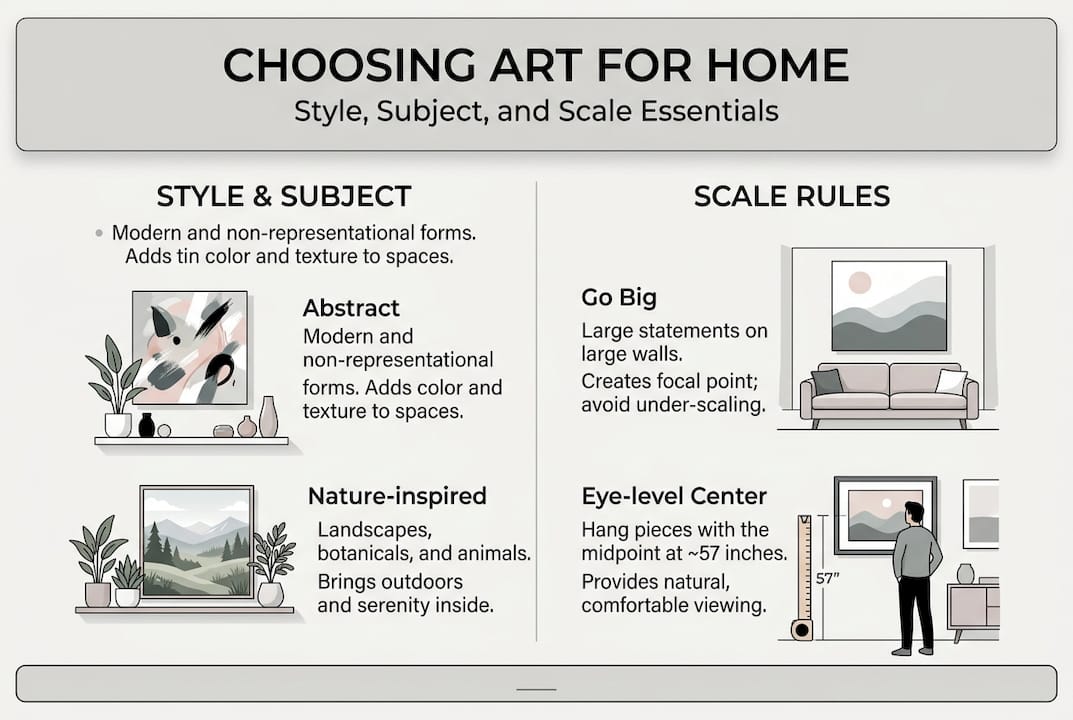
Then there is the question of scale, which is one of the most common sources of frustration. Design professionals follow a clear rule: art should span 60-75% of furniture width, hung at eye level. This means a sofa that is 84 inches wide should be paired with art that is roughly 50 to 63 inches wide.
| Art style | Best for | Emotional effect |
|---|---|---|
| Impressionistic | Traditional and transitional rooms | Warmth, nostalgia, calm |
| Romantic | Cozy bedrooms and reading nooks | Intimacy, comfort |
| Biophilic/nature | Any room, especially kitchens and baths | Restoration, stress relief |
| Contemporary abstract | Offices and open-plan living areas | Energy, creative focus |
How to choose art for your specific space:
- Measure the furniture the art will hang above and calculate 60-75% of that width
- Identify the mood you want the room to support (calm, energized, cozy, focused)
- Choose a style from the table above that matches that emotional goal
- Select a subject or motif that has personal meaning to you
- Test scale with painter’s tape before you buy
Pro Tip: If you have a large, open wall with no furniture beneath it, go bold. A statement piece works far better than two small prints that get lost. Options like triptych art for modern decor, modern acrylic wall art, or metal wall art for homes are designed with exactly this kind of impact in mind.
How to hang and display art for best effect
Selecting the right piece is only half the battle. Placement determines whether your art becomes a focal point or fades into the background. The good news is that the core rules are simple and consistent across design professionals.
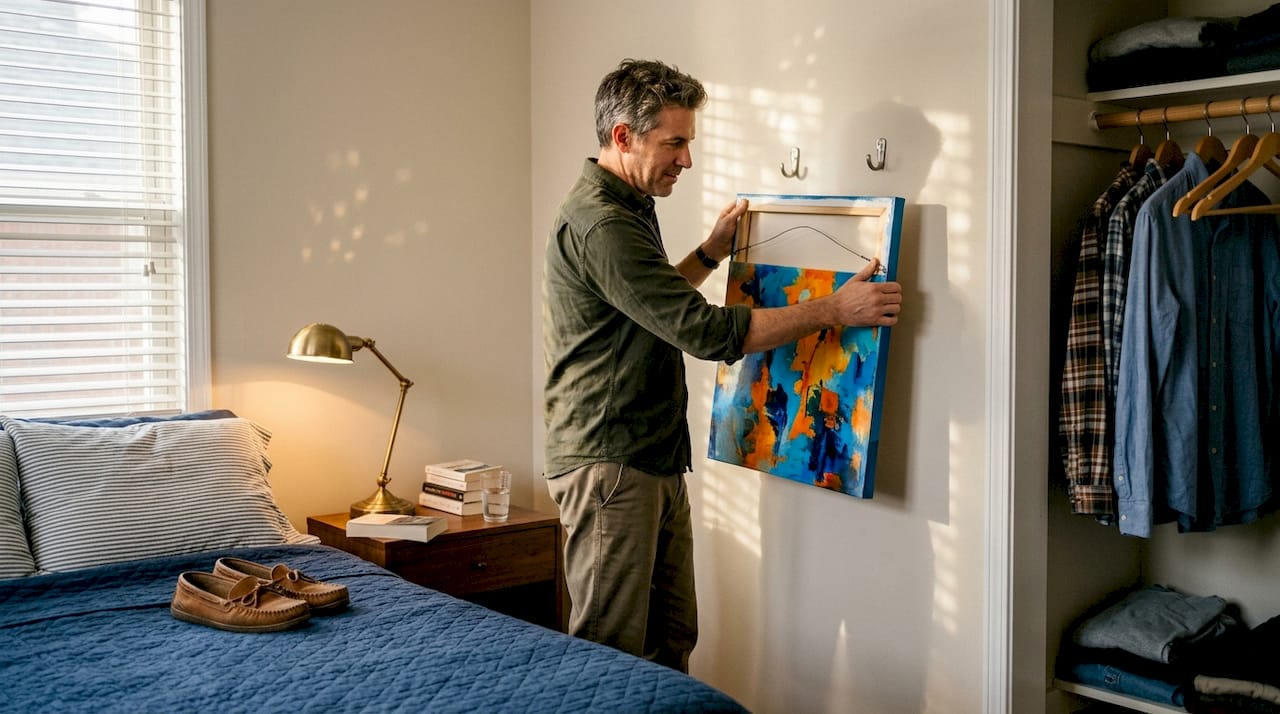
The most important guideline: hang art so the center is 57-60 inches above the floor. This positions the visual midpoint of the piece at average eye level, which creates natural comfort for anyone standing or sitting in the room. When art is hung too high, it disconnects from the furniture below it and the viewer standing in front of it.
Room-by-room art sizing reference:
| Furniture width | Recommended art width | Suggested placement height |
|---|---|---|
| 60 inches (small sofa) | 36-45 inches | Center at 57-60 inches |
| 84 inches (standard sofa) | 50-63 inches | Center at 57-60 inches |
| 72 inches (queen bed) | 43-54 inches | 6-8 inches above headboard |
| 48 inches (console table) | 29-36 inches | Center at 57-60 inches |
Art hanging checklist:
- Measure the furniture width and calculate the ideal art width (60-75% rule)
- Mark the wall at 57-60 inches and center the art horizontally above the furniture
- Leave a 6 to 8 inch gap between the top of furniture and the bottom of the frame
- Use a level every time, even for casual arrangements
- For gallery walls, lay the arrangement on the floor before committing to holes
- Step back from across the room to evaluate before final anchoring
Pro Tip: Before drilling a single hole, cut out paper templates of your frames and tape them to the wall. Live with the layout for a day or two. You will catch problems with proportion and spacing that are invisible in the planning stage. Exploring gallery wall curation tips can also help you visualize multi-piece arrangements before you commit.
Common mistakes and modern myths about art for home decor
Good intentions lead to plenty of decorating regrets. Some of the most common art mistakes come directly from well-meaning rules that are either outdated or misunderstood.
“The biggest wall art error is not choosing the wrong style. It is choosing the wrong size. Small art on a large wall is one of the most common and most easily avoided mistakes in home decor.”
Design editors consistently flag a short list of errors that undermine even beautifully decorated rooms. Common mistakes include small art on big walls, mass-market prints, and uncurated gallery walls. These choices dilute the emotional and visual impact that art is supposed to create.
The gallery wall myth deserves special attention. For years, layered groupings of frames were treated as a timeless design choice. But gallery walls may look cluttered or dated without careful curation and a commitment to refreshing them over time. The family photo grid, the mismatched frame medley, and the random inspirational quote collection are all signals that a gallery wall was assembled rather than designed.
Here are the most important mistakes to avoid:
- Hanging art too high: the classic error, usually caused by treating the wall rather than the viewer as the reference point
- Choosing undersized pieces: a single 8x10 above a king bed or full sofa reads as an afterthought
- Over-curating with too many small pieces: visual noise that competes with itself and exhausts the eye
- Buying art only on sale or for price: cheap, mass-produced prints signal the choice was made by budget rather than intention
- Ignoring personal connection: art chosen purely because it matches a paint color rarely holds your attention or delivers emotional benefit
- Mixing too many unrelated styles: a cohesive gallery wall arrangement needs a unifying thread, whether that is color, subject, or medium
The fix for most of these is surprisingly simple: buy fewer, better pieces and give them room to breathe.
Why most art advice misses what matters
Most decorating guides approach art as a finishing touch, the last thing you add once the furniture is arranged and the walls are painted. We think that framing is completely backwards.
Art is not decoration layered on top of a room. It is one of the fastest ways to change how a room feels to be in. And feeling is what makes a house a home. The research on cortisol reduction and eudaimonic well-being is not just interesting data. It is a reminder that what surrounds you daily shapes you in ways you may not consciously notice.
When homeowners choose customized colorful artwork based on personal resonance rather than trend reports or algorithm recommendations, the results are almost always more satisfying and more lasting. Science should be your starting point and your confidence, not a checklist that overrides your instincts. Trust what draws you in. Then use the research to make sure it is displayed in a way that maximizes its impact.
Discover vibrant wall art that transforms your home
If this article has inspired you to rethink your walls, the next step is finding pieces that actually deliver on both style and substance. At ColorMelt, every design is built around bold color, lasting quality, and the kind of visual energy that genuinely changes how a room feels.
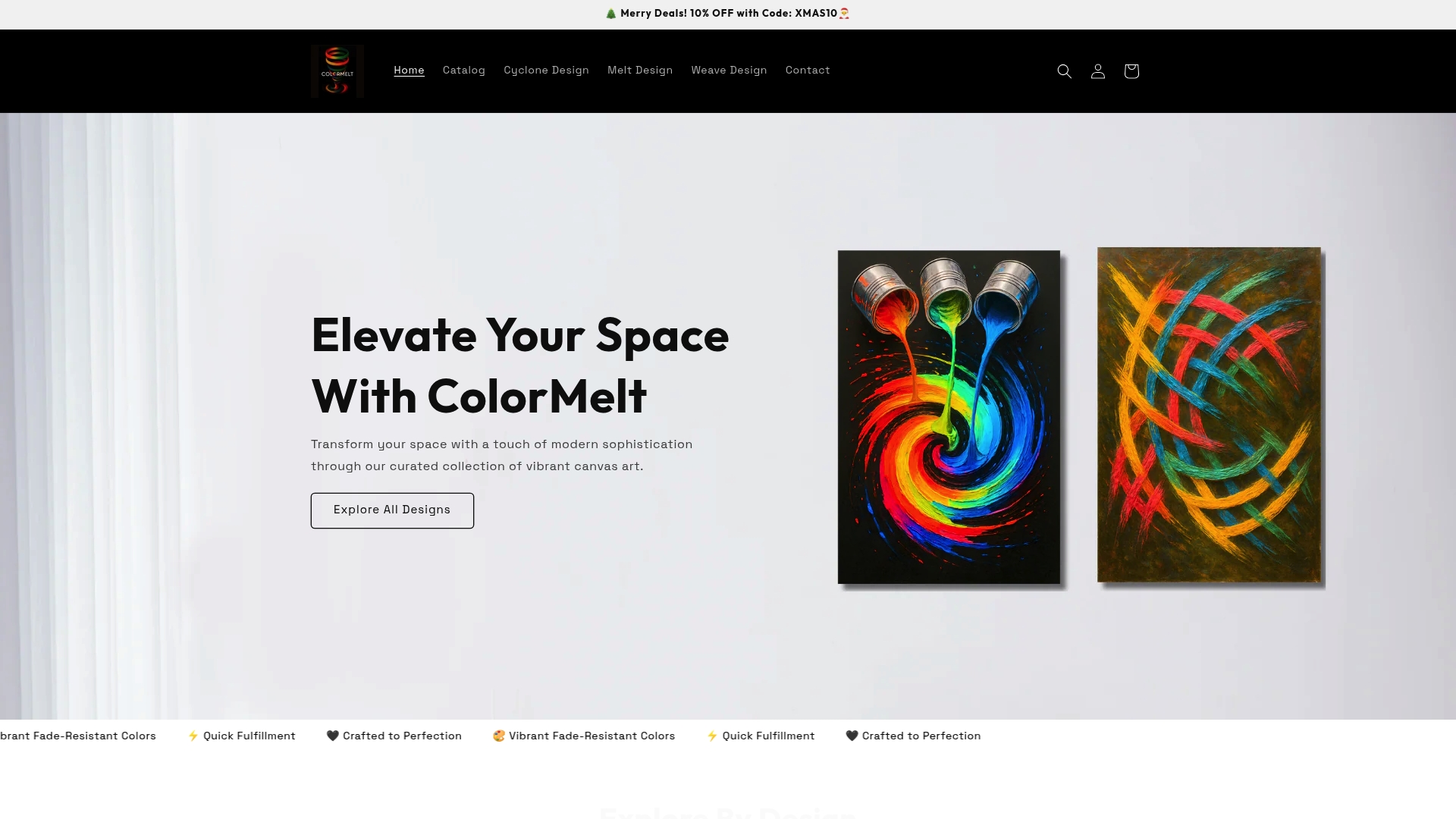
Whether you are drawn to the clean impact of modern metal wall art, the warmth of vibrant canvas art, or something from across the full ColorMelt collection, you will find pieces scaled for real rooms and printed with fade-resistant quality that holds up for years. Browse the collection and find the piece that makes your space feel exactly the way you want it to.
Frequently asked questions
Is there scientific proof that art reduces stress at home?
Yes. Studies confirm that biophilic and restorative art reduces cortisol by 15-20% and improves mood and anxiety levels over time with regular exposure.
What size art looks best over a sofa or bed?
Art should be 60-75% of the furniture’s width and the center hung at 57-60 inches from the floor for the most balanced, visually comfortable result.
Are gallery walls still in style for 2026?
They can be, but gallery walls look cluttered without deliberate curation. A unified theme, consistent framing, and periodic refreshing are essential to keeping them current.
Which styles of art are most recommended for modern interiors?
Research points to Impressionistic, Romantic, and nature-inspired art as the strongest performers. Impressionistic and Romantic styles consistently generate more positive emotional responses in modern interior settings than purely contemporary styles.
Should I avoid mass-produced or inexpensive prints?
In most cases, yes. Mass-market prints diminish the comfort and sophistication of a space. Fewer, higher-quality pieces with personal meaning will always outperform a wall full of budget filler.