
What Is Contemporary Canvas? Transform Your Home With Modern Art
Most people think canvas art belongs in old museums or above a fireplace in a Victorian sitting room. That assumption is costing you one of the most powerful design tools available for modern interiors. Contemporary canvas art is nothing like its historical counterpart. It is bold, expressive, and built specifically for the way we live now. In this article, you will learn exactly what contemporary canvas art means, what separates it from older formats, how to compare it with rival surfaces like art panels, and how to place it confidently in any room of your home.
Table of Contents
- Defining contemporary canvas art
- Key features of contemporary canvas
- Canvas vs. panel: What should you choose?
- How to incorporate contemporary canvas into your home
- Why your next statement piece should be a contemporary canvas
- Ready to upgrade your walls? Explore bold contemporary canvases
- Frequently asked questions
Key Takeaways
| Point | Details |
|---|---|
| Modern style focus | Contemporary canvas art transforms spaces with bold color and up-to-date themes. |
| Versatile material | Canvas offers unique textures and adaptability for nearly any room. |
| Comparison insights | Panels provide stability, but canvases engage and enliven with their tactile surface. |
| Practical integration | Correct placement and lighting maximize contemporary canvas impact in home decor. |
| Easy next steps | You can explore or purchase contemporary canvas art to elevate your living space right away. |
Defining contemporary canvas art
Canvas art has existed for centuries, but what we call “contemporary canvas” today is a completely different animal. The word contemporary simply means “of the present time.” In art, it refers to work made with current themes, materials, and visual language. That means bold color relationships, abstract or geometric forms, layered textures, and designs that respond to how modern people feel and live.
Traditional canvas painting used oil paint applied slowly over weeks or months on hand-stretched linen. Contemporary canvas, on the other hand, often combines giclée printing (a high-resolution inkjet process that reproduces color with stunning accuracy) with hand-stretched cotton or polyester canvas. The result is artwork that is visually rich, consistent in quality, and accessible to anyone decorating a home on a real budget.
Here are the core characteristics that define contemporary canvas art:
- Bold, saturated colors that command attention and anchor a room’s palette
- Abstract, geometric, or mixed-media motifs inspired by nature, architecture, or digital design
- Textured surfaces created through layered inks or embossed printing techniques
- Gallery-wrapped edges where the image wraps around the frame, eliminating the need for a separate mat or border
- Fade-resistant inks that maintain color integrity for decades under normal indoor light
- Scalable formats ranging from small accent pieces to oversized statement panels
“While popular for decor versatility, some collectors prefer panels over canvas for stability; textures boost engagement but require careful lighting to avoid color shifts.”
That collector perspective is worth noting, but it also highlights something important: the engagement that canvas texture creates is a genuine design asset. A flat surface cannot do what a textured canvas does in a living room. If you want practical guidance on placing canvas in different spaces, these canvas styling tips walk you through room-by-room approaches.
Contemporary canvas is ideal for today’s interiors because modern homes favor clean lines, open plans, and curated focal points. A bold contemporary canvas fills that role immediately, without requiring you to hire a decorator or own an art history degree.
Key features of contemporary canvas
Understanding what contemporary canvas is only takes you so far. Knowing what makes it work in a real home is what helps you make smart buying decisions. Let’s dig deeper into the specific features and practical benefits that make contemporary canvas a favorite.
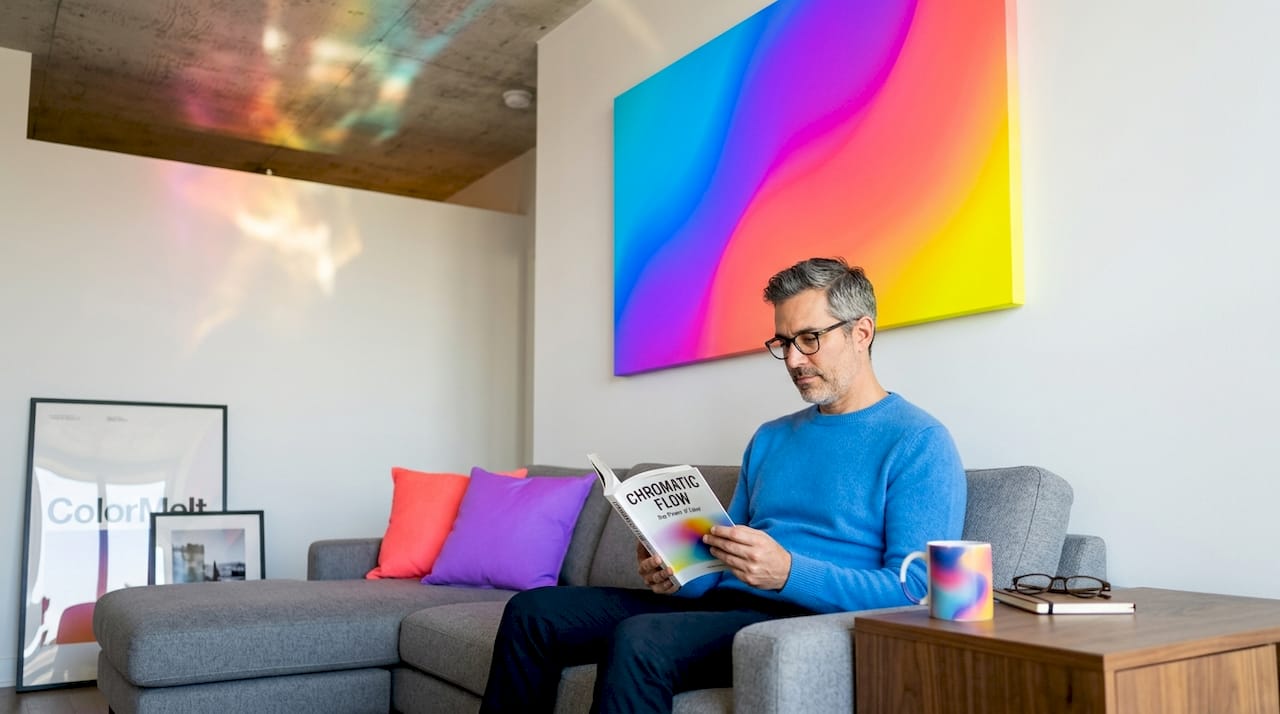
Color and motif: Contemporary canvas art leans into contrast. Think deep indigo next to warm gold, or swirling cyclone patterns where dark and light fight for dominance. This contrast-driven design philosophy creates visual energy that no neutral wall treatment can match. Abstract designs, in particular, allow the viewer to bring their own interpretation, which means the art stays interesting over years of living with it.
Texture and layering: One of the most underappreciated qualities of canvas is its surface depth. Even printed canvases have a slight tooth and grain that catches light differently throughout the day. Morning sunlight will make the texture pop in a way that evening lamp light will not. This dynamic quality keeps a room feeling alive and never static.
Stretched canvas vs. panels: This is a decision many buyers overlook until after purchase.
| Feature | Stretched canvas | Art panel |
|---|---|---|
| Surface texture | Rich, tactile grain | Smooth, flat |
| Visual warmth | High | Medium |
| Weight | Light to medium | Heavier |
| Stability in humidity | Moderate | High |
| Framing required | No (gallery wrap) | Often yes |
| Cost range | Budget to premium | Premium |
| Best setting | Living rooms, bedrooms | Humid or high-traffic areas |
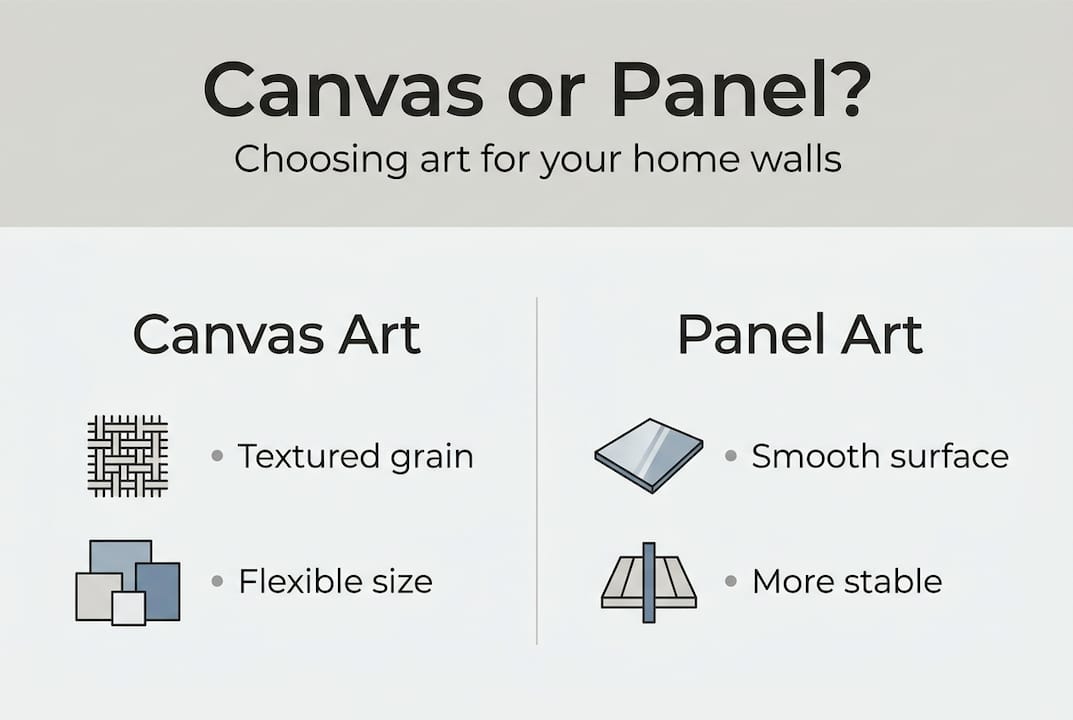
As noted by art buyers evaluating their options, canvas allows greater texture and engagement compared to the smoother, more stable panel surface. For most living spaces, that texture is exactly what you want.
Size and framing: Contemporary canvas comes in formats from 8x10 inches all the way to multi-panel murals spanning six feet or more. Gallery-wrapped canvas needs no frame, which keeps the look clean and modern. If you want a more structured appearance, a floating frame (a thin frame that gives the canvas a shadow gap from the wall) adds depth without competing with the artwork itself.
Pro Tip: When choosing canvas size, use painter’s tape to mark the intended dimensions on your wall before buying. This single step prevents the most common decorating mistake: buying art that is too small for the space.
Understanding modern art’s impact on room mood can also help you select the right visual weight for your specific space before you commit to a purchase.
Canvas vs. panel: What should you choose?
With a grasp on canvas features, it helps to see how it compares directly to rival materials like art panels. Both are legitimate wall art surfaces, but they serve different purposes and thrive in different environments.
Art panels are typically made from wood, aluminum composite, or rigid foam board. They offer a very smooth, stable surface that resists warping. Canvas, stretched over a wooden frame, has more flexibility and responds to changes in humidity and temperature by slightly expanding or contracting.
Here is a practical breakdown:
| Factor | Canvas | Panel |
|---|---|---|
| Texture feel | Tactile, woven grain | Smooth and flat |
| Humidity resistance | Moderate | Excellent |
| Color vibrancy | Very high with inks | High, very consistent |
| Ease of hanging | Simple, lightweight | Heavier hardware needed |
| Interior design fit | Casual, artistic, layered | Sleek, minimal, gallery-style |
| Long-term durability | Excellent indoors | Excellent in most conditions |
Art buyers who weigh these options often find that panels offer more stability in difficult environments, but canvas wins in visual engagement and warmth.
Where each material works best:
- Canvas: Living rooms, bedrooms, home offices, dining rooms, hallways
- Panel: Bathrooms, laundry rooms, humid basements, commercial settings with controlled climate
- Canvas: Large statement pieces, multi-panel gallery walls, cozy reading nooks
- Panel: Minimalist spaces, industrial-style rooms, places where flatness and precision matter
Lighting is the wildcard that influences both surfaces. Canvas textures respond beautifully to warm, angled light like a table lamp or picture light mounted above the piece. Direct overhead lighting can wash out the texture and flatten the design. For panels, lighting matters less for texture but still affects color accuracy.
If you are choosing art for a specific room and want to see a great example of a versatile design that suits multiple spaces, take a look at this unique room artwork with a weave motif that works across a wide range of interior styles.
How to incorporate contemporary canvas into your home
Once you’ve chosen between canvas and panel, here’s how to confidently showcase contemporary canvas art at home. The placement, pairing, and maintenance of your artwork are just as important as the piece itself.
1. Choose a theme that connects to your existing palette Start with the two or three dominant colors already in your room. Your canvas does not need to match those colors exactly. In fact, art that introduces one new accent color often creates the most visually satisfying result. If your room is mostly warm gray and cream, a canvas with deep teal and gold will pull both palettes together without feeling forced.
2. Decide on a focal point before hanging Every room has one natural focal point: the wall behind a sofa, the space above a bed’s headboard, or the wall you see immediately when you enter. This is where your largest or most visually complex contemporary canvas belongs. Smaller accent pieces can support this main piece from side walls or shelving.
3. Use lighting to activate the canvas texture Textures boost engagement but require careful lighting to avoid unwanted color shifts. The most effective approach is to use a warm white LED picture light positioned above the frame, angled at roughly 30 degrees toward the canvas surface. This highlights the texture without creating harsh shadows or bleaching the color.
4. Create a gallery wall with layered sizes Contemporary canvas works beautifully in groupings. Mix a large anchor piece (24x36 inches or bigger) with two to three smaller companion pieces in similar tones. Keep consistent spacing of two to three inches between frames for a curated, intentional look rather than a cluttered feel.
5. Pair canvas with complementary decor A bold abstract canvas over a neutral sofa reads strongest when you pick up one of the canvas’s colors in nearby throw pillows or a decorative vase. This creates what designers call a “color echo,” where a hue appears in at least three places in the room to feel intentional rather than accidental.
Pro Tip: Avoid hanging canvas art directly above heating vents or in spots with constant direct sunlight. Even fade-resistant inks will degrade faster under prolonged UV exposure, and fluctuating heat can loosen the canvas tension over time.
6. Keep the canvas clean and protected Dust your canvas lightly with a dry, soft microfiber cloth every few weeks. Never spray cleaning solutions directly onto the surface, as moisture can seep into the printed layer. For stubborn marks, a barely damp cloth applied very gently works better than any chemical product.
Reviewing detailed canvas print styling steps and exploring aesthetic canvas design options in cyclone motifs can help you visualize the final look before making your decision.
Why your next statement piece should be a contemporary canvas
Here is an opinion that might surprise you: the ongoing conversation about panels being “superior” to canvas for stability is a technical argument that misses the entire point of living with art.
Yes, panels are more stable in high-humidity rooms. That is a fact worth respecting. But stability is not why people hang art on their walls. People hang art because they want their home to feel alive, personal, and emotionally resonant. And on that measure, canvas wins consistently.
We have seen firsthand how a single bold canvas transforms the energy of a room. Not in a subtle, “you-might-notice-it” way, but in the immediate, gut-level way that makes guests stop mid-conversation to look at the wall. That response comes from texture, scale, and color working together, elements that canvas delivers more naturally than any flat surface.
The argument that panels are always the smarter choice reminds us of the people who buy the most practical car in the lot when what they actually wanted was something that made the drive enjoyable. Practicality has its place, but in a living room, impracticality sometimes creates the most memorable experiences.
Interior designers who work with contemporary canvas also report something interesting: clients who invest in one genuinely bold canvas piece tend to feel more satisfied with their overall interior than clients who spread the same budget across six smaller, safer items. One strong visual statement anchors a room better than a dozen modest ones.
Living room transformation through bold canvas art is not a trend. It is a design principle that has proven itself across decades of residential styling. The tools are different now: fade-resistant inks, precision printing, and gallery-wrapped frames. But the principle remains. Art should make you feel something every time you walk into the room.
The textures boost engagement effect is not a collector’s niche preference. It is the reason canvas feels warm and alive in a way that no other wall treatment fully replicates. Lean into that. Your walls deserve more than just occupancy.
Ready to upgrade your walls? Explore bold contemporary canvases
Inspired to transform your home? Here’s how to take action and explore what’s possible.
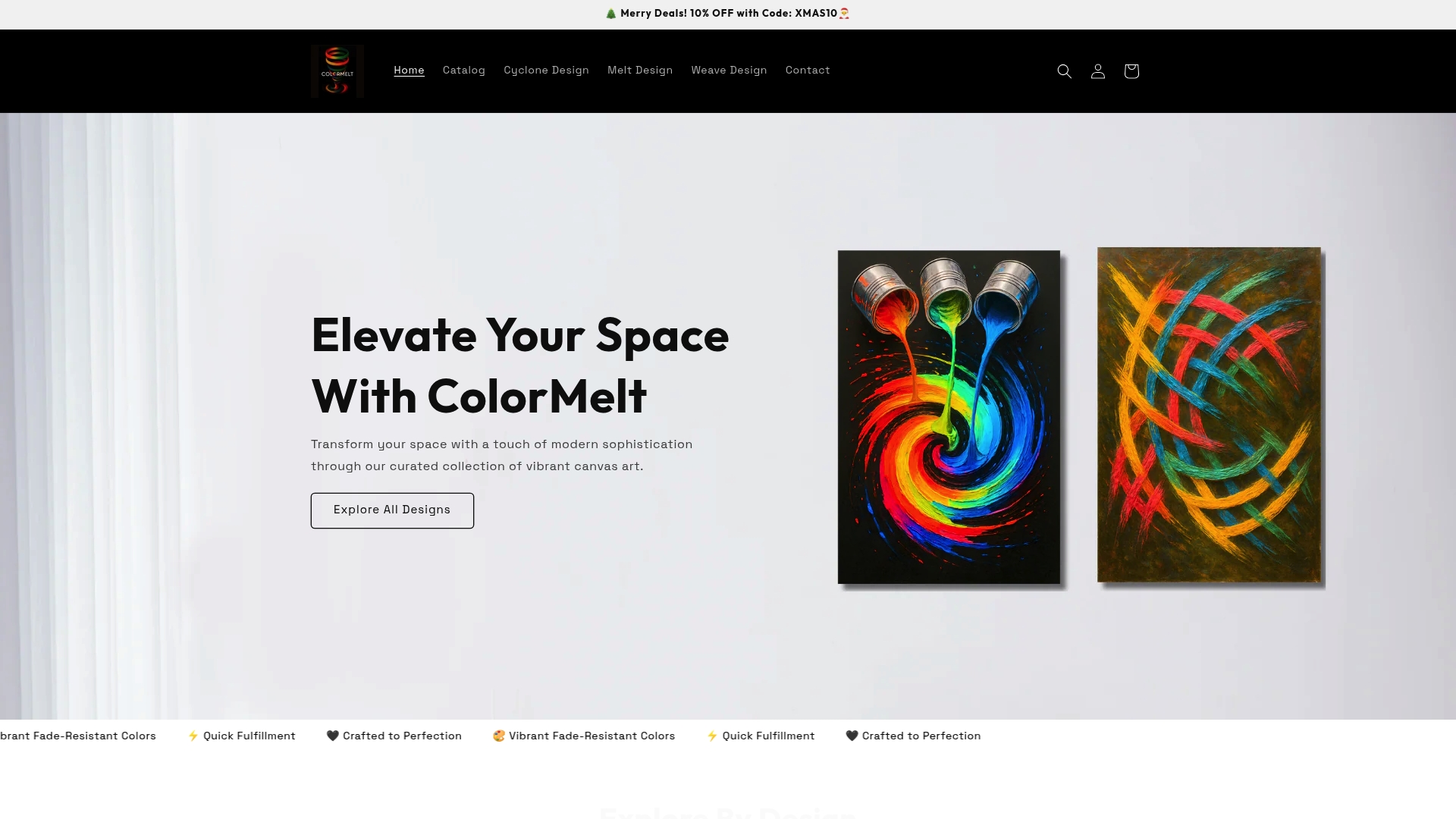
At ColorMelt, we design every piece with the specific goal of turning your wall into something worth stopping for. Our shop wall art collection includes abstract, weave, cyclone, and floral designs built for modern interiors, with fade-resistant inks and gallery-quality canvas that holds its vibrancy for years. Whether you want one commanding statement piece or a coordinated gallery wall, you will find designs that fit your color palette and your personality. If you are ready to see how a bold canvas feels in your space, start with our best-selling colorful canvas print in the weave design, a versatile piece that works with almost any interior palette.
Frequently asked questions
What exactly makes canvas art “contemporary”?
Contemporary canvas art reflects current trends, bold colors, and modern themes, often featuring abstract or geometric designs that move well beyond traditional landscape or portraiture subjects.
How do lighting and room placement affect contemporary canvas?
Lighting can enhance canvas texture dramatically, but careful lighting avoids color shifts that occur when direct overhead or harsh lighting flattens or distorts the print. Warm, angled light positioned above the artwork gives the best result.
What’s best: canvas or panel for a humid environment?
Panels are typically more stable than canvas in humid rooms because collectors prefer panels for stability in conditions where moisture causes canvas to expand or warp over time.
Can I mix contemporary canvas with more classic decor?
Yes, contemporary canvas often acts as a bold focal point that blends well with classic furniture and traditional textiles, creating a dynamic contrast that keeps the overall room from feeling dated or one-dimensional.