
How to choose quality wall art for lasting impact
Most people walk into a room, glance at the wall, and decide whether art looks good or doesn’t. That split-second judgment is natural, but it misses something bigger. Real quality in wall art goes several layers deeper than aesthetics, touching on materials, craftsmanship, emotional weight, and how a piece interacts with your specific space over years, not just days. This guide breaks down every dimension of quality you should consider before making a purchase, so you can confidently select pieces that don’t just fill wall space but genuinely transform your home into something worth coming back to.
Table of Contents
- Defining quality in modern wall art
- Style, color, and design: Bringing vibrancy and uniqueness
- Size, scale, and placement: Making art fit your space
- Personalization and emotional resonance
- Why focusing on quality pays off, what most decorators overlook
- Find high-quality, vibrant wall art for your home
- Frequently asked questions
Key Takeaways
| Point | Details |
|---|---|
| Materials matter | Quality wall art starts with strong materials, like archival canvas or durable acrylic, to ensure longevity. |
| Vibrant design elevates style | Modern wall art shines when color, composition, and uniqueness combine for impactful home decor. |
| Proper sizing transforms rooms | Well-chosen artwork size creates harmony, turning a plain wall into a focal point. |
| Personal meaning enhances value | Art that resonates emotionally feels more valuable and beautiful in your space. |
Defining quality in modern wall art
When most decorators talk about “quality,” they mean something vague, like it just looks expensive. But quality is actually a set of measurable, concrete properties you can check before buying. Understanding the three main pillars, materials, craftsmanship, and print technique, gives you a reliable framework to evaluate any piece.
Materials are the physical foundation. Canvas is the most popular choice for good reason: it’s lightweight, stretches taut over a wooden frame, and allows ink to sit with remarkable depth. Acrylic prints bond the image directly to the surface of the acrylic sheet, producing colors that practically glow, especially in bright rooms. Metal prints (usually aluminum) are ultra-thin, moisture-resistant, and deliver sharp, high-contrast images with a slight sheen. Wood prints offer a warm, organic texture that softens bold designs. Each material serves a different purpose, and the best choice depends on your room’s lighting, humidity levels, and the mood you want to create.
Craftsmanship is about execution. Check that the image is printed straight, with no distortion at the corners. On canvas, look at how the image wraps around the edges: a quality piece will either have the image continue around the sides or feature a clean, gallery-wrapped black or white border. The frame behind the canvas should be solid, not flimsy or warped. Hanging hardware should be already mounted and sturdy enough to hold the piece without shifting over time.
Print technique separates budget prints from true art-grade reproductions. Giclée printing (pronounced “zhee-clay”) uses microscopic droplets of archival ink to produce images with stunning color range and sharpness, most fine art reproductions use this method. UV printing bonds ink to hard surfaces like metal and acrylic under ultraviolet light, creating fade-resistant results. Dye sublimation pushes dye directly into the material at a molecular level, making it part of the substrate rather than just sitting on top, which is why sublimated prints resist chipping and flaking.
The characteristics of high-end wall art consistently point to these three pillars as non-negotiable, because high-quality wall art stands out through superior materials, precise craftsmanship, and advanced printing methods.
Top 4 signs of true quality in a wall piece:
- Color accuracy: Colors should match the digital preview without muddy undertones or blown-out highlights.
- Edge finishing: Rough, fraying canvas edges or visible staples indicate shortcuts in production.
- Image sharpness: Even at close range, fine details should remain crisp, not pixelated.
- Weight and stability: A quality piece feels solid; lightweight, rattling frames are a red flag.
| Material | Visual impact | Durability | Best room |
|---|---|---|---|
| Canvas | Warm, textured depth | High with UV coating | Living rooms, bedrooms |
| Acrylic | Vibrant, luminous glow | Very high | Bright, modern spaces |
| Metal | Sharp, high-contrast | Excellent, moisture-proof | Bathrooms, kitchens |
| Wood | Organic, muted warmth | Moderate | Rustic or eclectic rooms |
Pro Tip: Before purchasing online, look for product pages that specify the printing method and ink type. If that information isn’t listed, ask the seller directly. A brand confident in its quality will answer without hesitation.
Style, color, and design: Bringing vibrancy and uniqueness
Having set a baseline for what makes art physically high quality, it’s time to explore the crucial role of visual elements in delivering impact. A perfectly printed piece on flawless canvas still falls flat if the design doesn’t connect with its environment. Color, composition, and creative intent are what make modern wall art feel alive.
Color psychology is real and surprisingly practical. Warm tones like deep reds, burnt oranges, and golden yellows stimulate energy and conversation, making them excellent choices for dining rooms and social spaces. Cool blues, soft greens, and layered grays create calm, which is why they work so well in bedrooms and reading nooks. High-contrast abstract pieces, where sharp darks collide with electric neons, create a focal energy that draws the eye and holds it. This is the visual language that modern art transforms living rooms through, using mood, style, and well-being as its core tools.
Design elements that add genuine vibrancy include movement, pattern density, and layering. A cyclone or swirl composition, for instance, creates a sense of motion even in a static image. Woven or weave-style patterns build visual complexity that rewards longer looking. Layered floral motifs combine organic softness with intricate detail that feels handcrafted even when digitally rendered.
“Vivid color, dynamic composition, and unique design are essential for modern art that transforms living spaces.”
Tips for choosing art that energizes vs. soothes:
- To energize: Choose bold contrasts, saturated primaries, diagonal compositions, or abstract cyclone patterns.
- To soothe: Look for analogous color palettes (colors sitting next to each other on the color wheel), horizontal compositions, and soft gradients.
- For balance: Pair one dominant hue with one neutral to avoid visual overload.
- For small spaces: Choose a single large piece with limited colors rather than several busy prints that compete.
| Art type | Primary characteristics | Best placement |
|---|---|---|
| Abstract | Bold shapes, strong contrasts | Living rooms, offices |
| Weave/pattern | Intricate, rhythmic detail | Hallways, accent walls |
| Cyclone/swirl | Sense of movement, energy | Statement walls, studios |
| Floral | Organic softness, layered color | Bedrooms, dining rooms |
Understanding how to approach styling colorful wall decor means thinking about your room’s existing palette first. Your art should either echo a color already present in your furniture or textiles, or it should introduce one new accent color intentionally.
Size, scale, and placement: Making art fit your space
Once the art style is chosen, placement is key. Let’s discover how size and position amplify quality. Even the finest piece of art will look awkward if it’s dwarfed by a massive blank wall or crammed over a narrow shelf. Scale and placement are as important as the art itself.
The general rule most interior designers follow is that art should cover between 50% and 75% of the available wall width above furniture. So if your sofa is 84 inches wide, your art or art arrangement should span roughly 42 to 63 inches. Going smaller creates the “floating stamp” effect, where the art looks lost. Going wider can overwhelm the furniture below it.
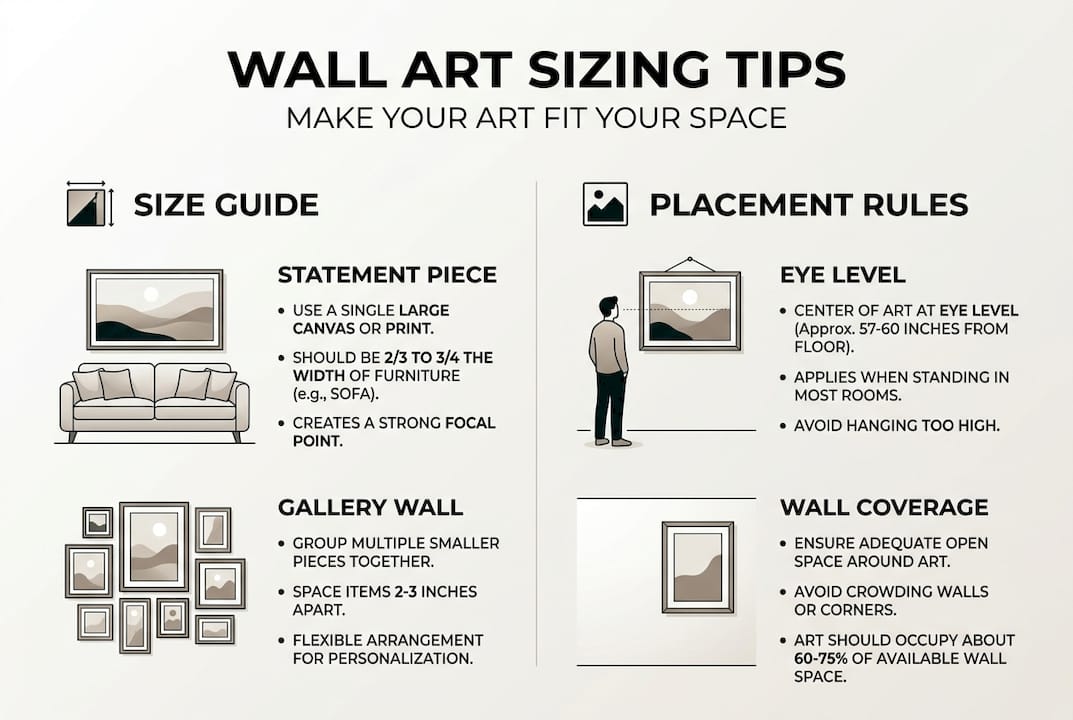
Choosing between a large statement piece and a gallery wall is partly a matter of personality. A single large canvas creates instant authority and draws focus to one powerful image. A gallery wall of smaller prints allows you to tell a more layered, personal story, mixing different sizes, frames, and subjects. The key is consistent spacing: gaps of 2 to 3 inches between pieces create visual coherence. Wider gaps make a gallery wall feel scattered.
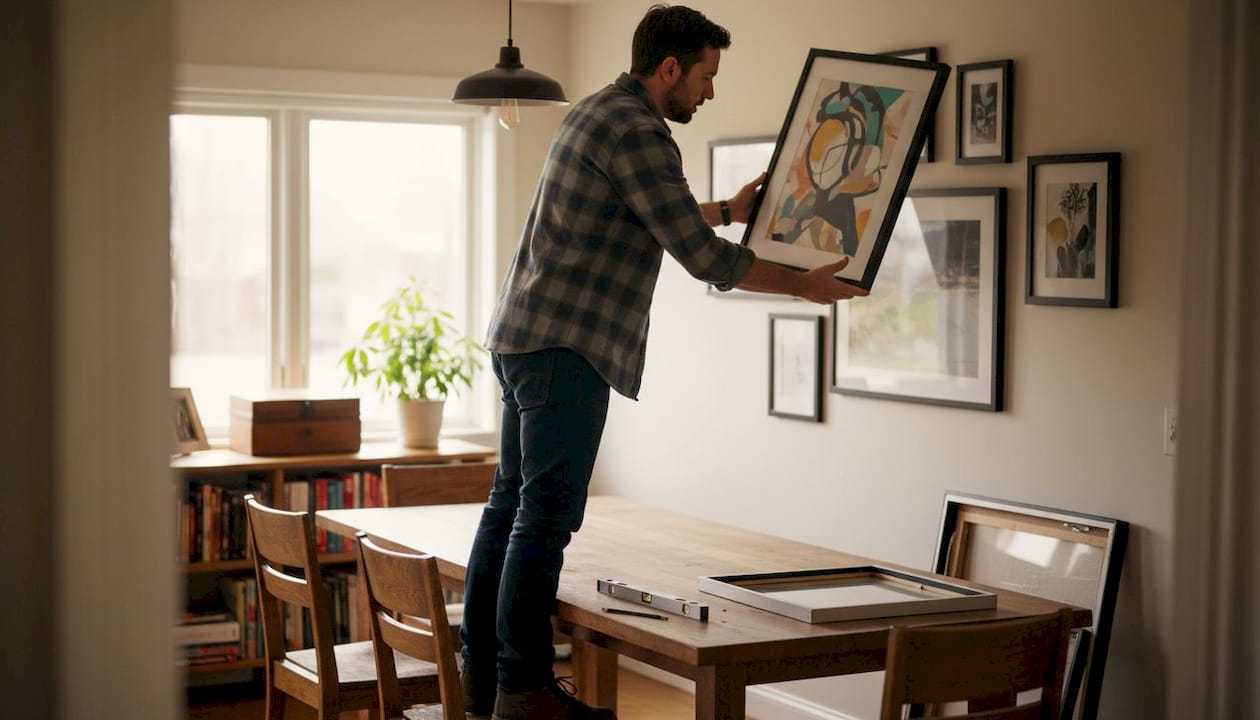
Proper placement and sizing turn wall art from background filler into a true focal point, and that principle holds whether you’re working with a single canvas or an eight-piece arrangement.
3-step process for measuring and hanging art:
- Measure the wall space and furniture below. Note the width of the furniture and calculate 50% to 75% of that measurement for your target art width. For height, the center of the artwork should sit at roughly eye level, which is about 57 to 60 inches from the floor.
- Mark the hanging point without drilling. Use painter’s tape to outline where the art will sit on the wall. Step back, live with it for a day, and adjust before committing to any holes.
- Check for level and lighting. Use a spirit level before driving in any hardware. Also check whether natural or artificial light will create glare on acrylic or metal surfaces, and reposition if needed.
Common mistakes include hanging art too high (a frequent error because people instinctively reach up), clustering too many small pieces without enough breathing room, and ignoring the relationship between the art’s colors and the room’s existing palette.
Pro Tip: Cut out paper templates the exact size of each piece and tape them to the wall before drilling anything. It takes ten extra minutes and saves you from unnecessary holes and repositioning.
Personalization and emotional resonance
There’s one final ingredient to truly high-quality wall art: an emotional connection that turns a picture into a story. Two pieces might be printed on identical materials with identical technique, but one resonates deeply while the other is forgettable. That difference is almost always personal meaning.
Art that reflects something you care about, a place you’ve traveled, a color palette that’s been yours since childhood, a shape that mirrors how you see the world, holds its value in ways purely decorative art cannot. It becomes part of your home’s identity. Guests ask about it. You notice it differently on different days. Personalized or meaningful artwork creates emotional connections that elevate the value of modern wall art far beyond its physical components.
Customization options have expanded significantly. Many modern art sellers now offer size customization, so you’re not stuck squeezing a standard size into an awkward space. Some allow color shifts, letting you request a version of an abstract design in a palette that matches your furniture. Text elements, names, dates, or short phrases, can transform a beautiful pattern into something genuinely one of a kind.
“The art you live with every day should feel like it belongs to you, not like it was chosen from a generic store to fill a gap.”
Ways to spot authentic emotional resonance in a piece:
- You pause on it. If you’re still looking at it after 30 seconds, it has something to say to you.
- It recalls a feeling, memory, or place. Art rooted in your experience will outlast any trend.
- It reflects your actual color world. If the palette matches colors you naturally wear, choose, or surround yourself with, it fits your visual identity.
- It triggers a reaction in others. If people who know you well immediately connect the piece to your personality, it’s working.
Exploring the full potential of personalizing wall art means going beyond picking a subject you like and thinking about what a piece will mean to you in five or ten years. Trends come and go. Meaning stays.
Why focusing on quality pays off, what most decorators overlook
Here’s an opinion most interior design guides won’t say out loud: chasing trends in wall art is one of the most expensive decorating mistakes you can make. A piece you buy because it’s popular right now loses its appeal the moment the trend shifts, and that usually happens within two years. Meanwhile, a quality piece chosen for its materials, its design integrity, and its personal relevance grows on you over time. You notice new details. It becomes part of your room’s story rather than a placeholder in it.
Most decorators underestimate how strongly art affects long-term ambiance. Paint colors and furniture take effort to change. Art is often the most flexible element in a room, but that flexibility fools people into treating it casually. The rooms that genuinely feel elevated, the ones that make visitors say “this feels different,” almost always have one or two pieces that anchor the space with real visual and emotional weight.
Cheap art also ages badly in a literal sense. Inks fade, frames warp, and edges fray. A quality piece with archival inks and a solid frame holds up for decades. That’s not just better value. It’s less waste, less replacement shopping, and less visual clutter as you swap out pieces that didn’t hold up.
Pro Tip: Invest in one truly excellent piece rather than filling walls with several inexpensive prints. A single statement piece with superior materials and a design you genuinely love will do more for a room than an entire gallery of forgettable art.
Find high-quality, vibrant wall art for your home
Ready to upgrade your living space? Start with expertly crafted and curated selections.
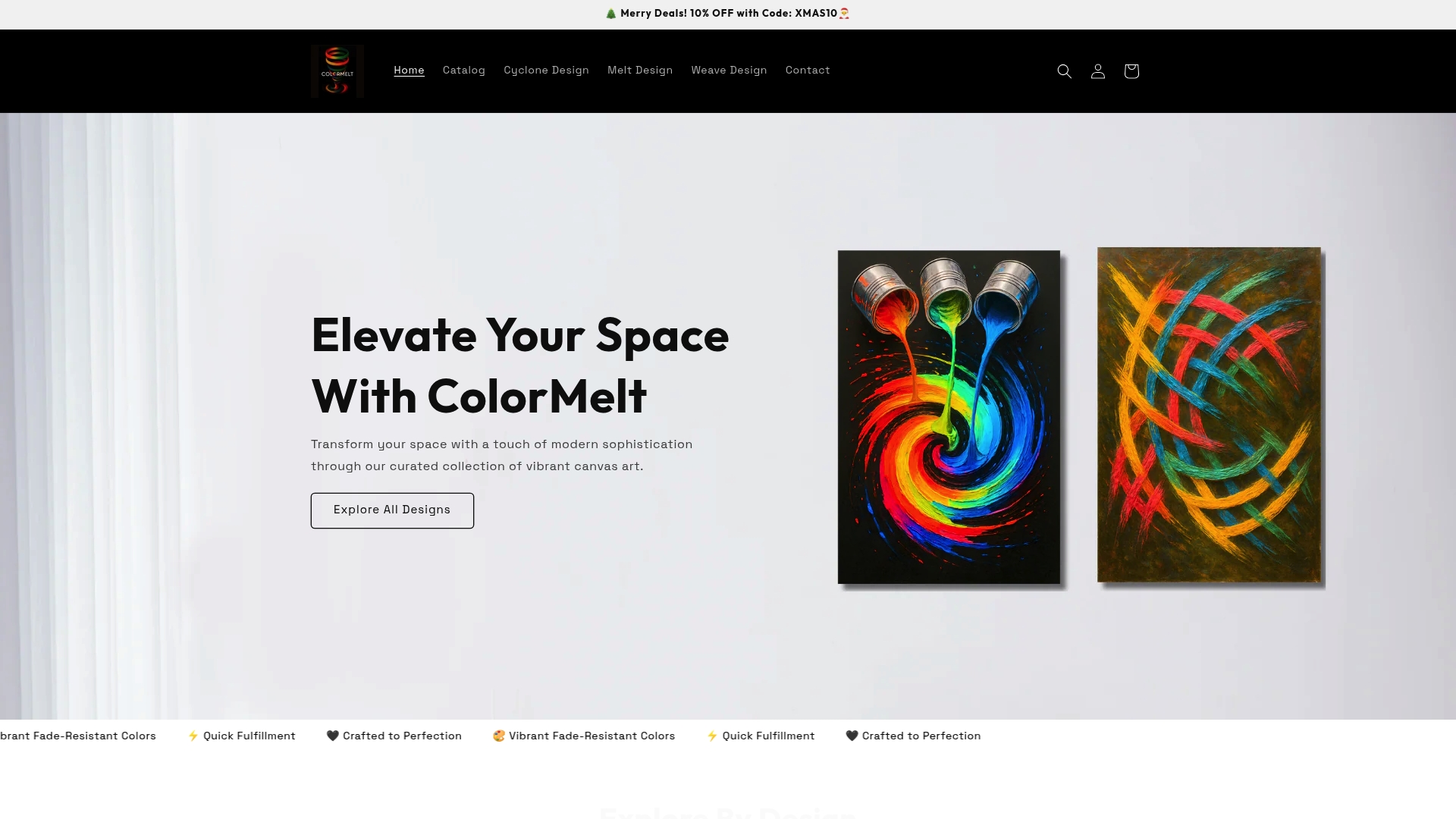
At ColorMelt, every piece in our collection is designed with the principles this guide covers: superior materials, advanced printing, bold color, and designs that hold your attention. Whether you’re drawn to electric abstract compositions, intricate weave patterns, or vivid floral art, we have pieces built to last and styled to stand out. Explore our full range of canvas prints, acrylic panels, wood prints, and framed artwork, each crafted with fade-resistant inks and finished with care. When you’re ready to choose something that truly fits your space and story, shop modern wall art and find the piece that speaks to you.
Frequently asked questions
How can I tell if wall art is high quality?
Check the material, print clarity, edge finishing, and whether the seller specifies their printing method. High-quality wall art features superior materials, precise craftsmanship, and advanced printing that you can verify before buying.
Does the size of wall art matter for quality?
Size impacts the overall presence and visual balance of your room but doesn’t directly affect craftsmanship or durability. That said, proper placement and sizing make wall art a true focal point rather than an afterthought.
How important is personalization in wall art quality?
Personalization adds meaning and uniqueness that purely decorative art can’t replicate. Personalized artwork creates emotional connections that make a piece feel irreplaceable rather than interchangeable.
Is it better to buy one large piece or multiple small pieces?
Choose based on your wall dimensions and the story you want to tell. A large single piece creates a bold, immediate focal point, while a curated gallery of smaller pieces builds depth and personality over time.