
Defining Modern Art Trends: What's Shaping Art in 2026
Modern art and contemporary art are distinct categories separated by both time and philosophy: modern art spans 1860s to 1970s, focusing on formal experimentation, while contemporary art (1970s to present) centers on conceptual depth, social commentary, and identity. Defining modern art trends today means recognizing that the most influential current movements prioritize what an artwork means over how it looks. Institutions like the Venice Biennale and the Whitney Biennial now serve as the primary barometers for these shifts, amplifying voices from outside traditional Western art centers and setting the agenda for collectors, curators, and enthusiasts worldwide. Understanding where these trends come from, and where they are heading, is the clearest path to reading the art world with confidence.
What key themes and movements define modern art trends in 2026?
The dominant force in current art movements is not a single visual style. Systems Art is the defining conceptual framework of the 21st century, focusing on revealing invisible social, political, and ecological infrastructures rather than producing objects for passive admiration. Artists like Trevor Paglen use satellite imagery, data visualization, and surveillance technology to make the mechanics of power visible. This is art that demands critical engagement, not just aesthetic appreciation.
Three movements are shaping the 2026 art conversation most directly:
- Systems Art: Visualizes the hidden structures governing society, from algorithmic surveillance to climate systems. Showcased prominently at the 2026 Whitney Biennial, this approach has dominated biennial programming for over a decade.
- Post-Internet Art: Treats internet culture as both subject and material. Artists in this mode reference memes, digital interfaces, and networked communication as raw creative inputs, blurring the line between online and physical experience.
- Post-Colonial Post-Conceptualism: Focuses on historical reckoning and identity. Biennials amplify voices outside traditional Western centers, challenging the homogeneity of the global art market and reframing whose stories get told.
These movements share a common thread: they all reject the modernist preoccupation with form and aesthetics in favor of context, critique, and social engagement. Where a Mondrian or a Rothko asked you to respond to color and composition, a Systems Art installation asks you to reckon with how power operates in your daily life. That is a fundamental philosophical shift, not just a stylistic one.
Pro Tip: When visiting a biennial or major group exhibition, read the curatorial statement before viewing the works. Systems Art and Post-Colonial Post-Conceptualism are almost always framed by institutional language that unlocks the work’s intent.
How has the post-medium condition transformed artistic practice?
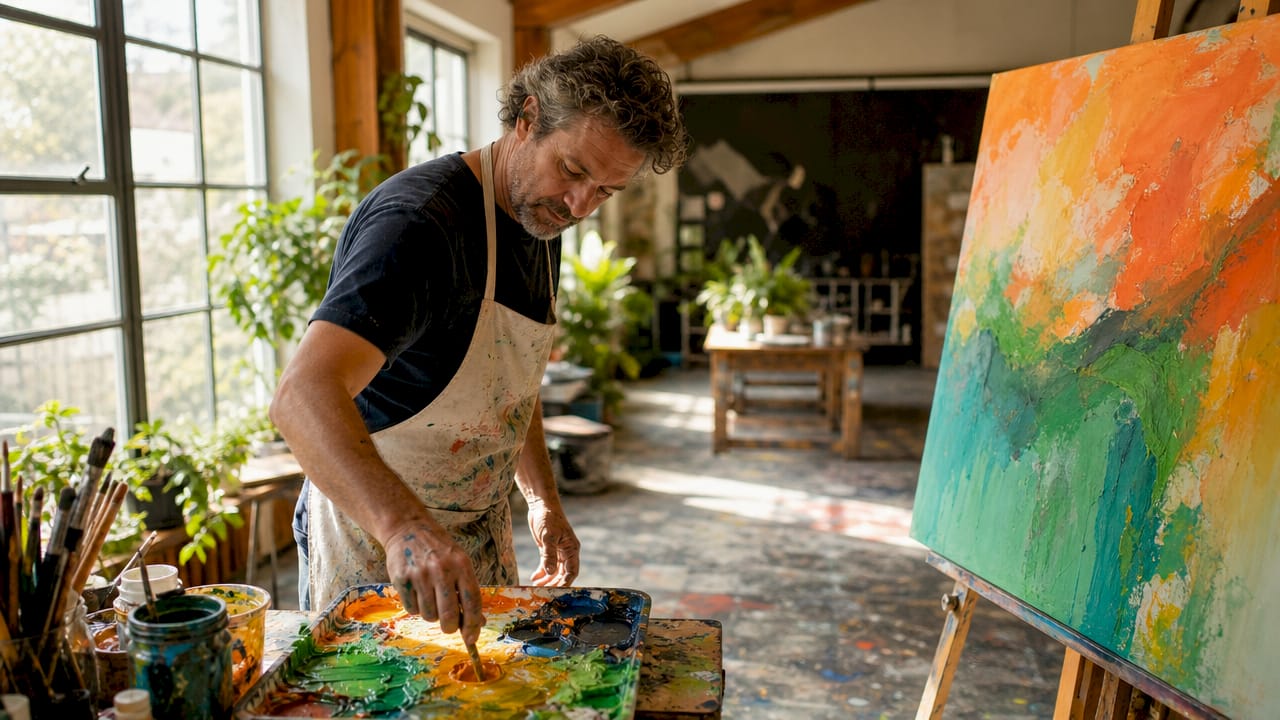
The “post-medium condition” is the term critics and curators use to describe contemporary art’s fluid relationship with materials. Artists now prioritize ideas over medium specificity, moving interchangeably between digital video, performance, installation, painting, and text depending on what best serves the concept. This is a direct departure from the modernist tradition, where mastery of a single medium (oil painting, bronze sculpture, printmaking) defined an artist’s identity and market value.
The shift plays out in four observable ways in current practice:
- Medium as tool, not identity. An artist might produce a video installation, a printed textile, and a live performance as parts of the same project. The medium is chosen for its communicative power, not its prestige.
- Internet culture as influence and material. Post-medium artists absorb the speed and fragmentation of online experience into their work. Images are repurposed, formats are remixed, and the boundary between digital and physical dissolves.
- Exhibition formats expand. Galleries now routinely present works that include live performance components, augmented reality layers, or participatory elements alongside traditional objects. The white cube is no longer sufficient.
- Collection and valuation become complex. When an artwork exists across multiple formats simultaneously, questions of ownership, authenticity, and reproduction become genuinely difficult. Collectors and institutions are still developing frameworks to address this.
The 2026 Venice Biennale made this shift impossible to ignore. Over 90% of participating artists are living, and the majority presented works that crossed at least two distinct media. That statistic reflects a generational consensus: the post-medium condition is not a fringe experiment. It is the mainstream of serious contemporary practice.
Pro Tip: When analyzing a contemporary work, ask “why this medium?” before asking “what does it look like?” The choice of format is almost always part of the argument the artist is making.
What role do digital platforms and decentralized art economies play?
The financial architecture of the art world is being restructured from the ground up. Digital platforms enable artists to retain 85 to 95% of their sales commission, compared to roughly 50% through traditional galleries. That gap is not a minor operational detail. It determines whether an artist can sustain a practice without institutional support, and it is reshaping who gets to make art professionally.
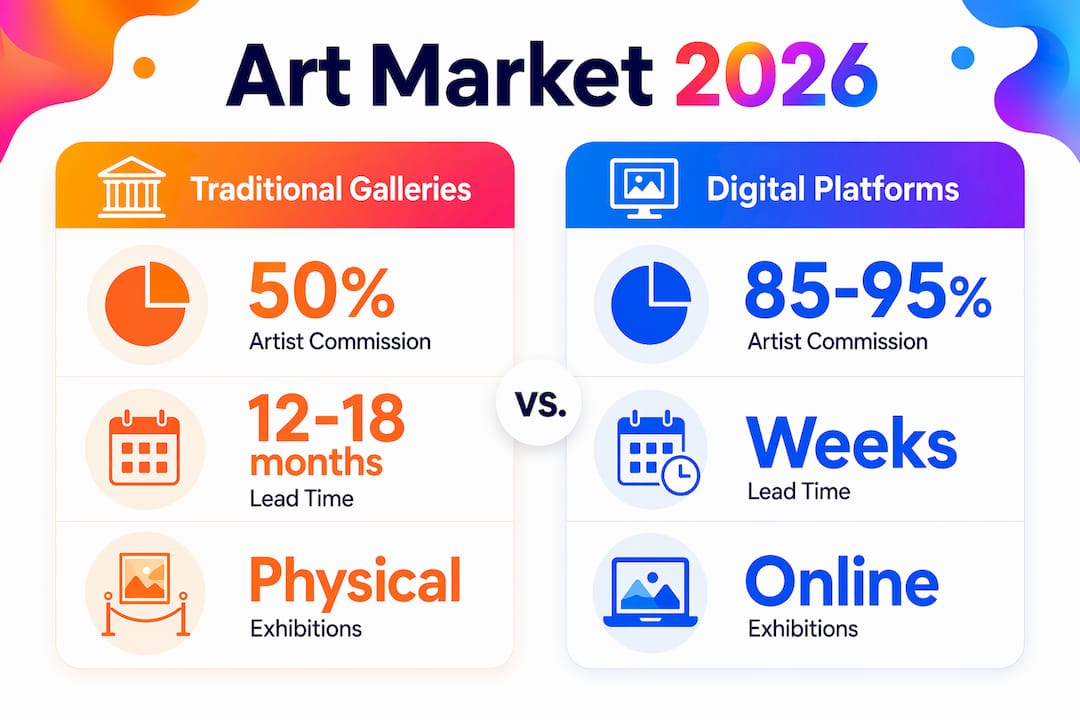
Exhibition timelines tell an equally stark story. Traditional gallery shows require 12 to 18 months of lead time for planning, production, and promotion. Digital exhibitions compress that window to 1 to 3 months, giving artists faster market entry and the ability to respond to cultural moments in near real time.
| Factor | Traditional galleries | Digital platforms |
|---|---|---|
| Artist commission | ~50% | 85–95% |
| Exhibition timeline | 12–18 months | 1–3 months |
| Audience reach | Local/regional | Global |
| Curation control | Gallery-led | Artist-led or community-led |
The rise of NFTs and decentralized autonomous organizations (DAOs) adds another layer. Digital art and NFTs redefine ownership and authenticity within contemporary ecosystems, enabling artists to embed royalties directly into smart contracts so they earn a percentage every time a work resells. DAOs introduce community voting into curation decisions, shifting power away from individual gatekeepers toward collective audiences.
The practical implications for art enthusiasts and collectors are significant:
- Digital platforms give access to emerging artists who would never appear in a major commercial gallery.
- NFT provenance records create verifiable ownership histories that paper certificates cannot match.
- The global art market reached $67.8 billion in 2025, with digital sales accounting for a growing share of that total.
- 70% of emerging artists now prioritize digital platforms over galleries, meaning the most interesting new work often appears online first.
How to distinguish and appreciate contemporary art styles
Contemporary art is defined by its engagement with the political and cultural discourse of its historical moment, not simply by when it was made or what it looks like. That distinction matters because it explains why two works made in the same year can feel completely different in intent and why a painting from 1985 might be more “contemporary” in spirit than a digital installation from 2020.
Several identifying features separate contemporary art styles from their modernist predecessors. Unconventional materials are a reliable signal: concrete, industrial waste, human hair, pharmaceutical packaging, and living organisms have all appeared in major museum exhibitions. The choice of material is rarely arbitrary. It carries meaning about labor, ecology, the body, or consumer culture. A second marker is the explicit presence of social or political critique. Contemporary art’s identity focus and political engagement represent the clearest evolution from modernism’s preoccupation with form.
Common misconceptions trip up even experienced viewers. The most persistent is that contemporary art is deliberately obscure or elitist. Most works that feel inaccessible become legible once you understand the artist’s stated intent, the exhibition context, and the cultural references being invoked. Reading the wall text is not cheating. It is the intended starting point.
For students and collectors approaching these works practically, three habits accelerate understanding. First, research the artist’s broader body of work before forming a judgment about a single piece. Second, treat the exhibition space itself as part of the work. Where something is shown, and alongside what, shapes its meaning. Third, follow modern art decor conversations outside gallery walls, because the way contemporary art moves into domestic and commercial spaces reveals which ideas have genuine cultural traction.
Key takeaways
Defining modern art trends in 2026 requires separating historical modernism from living contemporary practice, where concept, context, and digital access now drive the field.
| Point | Details |
|---|---|
| Modern vs. contemporary | Modern art (1860s–1970s) prioritized form; contemporary art (1970s–present) centers on concept and social critique. |
| Systems Art dominates | The 2026 Whitney Biennial confirms Systems Art as the leading conceptual framework, visualizing invisible social and political structures. |
| Post-medium condition | Artists now move fluidly across media, choosing format based on conceptual need rather than medium mastery. |
| Digital economics shift power | Artists on digital platforms retain 85–95% commission versus ~50% in traditional galleries, fundamentally changing who can sustain a practice. |
| Context unlocks meaning | Contemporary art is defined by engagement with its historical moment, not appearance alone. Reading intent is the core interpretive skill. |
Why the boundaries we draw around art matter more than we admit
I have spent years watching people walk past works that would genuinely change how they see the world, simply because the label said “contemporary art” and that phrase carries a weight of assumed difficulty. The honest truth is that the confusion between modern and contemporary art is not a vocabulary problem. It is a framing problem. When we call something “modern,” we imply it is still current. When it is actually a historical category ending in 1970, that word misleads people into thinking they understand what they are looking at.
What strikes me most about the current moment is how the post-medium condition and the rise of digital platforms are doing something that decades of critical theory could not: they are forcing the art world to justify itself to a broader audience. When an artist can sell directly to a collector in Seoul or São Paulo without a gallery intermediary, the institutional gatekeeping that made contemporary art feel exclusive starts to dissolve. That is genuinely significant.
The trends worth watching most closely are not the ones generating auction records. They are the ones showing up in DAO-curated exhibitions and artist-run digital spaces, where the work is being made without permission from established institutions. Systems Art and Post-Colonial Post-Conceptualism are not just aesthetic preferences. They are arguments about who gets to define reality. Paying attention to those arguments, whether you are a student, a collector, or someone who just wants art that transforms a living room, is the most useful thing you can do right now.
— Shlomo
Bring current art movements into your space with Colormelt
The movements shaping contemporary art in 2026, from Systems Art’s bold visual structures to Post-Internet Art’s vibrant digital energy, translate directly into the kind of wall art that makes a space feel alive and considered.
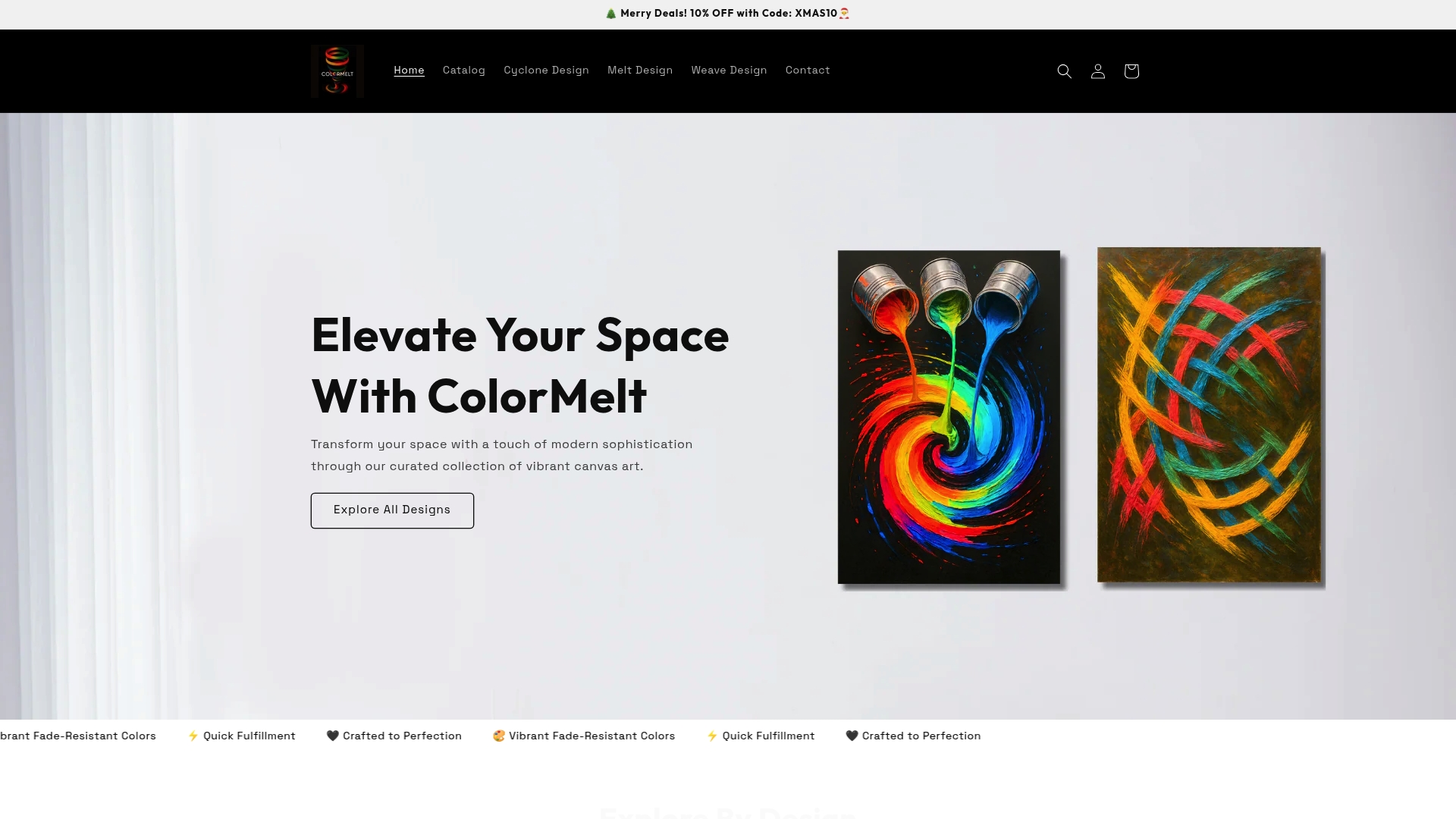
Colormelt’s wall art collection captures exactly this spirit: abstract forms, cyclone patterns, and weave designs that carry the conceptual energy of current trends in artistic expression without requiring a gallery membership to access. Every piece uses fade-resistant inks and quality materials built to last. Whether you are furnishing a studio, a living room, or a workspace, Colormelt offers curated prints that reflect the diversity and confidence of contemporary art today. Browse the collection and find the piece that speaks to your space.
FAQ
What is the difference between modern and contemporary art?
Modern art refers to work made roughly between the 1860s and 1970s, emphasizing formal experimentation and innovation. Contemporary art covers work made from 1970 onward, defined by conceptual depth, social commentary, and engagement with current political and cultural discourse.
What is Systems Art and why does it matter now?
Systems Art visualizes invisible social, political, and ecological structures to provoke critical thinking rather than passive viewing. It has been the dominant conceptual framework in major biennials, including the 2026 Whitney Biennial, for over a decade.
What does “post-medium condition” mean in contemporary art?
The post-medium condition describes how artists today choose their medium based on the idea they want to communicate, moving fluidly between digital, performance, installation, and traditional formats rather than specializing in one.
How do digital platforms change the art market for emerging artists?
Digital platforms allow artists to retain 85 to 95% of sales commissions compared to roughly 50% through traditional galleries, and they compress exhibition timelines from 12 to 18 months down to 1 to 3 months.
How can I tell if an artwork is genuinely contemporary?
Contemporary art is recognized by its engagement with the political or cultural issues of its historical moment, not solely by its date or appearance. Context, intent, and the artist’s stated framework matter more than visual style alone.