
What Is Contemporary Decor? A Homeowner's Guide
Contemporary decor is one of the most misunderstood terms in interior design. Ask ten people what it means and you’ll get ten different answers, ranging from “sleek and cold” to “whatever’s trending on Instagram right now.” Neither is quite right. Understanding what is contemporary decor actually means separates homeowners who create genuinely livable, stylish spaces from those who end up with something that feels dated or sterile within a year. This guide cuts through the confusion, walks you through the real characteristics of contemporary decor, shows how it differs from modern style, and gives you practical tools to apply it in your own home.
Table of Contents
- Key takeaways
- What is contemporary decor, really?
- Contemporary vs. modern: the real difference
- How to choose contemporary decor for your home
- Examples of contemporary style in real spaces
- My honest take on contemporary decor
- Bring your contemporary space to life with Colormelt
- FAQ
Key takeaways
| Point | Details |
|---|---|
| Contemporary is not fixed | Contemporary design reflects the current moment, not a specific historical period like modernism. |
| Warm minimalism defines 2026 | Organic textures, natural materials, and layered comfort have replaced stark minimalism as the defining trend. |
| Modern and contemporary differ | Modern refers to a 1920s–1970s design era; contemporary is fluid and evolves with the times. |
| The 60-30-10 rule helps balance color | Use 60% neutral, 30% secondary tones, and 10% bold accents for a cohesive contemporary palette. |
| Personalization is the point | Filtering trends through your own lifestyle and comfort needs is what makes contemporary design succeed. |
What is contemporary decor, really?
Contemporary design is fluid and ever-evolving, always reflecting the style of the present moment rather than adhering to a fixed historical period. That single fact explains nearly every misconception people have about it.
The 2026 version of contemporary decor looks noticeably different from its 2010 counterpart, and that’s not a flaw. It’s the whole point. Right now, core contemporary features include open layouts, generous natural light, clean silhouettes, neutral base palettes punctuated by bold accent colors, and furniture that prioritizes function without sacrificing visual appeal.
The warm minimalism shift
What separates 2026’s version of contemporary from the cold, gallery-like interiors of a decade ago is a deliberate move toward warmth. The 2026 trend pushes contemporary design toward what designers are calling “warm minimalism,” where raw wood, wool, stone, layered textiles, and sustainable materials create tactile richness without cluttering the space. Ornamentation is still stripped away, but varied materials like bouclé, linen, and leather do the work of adding depth and preventing that sterile showroom feeling.
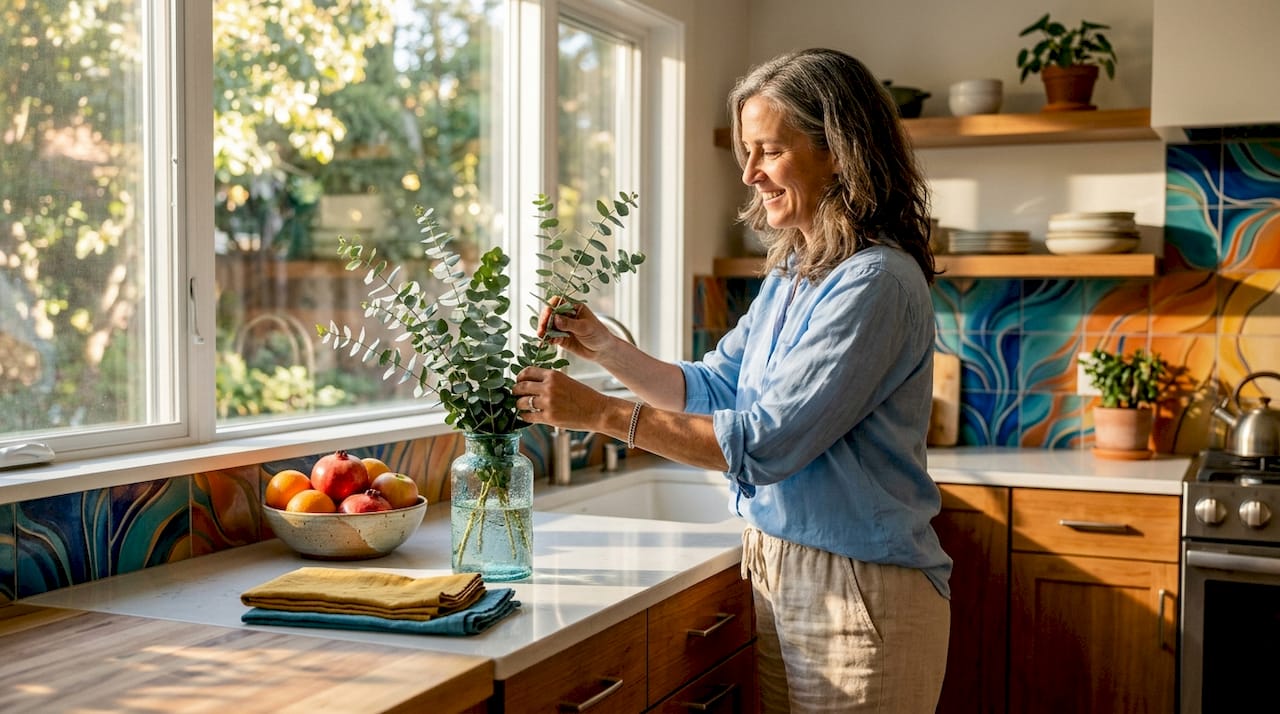
Think of a living room with a poured concrete coffee table paired with a cream bouclé sofa and a chunky wool throw. Every element is clean and deliberate, yet the room feels genuinely warm and lived-in. That’s contemporary design working as intended.
Here are the defining characteristics of contemporary decor in 2026:
- Open, airy layouts that maximize natural light and create visual flow between spaces
- Neutral base palettes built from whites, warm grays, and soft beiges, punctuated with deep greens, terracotta, or navy as accent colors
- Functional furniture with clean lines and, increasingly, curvilinear forms that soften geometric strictness
- Organic materials including raw wood, stone surfaces, and natural fiber textiles
- Statement pieces like sculptural pendant lighting or a single oversized canvas that anchor the room
- Sustainable and eco-conscious materials that reflect a broader cultural shift toward responsible living
Pro Tip: Don’t buy every piece at once. Contemporary spaces benefit from being built gradually, because each new piece should feel intentional. A room assembled over six months almost always beats one furnished in a single weekend shopping trip.
Warm minimalism and sustainability have effectively replaced the stark, cold minimalism that defined early 2010s interiors, and this shift is more than aesthetic. It reflects a cultural demand for spaces that support emotional well-being alongside visual clarity.
Contemporary vs. modern: the real difference
This comparison trips up homeowners more than any other design concept. The words get used interchangeably, but they describe genuinely different things.
Modern design refers to a specific historical movement, roughly spanning the 1920s through the 1970s. It grew from the Bauhaus school and Scandinavian design philosophy, championing “form follows function,” strict geometric lines, flat surfaces, and a deliberately limited material palette, typically wood, chrome, and leather in muted tones. It’s a finished chapter in design history.
Contemporary design has no fixed endpoint. It describes whatever is happening in design right now, and right now that includes curvilinear forms and eclectic material mixes that a strict modernist would never have approved of.
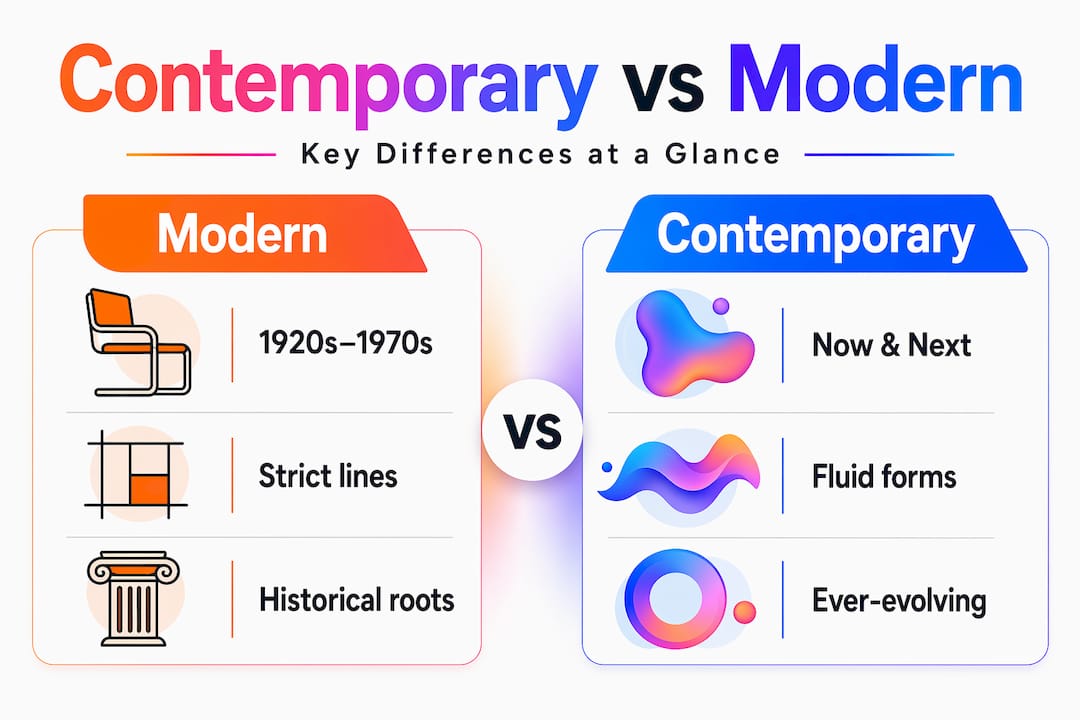
| Feature | Modern design | Contemporary design |
|---|---|---|
| Time period | 1920s–1970s | Present moment, always evolving |
| Lines | Strictly geometric and horizontal | Clean lines plus curvilinear softness |
| Color palette | Earth tones, warm neutrals, muted colors | Neutral base with bold accent colors |
| Materials | Wood, chrome, leather | Wood, stone, wool, bouclé, recycled materials |
| Ornamentation | Minimal, form-driven | Minimal, but with sculptural focal points |
| Technology | Not applicable | Smart home integration, subtle and functional |
The “modern contemporary” approach you’ll often see in design magazines is a deliberate hybrid. It takes modern design’s structural simplicity and clean geometry and layers in contemporary warmth through textiles, organic materials, and personalized touches. Combining modern structure with contemporary warmth creates spaces that feel both sophisticated and genuinely livable.
Pro Tip: If you love mid-century modern furniture, you don’t have to abandon it to achieve a contemporary feel. Pair those clean-lined pieces with a richly textured rug, organic pottery, and updated lighting. The contrast is exactly what makes contemporary spaces interesting.
Knowing this difference matters practically because it shapes every purchasing decision you make. Understanding whether you’re drawn to the historical discipline of modernism or the fluid expressiveness of contemporary style helps you explore modern decor trends without getting lost in conflicting aesthetics.
How to choose contemporary decor for your home
Getting contemporary decor right comes down to a handful of decisions made in the right order. Here’s the practical sequence:
-
Establish your neutral foundation first. Apply the 60-30-10 color ratio: 60% of the room’s color should be your dominant neutral, covering walls and large furniture. The remaining 30% goes to secondary tones in textiles, curtains, and drapery. The final 10% is your bold accent, delivered through art, ceramics, or throw pillows. This ratio keeps the room cohesive without feeling monotonous.
-
Layer your materials deliberately. Choose at least three different textures for any given room. A wool rug, a linen sofa, and a raw wood side table already give you visual richness without a single decorative object. This is how you avoid the “bare showroom” problem that plagues many first attempts at contemporary decorating.
-
Choose one or two statement pieces and build around them. A sculptural lighting fixture or wall art creates an intentional focal point that anchors the entire space. Everything else should complement it rather than compete with it.
-
Integrate technology subtly. Smart home technology in contemporary spaces works best when it’s invisible: hidden charging stations, flush-mounted speakers, and lighting systems controlled by simple apps rather than cluttered remotes and visible wires.
-
Edit ruthlessly before adding more. The most common mistake is treating contemporary as a permission slip to accumulate stylish objects. It is not. Each new piece should earn its place by serving a function, adding texture, or creating visual interest. If it does none of those things, it doesn’t belong.
Pro Tip: Before buying new pieces, photograph your room and study the image. The camera reveals clutter and visual imbalance that your eyes naturally edit out when you’re standing in the space. It’s one of the fastest diagnostic tools available to any homeowner.
True contemporary design filters trends through individualized needs for comfort and usability rather than chasing whatever is new. That mindset is what separates spaces that stay fresh for years from rooms that feel outdated the moment the next trend cycle begins. For more guidance on pulling a cohesive look together, the Colormelt blog has a thorough breakdown on styling modern decor with warmth in mind.
Examples of contemporary style in real spaces
Seeing the principles in action makes them far easier to apply. Consider a few realistic scenarios:
-
Living room: Warm gray walls serve as the neutral base. A low-profile sectional sofa in a textured oatmeal fabric sits opposite a raw wood media console. An oversized abstract canvas provides the bold focal point and introduces color. A rattan pendant light adds organic texture overhead, while a layered rug grounds the seating area. Every element is clean, but the room reads as warm and personal.
-
Bedroom: White walls, linen bedding in a soft sage, and a solid walnut bed frame create a quiet foundation. A single sculptural table lamp and a ceramic vase with dried botanicals serve as the only decorative objects. The room breathes, and 3D metal wall art above the headboard adds shadow play that shifts throughout the day as the light changes.
-
Home office: A clean-lined desk in white and ash wood sits beneath a wall-mounted shelf with no visible brackets. The single art piece on the opposite wall is a bold abstract print that introduces color without pattern complexity. A trailing pothos adds the biophilic touch that connects the space to natural elements, a design move that defines contemporary interiors in 2026.
-
Kitchen: Matte white cabinetry with integrated handles, a honed marble countertop, and open shelves displaying a small collection of ceramic vessels and one wooden cutting board. The materials carry all the visual interest; there is nothing superfluous on display.
What all four rooms share is intentionality. Each object was chosen for a reason, and the spaces have room to breathe. That is the hallmark of sophisticated contemporary design: contrast, texture, and deliberate focal points that make the whole room feel considered.
My honest take on contemporary decor
I’ve looked at a lot of interiors, and the pattern I keep coming back to is this: the rooms that feel genuinely contemporary, not just stylishly photographed but actually good to be in, are never the ones that followed a trend to the letter.
The homeowners who end up with spaces they love are the ones who used contemporary design as a framework, not a rulebook. They understood the principles, they chose quality materials over quantity, and then they added the things that actually matter to them. A grandmother’s ceramic bowl on a minimalist shelf. A stack of well-worn books beside a clean-lined sofa. Those details don’t violate contemporary design. They complete it.
What I’ve found genuinely frustrating is how often “contemporary” gets used as a shorthand for “remove everything personal.” That’s not contemporary design. That’s just emptiness. Adaptable palettes and materials that evolve with your life and your light are what actually make a space timeless.
My strongest recommendation: stop treating your home as a style project and start treating it as a living environment. Contemporary design, done well, gives you a structure flexible enough to grow with you. That’s worth far more than any specific trend.
— Shlomo
Bring your contemporary space to life with Colormelt
The right wall art can do more for a contemporary interior than almost any other single purchase. It introduces color, creates a focal point, and adds the kind of visual energy that pulls a neutral room together without overcrowding it.
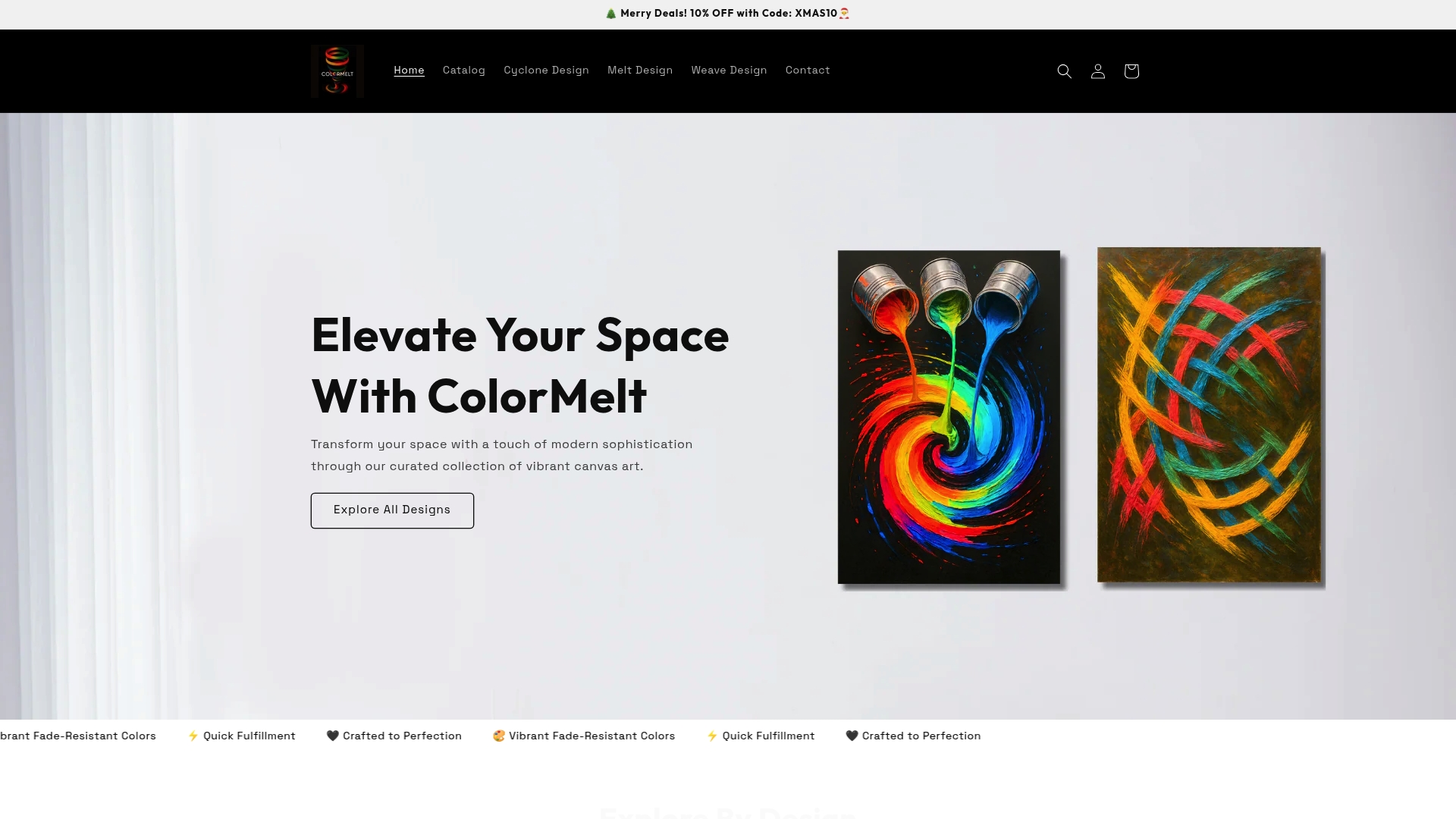
Colormelt’s curated wall art collection is designed with exactly this in mind. Every piece is printed with fade-resistant inks on quality substrates, so the vibrancy you see on screen is the vibrancy you live with for years. If you want something with real tactile presence, the weave design wall hanging delivers sculptural depth that changes with natural light, exactly the kind of statement piece contemporary spaces are built around. For a bolder color moment, the Cyclone design brings layered movement and warmth that fits beautifully into the 2026 warm minimalism aesthetic. Browse Colormelt and find the piece your walls have been waiting for.
FAQ
What is the difference between contemporary and modern decor?
Modern decor refers to a historical design movement from the 1920s through the 1970s, defined by strict geometry and limited materials. Contemporary decor describes the style of the current moment and is always evolving.
What are the main characteristics of contemporary decor?
Contemporary decor features open layouts, neutral color palettes with bold accents, functional furniture with clean or curvilinear lines, organic materials like wood and wool, and deliberate statement pieces that anchor the space.
Is contemporary decor the same as minimalism?
Not exactly. Contemporary decor in 2026 leans toward warm minimalism, which layers textures and organic materials to create comfort and depth. It avoids clutter but is not the cold, stark look associated with strict minimalism.
How do I start decorating in a contemporary style?
Start by establishing a neutral base using the 60-30-10 color rule, then layer at least three different textures, choose one statement piece as your focal point, and edit carefully before adding more objects to the room.
Can contemporary decor work in a small apartment?
Absolutely. The emphasis on open layouts, light, and intentional placement makes contemporary design particularly well suited to smaller spaces, where every object needs to earn its place and visual clutter is especially costly.