
How to Style Modern Decor for a Warm, Cohesive Home
Modern decor looks effortless in design magazines but can feel frustratingly cold or impersonal when you try it at home. The problem isn’t the style itself. It’s that most people learn how to style modern decor by copying the aesthetic without understanding the principles underneath it. Clean lines and neutral palettes only get you halfway there. The other half is knowing how to layer warmth, texture, and personality without tipping into clutter. This guide breaks that process down into practical steps any homeowner or renter can follow, starting from the floor up.
Table of Contents
- Key takeaways
- How to style modern decor: the core principles
- Color and texture: keeping neutrals alive
- Furniture selection and layout for livable modern spaces
- Accessorizing modern spaces with art, lighting, and curated objects
- Solving the most common modern decor problems
- My honest take on making modern decor feel like home
- Transform your space with Colormelt wall art
- FAQ
Key takeaways
| Point | Details |
|---|---|
| Start with clean-lined foundations | Choose furniture and architectural elements with simple silhouettes to set a modern base. |
| Use neutrals as a canvas | Build your palette with neutral tones, then add color through pillows, art, and small accents. |
| Layer textures for warmth | Mix refined and organic materials like stone, linen, and wood to prevent a cold or flat feel. |
| Hang art at the right height | Center wall art between 57 and 60 inches from the floor for a polished, gallery-like result. |
| Edit accessories ruthlessly | Fewer, more intentional pieces read as modern and curated rather than sparse or boring. |
How to style modern decor: the core principles
Before you buy a single piece of furniture or repaint a wall, you need to understand what modern decor actually is. People often confuse it with minimalism, but modern art style is rooted in clean silhouettes, thoughtful materials, and enough visual breathing room so spaces feel neither cluttered nor cold. It’s a discipline, not just a look.
The foundation of any modern interior starts with the bones of the room. That means furniture and architectural details with straight, clean profiles. Think sofas with low, flat backs. Coffee tables with geometric frames. Shelving that sits flush against the wall. Ornate carvings, heavy scrollwork, and fussy details have no place here.
Here’s what you need to get the foundation right:
- Choose furniture with straight or gently curved silhouettes. Avoid overly decorative legs, tufted patterns, or busy upholstery.
- Protect the spatial flow. Modern interiors breathe. Leave clear pathways between pieces and resist the urge to fill every corner.
- Invest in quality materials. Exposed wood, brushed metal, stone, and natural fiber textiles all read as intentional and modern.
- Keep the floor visible. Furniture raised on legs instead of sitting flat on the floor opens up the room visually.
Pro Tip: If you’re renting and can’t change your architecture, use large-format art and floor-length curtains hung close to the ceiling to create the illusion of height and structure without touching the walls permanently.
Color and texture: keeping neutrals alive
The most common mistake in decorating modern spaces is using a neutral palette without understanding how to activate it. Neutrals are not boring by nature. They’re boring when they’re flat. Beige walls, a beige sofa, and beige curtains with no variation in texture or contrast create a room that reads as unfinished rather than refined.
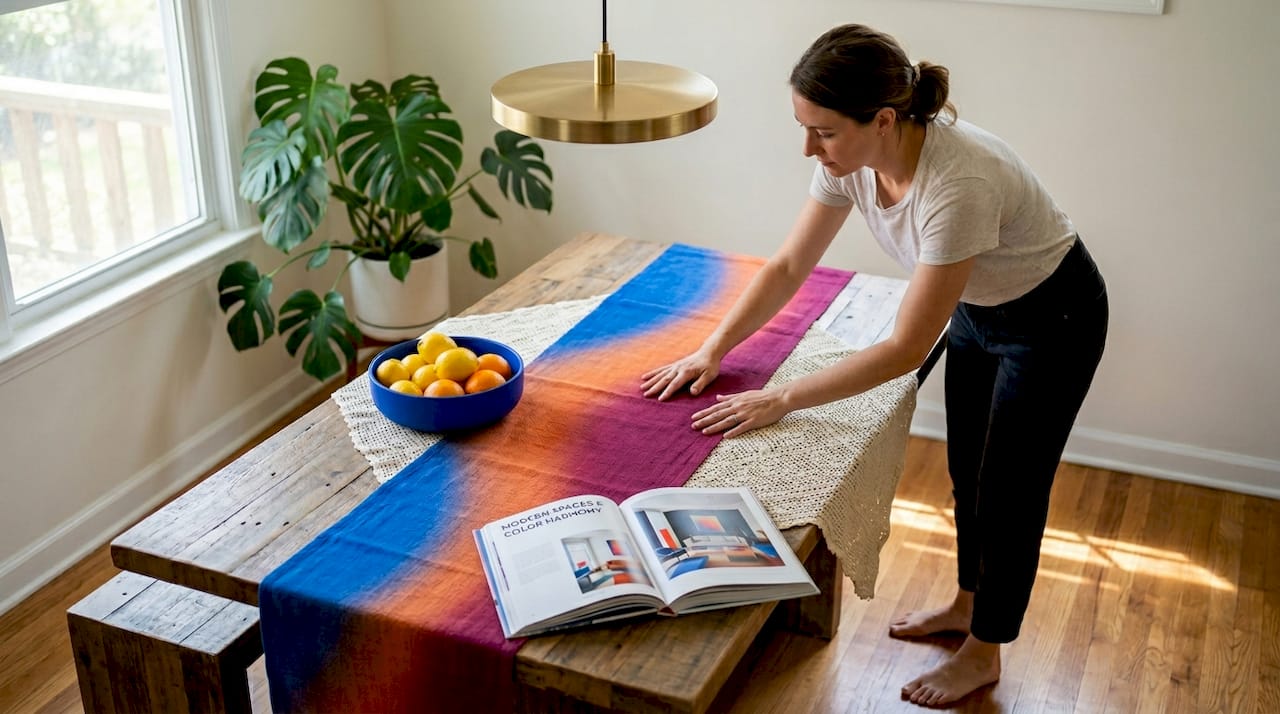
The answer is layering. Neutral rooms gain depth by pairing rough, organic textures with smooth, refined ones. A plaster-finish wall reads beautifully against a tightly woven wool throw. A polished concrete floor becomes interesting when anchored by a chunky jute rug. The contrast is doing the visual work that color would do in a different style of room.
Here are materials worth layering in a neutral modern space:
- Wood in warm, mid-tone finishes (walnut, oak) grounds a room with natural warmth
- Linen and cotton textiles for softness on sofas, beds, and windows
- Leather accents on chairs or poufs for texture that also ages beautifully
- Stone surfaces on coffee tables or kitchen counters for weight and permanence
- Woven textiles as wall hangings or area rugs to break up hard, flat surfaces
When you want color, keep it in the accessories. A deep terracotta cushion, a forest green ceramic vase, a bold piece of colorful wall art — these are your accent colors. They punch without overpowering because the neutral base gives them space to breathe.
Pro Tip: Lighting is texture too. Swap a bare overhead bulb for a sculptural pendant in warm white light. The shift in shadow and warmth across your surfaces can change how an entire room feels.
Furniture selection and layout for livable modern spaces
Styling contemporary interiors isn’t only about what furniture you pick. It’s about how those pieces relate to each other and to the room. A beautifully designed chair placed in the wrong spot becomes invisible. A mediocre sofa arranged with intention becomes the anchor of a space.
Follow these steps when approaching your furniture layout:
- Pick one anchor piece per room. This is typically the sofa in a living room or the bed in a bedroom. Everything else should serve and support it.
- Check your scale. Oversized furniture in a small room creates visual noise. Undersized furniture in a large room makes the space feel empty and unresolved. Measure before you buy.
- Arrange seating for conversation. Seating within roughly 8 feet of each other creates the sense of intimacy and comfort that modern spaces can otherwise lack. Pull your sofa away from the wall. Angle chairs toward the center.
- Create clear pathways. You should be able to walk through any room without turning sideways or stepping around obstacles. If you can’t, something needs to move or go.
- Avoid pushing furniture against every wall. This is an instinct many people have, but it actually makes rooms feel smaller and more disconnected.
For renters who can’t make structural changes, furniture layout is your most powerful tool. A well-arranged room with mid-range furniture outperforms a poorly arranged room with expensive pieces every time. If you’re looking for guidance on selecting pieces that work for bespoke modern interiors, furniture studio resources can offer a useful starting point for understanding what makes a piece genuinely modern versus simply trendy.
Accessorizing modern spaces with art, lighting, and curated objects
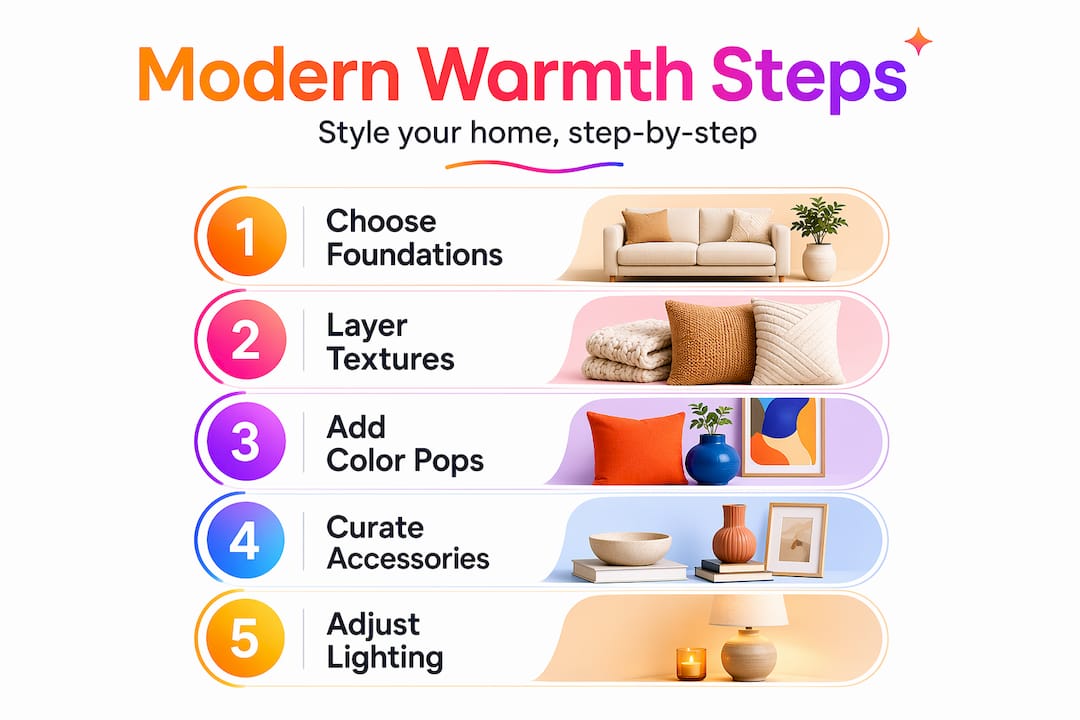
This is where a modern space goes from looking like a furniture showroom to feeling like an actual home. Accessories are not an afterthought in modern decor. They are the personality layer, and when chosen and placed well, they make the difference between a space that impresses and one that actually feels good to live in.
Hanging wall art the right way
One of the most common decorating errors is hanging art too high. Center your artwork between 57 and 60 inches from the floor, which aligns with average eye level and creates a gallery-like feel. When hanging art above furniture, place it 6 to 8 inches above the piece so it reads as connected rather than floating. You can learn more about getting this right with Colormelt’s guide on styling canvas art for modern interiors.
For examples of modern art styles that work in contemporary homes, look at abstract forms, geometric prints, and large-format photography. These formats echo the clean shapes and deliberate simplicity that define the style without adding visual noise.
Accessory placement at a glance
| Surface | What works well | What to avoid |
|---|---|---|
| Coffee table | Tray, stacked books, organic element | Random small objects with no relationship |
| Shelves | Grouped objects by material or color | Overcrowding with collectibles or sentimental clutter |
| Side tables | Lamp, one small object | Too many items competing for attention |
| Walls | Large-format or curated group of prints | Too many small frames scattered without order |
A well-styled coffee table follows a designer formula: one decorative tray, at least one stack of design or art books, one organic element like a branch or stone, and one or two additional decor pieces that connect to the room’s color story. That’s it. The restraint is intentional.
Layering textiles as art in a modern space also adds narrative depth. A woven wall hanging, a macramé piece, or a textile print can add warmth and dimension that a flat canvas print cannot.
Solving the most common modern decor problems
Even well-intentioned modern spaces can go sideways. Here’s how to diagnose and fix the three most common issues.
The room feels cold. This is usually a texture problem. If your surfaces are all smooth and reflective (glass, polished metal, high-gloss paint), there’s nothing to absorb the visual chill. Balancing structure with softness means introducing layered textiles, warm-toned wood, and lower-kelvin lighting to counteract that sterile feeling.
The room feels bare but also somehow cluttered. This contradiction is common and usually comes down to having neither the right pieces nor the right placement. Bare walls next to a surface covered in small objects creates visual tension. The fix is redistribution. Move objects from cluttered surfaces to bare walls. Group them intentionally.
Everything looks the same tone. Beige-on-beige flatness is real, and the solution is contrast. You don’t need bold color. A dark wood element against a light wall, a black frame against white linen, a textured cushion against a smooth sofa. Contrast is not drama. It’s clarity.
Pro Tip: When editing your accessories, remove everything from a surface and only put back what you genuinely like and what adds something visually. If you can’t explain why a piece is there, it probably shouldn’t be.
My honest take on making modern decor feel like home
I’ve worked with enough modern interiors to say this with confidence: the coldness that people associate with modern design is almost never the style’s fault. It’s the result of prioritizing appearance over livability.
What I’ve found is that the spaces people love most are the ones where the owners broke a rule or two. They kept the grandmother’s quilt folded on the modern linen sofa. They mixed a vintage side table with a contemporary chair. They hung a piece of art that meant something to them rather than one that matched the wall. Those are the rooms that feel warm and real.
The goal of styling a modern space should never be to impress guests. It should be to create a place you genuinely want to spend time in. The principles of modern home decor give you a framework, not a cage. Use clean lines as your structure, then personalize from there.
The designers I’ve seen do this best treat the modern foundation as a starting point, not an end state. You’re allowed to layer in warmth. You’re allowed to mix eras. A perfectly styled room that feels like a hotel lobby is not a success.
— Shlomo
Transform your space with Colormelt wall art
If you’ve got the furniture placed and the palette set, the right wall art is often the piece that makes everything click. Colormelt offers a curated collection of modern wall art built for exactly this moment: abstract prints, weave designs, and cyclone motifs in fade-resistant, gallery-quality formats that work with neutral palettes without disappearing into them.
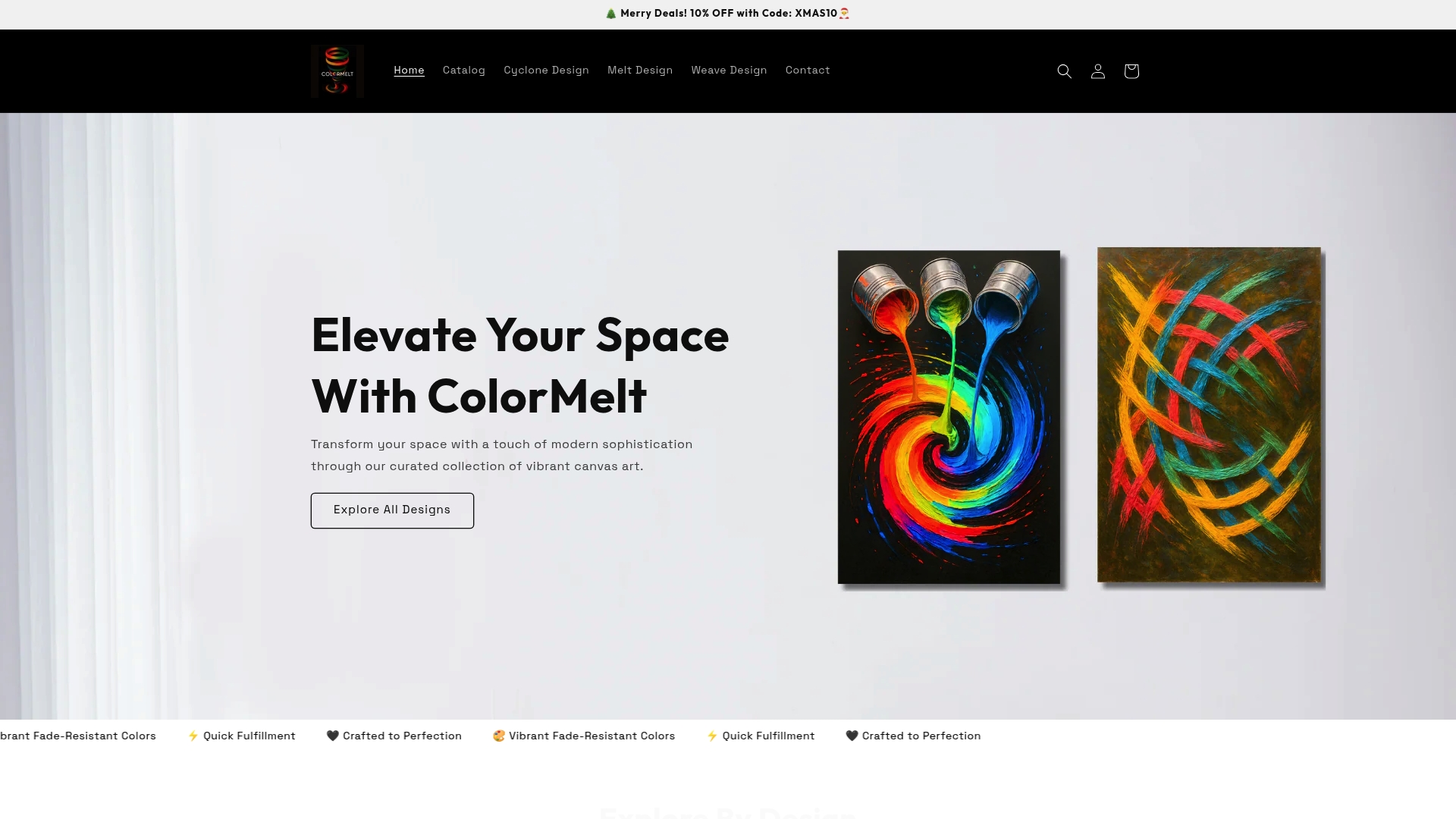
Whether you’re filling a large statement wall or building a curated grouping above a sofa, Colormelt’s pieces are designed to add color, contrast, and texture in equal measure. The collection includes canvas prints, acrylic prints, and wood prints, so you can match the finish to your existing materials. Explore the full range and find the piece that turns your modern space from styled to genuinely yours.
FAQ
What is modern decor style exactly?
Modern decor refers to a design style rooted in clean lines, minimal ornamentation, and a focus on materials and function. It draws from early-to-mid 20th century design movements and favors open spaces, neutral palettes, and quality craftsmanship over decorative excess.
What are the best colors for modern decor?
Neutral palettes including white, gray, warm beige, and black are the foundation of most modern interiors. Color is introduced through accessories and art rather than large surfaces, keeping the space cohesive while still having visual interest.
How do you hang art in a modern space?
Center your wall art at 57 to 60 inches from the floor, which aligns with average eye level. When placing art above furniture, keep it 6 to 8 inches above the piece so it reads as connected rather than floating on its own.
How do you keep a modern room from feeling cold?
Layer textures using warm materials like wood, linen, leather, and woven textiles. Add warm-toned lighting and introduce soft elements like throw blankets and cushions to offset the clean, hard surfaces that can make modern spaces feel sterile.
What is the difference between modern and contemporary decor?
Modern decor refers specifically to a design period and its associated aesthetic principles. Contemporary decor describes what is current right now and evolves with trends. The two overlap significantly but modern remains more fixed in its principles while contemporary is more fluid.