
How to Style Canvas Art for a Modern, Stunning Home
Most people hang wall art and immediately sense something is off. Maybe the piece looks tiny above the sofa. Maybe it feels too high, too crowded, or just plain wrong. The challenge is rarely about taste. It’s almost always about proportion, placement, and material quality, and these are the exact things most style guides gloss over. This article walks you through every step, from picking the right canvas material to troubleshooting common arrangement mistakes, using real designer benchmarks and 2026 trends to help you get it right the first time.
Table of Contents
- Choosing the ideal canvas materials and frames for modern style
- Sizing and placement: Achieving visual balance in your space
- Matching art styles and colors to your room décor
- Troubleshooting and avoiding common canvas art styling mistakes
- Why embracing trends is less important than trusting your eye
- Shop modern canvas art for your home
- Frequently asked questions
Key Takeaways
| Point | Details |
|---|---|
| Proportion is key | Use the 2/3 furniture width rule for visually balanced canvas placement. |
| Modern materials matter | Poly-cotton canvas and floating frames create a sleek contemporary effect. |
| Oversized trends | Large single canvases deliver impact and are trending in 2026. |
| Match art to décor | Coordinate art style and color with your room for cohesive results. |
| Personal taste over rules | Designer standards are flexible—trust your eye to finish your look. |
Choosing the ideal canvas materials and frames for modern style
The foundation of any great wall art display is the canvas itself. You can choose the most stunning print in the world, but if the material sags, yellows, or warps within a year, the whole effect collapses. Understanding what separates quality canvas from cheap alternatives saves you money and frustration.
Canvas material types compared
| Material | Texture | Durability | Best for |
|---|---|---|---|
| Poly-cotton blend | Smooth to moderate | Excellent | Modern, vivid prints |
| 100% cotton | Rich texture | Good | Traditional and fine art |
| Synthetic blend | Very smooth | Moderate | Budget-friendly options |
The most important specification to check before buying is the GSM rating. GSM stands for grams per square meter, and it measures how dense and heavy the canvas is. Poly-cotton blend canvas at 380+ GSM ensures the material stays taut over time, resists sagging, and holds color more consistently than lighter weaves. Anything below 300 GSM tends to develop soft spots or warping, especially in rooms with fluctuating humidity.
Frame choice is equally critical for a modern look. Here’s a quick breakdown of what to consider:
- Floating frames sit slightly away from the canvas edge, creating a visible shadow gap that makes the piece look dimensional and high-end
- Traditional frames wrap around the canvas and sit flush, giving a more classic, gallery-style presentation
- Frameless (gallery wrap) prints fold the image around the edges and hang with no frame at all, offering a very clean, minimalist look
- Thin metal frames work well in industrial or Scandinavian-modern interiors
Floating frames have become the modern default in 2026 for very practical reasons. They emphasize the art rather than the border, create depth without bulk, and work across almost every contemporary interior style. If you’re exploring multi-panel canvas benefits, floating frames on each panel create a cohesive, gallery-worthy look without the panels feeling disconnected.
Pro Tip: Always ask for the GSM rating and the frame depth before purchasing canvas art online. A frame depth of 1.5 to 2 inches combined with a poly-cotton blend canvas at 380+ GSM is the gold standard for modern displays. If the seller can’t tell you these specs, that’s a red flag worth heeding.
Sizing and placement: Achieving visual balance in your space
Choosing the wrong size is the single most common reason wall art looks awkward in a room. A piece that’s too small disappears on a large wall. A piece that’s too large can feel oppressive and dominate the room in a negative way. The good news is that designers have established simple, reliable rules you can apply in any space.
The 2/3 proportion rule
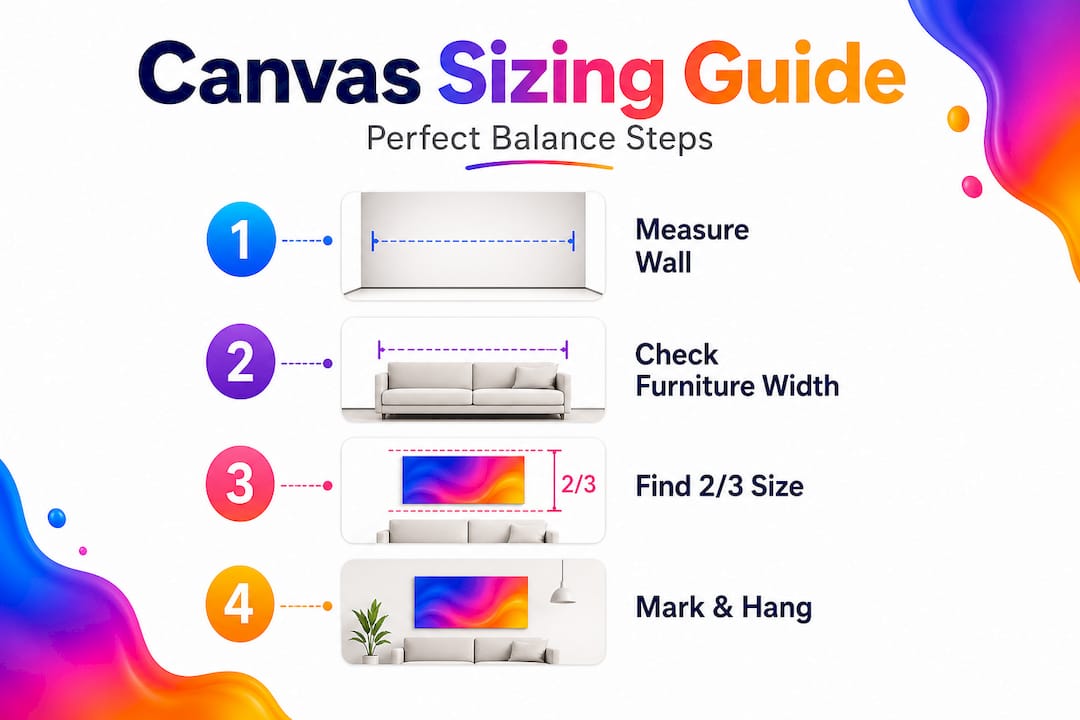
Canvas art should span 2/3 to 3/4 of the furniture width below it, such as a sofa or console table. So if your sofa is 84 inches wide, your art or art arrangement should be roughly 56 to 63 inches wide. This ratio is not arbitrary. It creates a visual anchor that ties the art to the furniture below it, preventing the floating, disconnected look that plagues most amateur installations.
Hanging height matters just as much as size
Designer standards consistently place 57 inches as the ideal center height for wall art, which represents the average human eye level. Most people hang art too high, especially above sofas and beds, which creates an awkward gap and makes the space feel disjointed. Always measure to the center of the artwork, not to the top or bottom edge.
Step-by-step placement process
- Measure the width of the furniture piece the art will hang above
- Multiply that measurement by 0.67 to find the minimum ideal art width
- Mark the 57-inch height point on your wall with a pencil
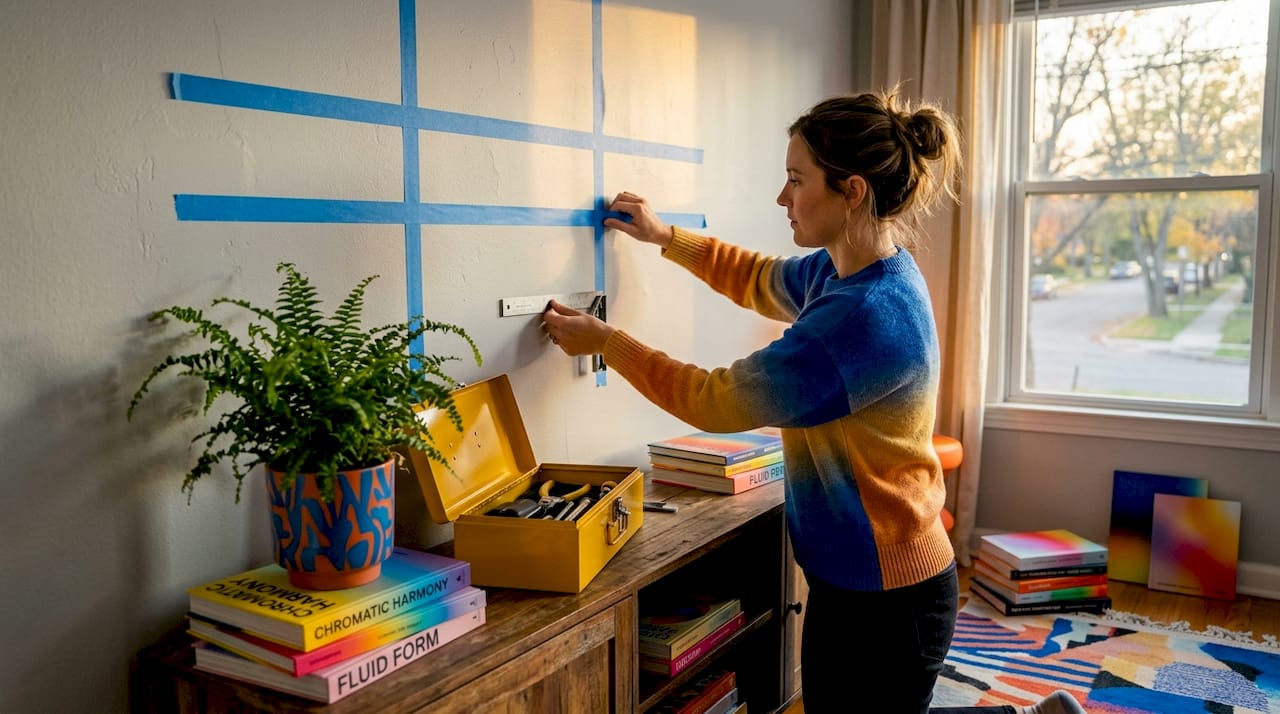
- Cut painter’s tape to represent the artwork’s dimensions and stick it to the wall
- Step back and evaluate the visual weight from across the room
- Adjust the tape before committing a single nail to the wall
Gallery wall sizing comparison
| Approach | Spacing | Overall width rule | Best use |
|---|---|---|---|
| Strict proportion (2/3) | 6 to 8 inches | Exact furniture match | Formal living rooms |
| Flexible modern (60-75%) | 6 to 12 inches | Slightly oversized | Open-plan spaces |
| Oversized single piece | N/A | 75% or more | Bold, minimal rooms |
“Treat a gallery wall grouping as a single piece of art. The overall arrangement should obey the same 2/3 proportion rule as a solo canvas, with the spacing between pieces kept consistent for a unified look.” — Designer consensus across multiple interior styling sources
Pro Tip: Use painter’s tape on the wall before hanging anything. It costs nothing and gives you a completely accurate preview of scale and placement. Most people are surprised to discover the size they thought was right is actually too small once they see it taped up.
For more detailed styling tips for canvas arrangements, especially in open-plan spaces, consider how furniture groupings create invisible zones on the wall. Each zone deserves its own art anchor. When personalizing your space, remember that the furniture-to-art relationship is the starting point. A living room transformation often comes down to one well-placed, correctly sized piece rather than a dozen small ones.
Matching art styles and colors to your room décor
Getting the size right is half the battle. The other half is making sure the art actually belongs in the room, stylistically and colorwise. This is where a lot of people second-guess themselves, but the logic is actually quite straightforward once you break it down.
Modern style categories for canvas art
- Minimalist: Clean lines, neutral tones, negative space. Works in any contemporary room and never feels overdone
- Abstract: Fluid shapes, layered colors, emotional energy. A strong choice for living rooms and creative workspaces
- Geometric: Precise patterns, bold contrasts, mathematical clarity. Excellent in modern kitchens, offices, and dining rooms
- Vibrant/expressive: High-saturation color fields, dynamic movement. Ideal as a focal point in rooms with neutral furniture
- Floral and organic: Soft curves and natural references. Adds warmth to bedrooms and reading nooks without going traditional
Matching art style and color to your existing room is the most reliable way to achieve a cohesive look. For modern interiors, abstract and geometric prints tend to work best because they create visual interest without narrative content, meaning they don’t compete with the function of the room or the personal items already in it.
Lighting changes everything. Natural light softens texture and makes colors appear warmer and more muted. Accent lighting, like a directional spotlight or a picture light mounted above the canvas, enhances depth and brings out the shadows in abstract or textural designs. If your art hangs on a north-facing wall with very little natural light, go with a higher-contrast piece. Soft, muted prints tend to disappear in low-light conditions.
Understanding what defines modern wall art helps you shop with confidence. You want pieces with a clear visual identity. Check out contemporary canvas options if you’re not sure where to start. For practical guidance on pulling a room together, modern decor tips cover the full picture from color coordination to accent pairings. If you want something with bold, structured color, acrylic triptych prints are a great example of how vibrant weave patterns look in a real interior context.
Pro Tip: Use contrasting colors between your canvas art and the surrounding wall for a statement look. If your wall is white or light gray, a canvas with rich navy, terracotta, or deep green reads powerfully. If your walls are already bold, choose art with soft, neutral tones to balance the energy of the room.
Troubleshooting and avoiding common canvas art styling mistakes
Even with the best intentions and the right measurements, certain mistakes show up repeatedly. Knowing what to watch for helps you catch problems early and fix them before they become permanent.
The most common canvas art mistakes
- Hanging art too high, especially above beds and sofas, which creates a visual gap that feels unfinished
- Choosing pieces that are too small for the wall or furniture below them
- Using low-GSM canvas that sags or warps within months
- Overcrowding walls with too many pieces, creating visual noise rather than visual interest
- Ignoring the room’s scale entirely and picking art based on price or immediate attraction alone
- Mixing too many conflicting styles without a unifying thread of color or shape
The “cluttered wall syndrome” is a real issue in 2026 design conversations. Oversized single canvases are trending because they deliver immediate, powerful impact without the planning complexity of a gallery wall. One well-chosen large piece often does more for a room than five smaller ones competing for attention.
There is also some productive disagreement in the design world worth knowing about. Some designers favor 60 to 75% furniture width rather than the strict 2/3 rule, and gap spacing recommendations for gallery walls vary from 6 to 10 inches up to 6 to 12 inches depending on piece size and room scale. The takeaway is not that the rules are wrong. It’s that they give you a range to work within, and your eye is the final judge.
The best canvas print troubleshooting advice is simple: when in doubt, go bigger and go fewer. Most rooms benefit from one anchor piece done right rather than multiple smaller pieces done approximately.
Pro Tip: If you’re unsure between two sizes, choose the larger one. Art almost always looks smaller on the wall than it does in a store, online preview, or on the floor of your room. The larger piece will almost certainly feel more intentional and impactful once it’s hung.
Why embracing trends is less important than trusting your eye
Here’s something most styling guides won’t tell you: the 2/3 rule, the 57-inch height standard, the floating frame preference, all of these are starting points, not laws. They exist because they work for most people in most rooms. But rooms are not average, and neither are you.
Designers themselves disagree on specifics. Gap spacing recommendations vary. Some prefer oversized single canvases at 75% of furniture width. Others build tightly packed gallery walls that break nearly every spacing rule and still look extraordinary. The difference is not that one approach is right and the other is wrong. It’s that each designer is responding to a specific space, a specific client, and a specific emotional intention.
Modern art is ultimately about personality. The rules give you confidence to begin. But once you’ve measured, taped, and stepped back to evaluate, the most important question is: does this feel right to you? A piece that breaks the 2/3 rule but gives you a genuine emotional response every time you walk past it is doing exactly what art is supposed to do. Rules cannot replicate that.
The best approach is to learn the standards, apply them as a baseline, and then adjust based on what you actually see. Tape before you hang. Step back from across the room. Look at the space in both natural and artificial light. Respond to what you notice rather than what you measured. Personalizing your canvas style is a process, not a single decision, and it gets more intuitive every time you do it.
Shop modern canvas art for your home
Ready to put these ideas into action? ColorMelt’s wall art collection is built on exactly the quality standards this guide covers: fade-resistant colors, 380+ GSM canvas materials, and modern designs that range from bold abstract cyclone patterns to intricate woven compositions.
Browse the full shop wall art collection to find pieces sized and styled for contemporary interiors. If you want a striking focal point with real visual energy, the abstract cyclone design delivers exactly the oversized impact that 2026 trends favor. For something with rich texture and vibrant color movement, the vibrant weave art canvas print pairs beautifully with both minimalist and expressive interiors. Use the proportion and placement principles from this guide to choose your size with confidence.
Frequently asked questions
Are floating frames really better than standard frames for modern canvas art?
Floating frames have become the modern standard in 2026 because they show off the canvas edges, create a minimalist look, and add perceived depth that standard frames don’t offer.
What’s the best way to decide canvas size for my wall?
Use the proportion rule: canvas art should span 2/3 to 3/4 of the width of the furniture below it, then use painter’s tape to visualize the size before committing to a purchase.
What modern styles and color palettes work best for canvas art?
Abstract and geometric prints with colors that either coordinate with or contrast your existing décor create the most cohesive and contemporary effect, especially when lighting is taken into account.
Is oversized canvas art or smaller groupings more popular in 2026?
Oversized single canvases are trending strongly in 2026 because one impactful piece delivers cleaner visual results than multiple small pieces competing for attention.
How far apart should I space pieces in a gallery wall?
Space canvas prints 2 to 6 inches apart for medium to large pieces, and treat the full grouping as one piece when applying the 2/3 proportion rule to the overall arrangement width.