
Canvas art defined: Enhance your space with modern wall designs
Canvas art is far more than a colorful print stapled to a frame and hung on a wall. The difference between a piece that genuinely transforms a room and one that simply fills empty space comes down to preparation, materials, and technique. Whether you’re curating a cozy living room gallery or giving a home office some personality, understanding what separates great canvas art from forgettable decoration is the first step toward making choices you’ll love for years.
Table of Contents
- What is canvas art?
- Core canvas materials and why they matter
- Choosing modern canvas art for your space
- Common canvas art pitfalls and expert solutions
- A fresh perspective: What most décor guides miss about canvas art
- Find vibrant canvas art for your home
- Frequently asked questions
Key Takeaways
| Point | Details |
|---|---|
| Define canvas art | Canvas art uses stretched fabric, primed and painted or printed, to create impactful wall visuals. |
| Material matters | Choosing linen, cotton, and the right primer affects durability, look, and archival quality. |
| Modern style tips | Use glazed abstracts or vibrant prints to brighten high-traffic areas and personalize your space. |
| Avoid common mistakes | Priming, placement, and cleaning are key to preserving your canvas art’s beauty and longevity. |
| Expert advice enhances results | Professional materials and subtle techniques like glazing deliver richer, lasting décor. |
What is canvas art?
Canvas art has roots stretching back centuries, long before digital printing made it accessible to every home decorator. Originally, artists stretched woven fabric over wooden frames and applied layers of preparation before ever touching paint to surface. That same foundation still defines quality canvas work today, even as technology has expanded the possibilities dramatically.
At its core, canvas is a heavy-duty woven fabric, traditionally linen and later cotton, pulled tightly over a rigid wooden stretcher bar frame. Artists and printmakers use this taut surface to apply color, whether through hand painting, ink, or high-resolution printing. The weave of the fabric gives canvas its characteristic texture, that subtle surface depth you can almost feel by looking at it.
The shift from purely hand-painted works to modern printed canvas opened the medium to the mainstream. Today, printed canvas art uses UV-resistant archival inks applied directly to primed fabric, producing images with rich color depth and a texture that flat paper prints simply cannot match. This is a crucial distinction: even a modern print benefits from the same preparation principles that traditional painters used for centuries.
Main canvas art materials at a glance:
- Linen fabric (natural, fine weave, highly archival)
- Cotton duck fabric (affordable, widely available)
- Wooden stretcher bars (kiln-dried, stable)
- Gesso primer (acrylic or oil-based)
- Sizing agents like PVA glue or rabbit skin glue
- UV-resistant archival inks (for printed works)
Traditional canvas painting mechanics involve preparing the canvas with sizing to seal fibers, followed by priming with 2 to 4 coats of gesso applied thinly, dried, and sanded between layers for a smooth, non-absorbent surface. Those preparation layers are what give finished canvas art its visual pop and structural longevity.
| Feature | Traditional hand-painted canvas | Modern printed canvas |
|---|---|---|
| Surface texture | Rich, visible brushwork | Subtle fabric texture |
| Color application | Hand-applied paint layers | UV-resistant archival inks |
| Customization | Unique, one-of-a-kind | Reproducible, consistent |
| Durability | Depends on technique | Fade-resistant with quality inks |
| Cost | Higher (artist time) | Accessible, scalable |
| Preparation | Sizing + gesso required | Pre-primed by manufacturer |
“Canvas art is not just about what you see. It’s about the layers you don’t see, the preparation beneath the surface that determines whether a piece lasts ten years or a lifetime.”
For a deeper look at how modern techniques connect to traditional principles, our contemporary canvas guide covers the full spectrum of what defines quality canvas art today.
Core canvas materials and why they matter
The fabric you choose as the base for canvas art is not just a practical consideration; it shapes how light hits the surface, how colors appear, and how long the piece holds up under real living conditions.
Linen vs. cotton: the key differences
Linen is woven from flax fibers, giving it a finer, more consistent weave with greater tensile strength than cotton. It absorbs moisture and releases it more evenly, making it less susceptible to warping over time. Cotton duck canvas is more affordable and widely used in mass production, but it is slightly more prone to humidity-related sag and can break down faster when exposed to oil-based media without proper priming.
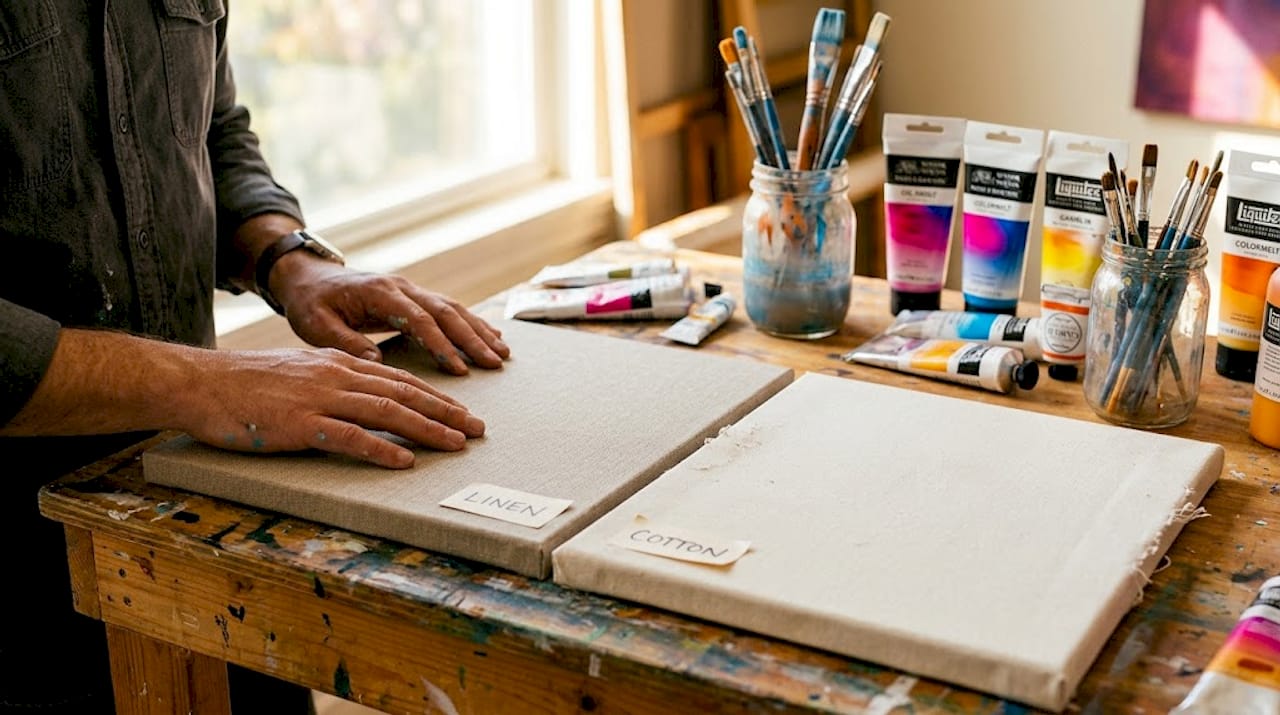
Linen canvas is more archival and finer weave than cotton; oil primers are preferred for oil paintings to prevent rot, while acrylic gesso is versatile but needs multiple coats to achieve a solid foundation. The “fat over lean” rule, applying thicker paint layers over thinner ones, prevents cracking by allowing underlying paint to dry before a more flexible upper layer is added.
| Property | Linen canvas | Cotton canvas |
|---|---|---|
| Weave consistency | Fine, uniform | Slightly irregular |
| Longevity | Excellent (archival) | Good (with proper care) |
| Texture | Subtle, smooth | More pronounced grain |
| Best for | Premium printed art, galleries | Everyday prints, high-volume |
| Price range | Higher | Budget-friendly |
| Humidity resistance | Superior | Moderate |
Common pitfalls in canvas preparation:
- Using raw, unprimed canvas that absorbs media unevenly
- Applying too few coats of gesso, leaving a porous surface
- Skipping the sanding step between gesso coats
- Ignoring humidity during both creation and display
- Choosing the wrong primer type for the medium being used
Pro Tip: When selecting printed canvas art for your home, ask whether the manufacturer uses pre-primed linen or cotton. Pre-primed linen typically yields sharper color reproduction and longer-lasting vibrancy, especially in rooms with natural light exposure.
Good canvas print styling tips always start with material awareness. Once you know what you’re working with, placement and care decisions become much easier.
Choosing modern canvas art for your space
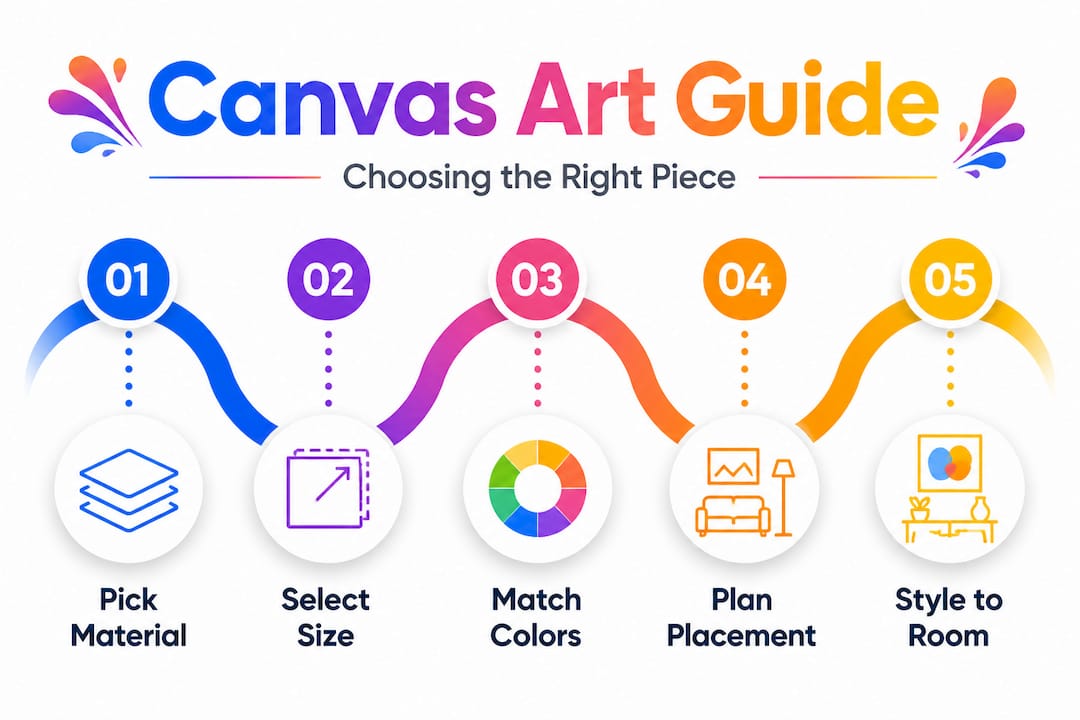
Selecting canvas art for your home is not just about picking a color you like. A piece that feels right in a store photo can look completely wrong on your actual wall if you haven’t thought through size, finish, and placement. Here’s a practical approach that removes the guesswork.
Step-by-step guide to choosing the right canvas art:
- Measure your wall space first. A good rule of thumb is that artwork should fill 60 to 75 percent of the available wall width. A 5-foot sofa calls for a canvas or grouping that spans roughly 3 to 4 feet.
- Match color temperature to the room’s light. Warm-toned art with ochres, reds, and golds thrives under warm lighting. Cool blues and greens work beautifully in naturally lit rooms facing north or east.
- Choose a finish that suits the room’s function. Matte finishes absorb light and reduce glare, making them ideal for bedrooms and reading nooks. Gloss or satin finishes make colors pop and work well in living rooms and dining areas.
- Consider subject matter relative to room mood. Abstract art with bold contrasts energizes home offices and creative spaces. Softer, organic patterns suit bedrooms and meditation areas.
- Check for UV-resistant and fade-resistant inks. This is non-negotiable for pieces placed near windows or in rooms with strong ambient light.
Prints excel in high-traffic areas due to durability without glass, meaning you can hang canvas art in hallways, kitchens, and children’s rooms without worrying about breakage or light reflection from protective glazing.
Pro Tip: Glazing, applying thin translucent layers of paint or medium over a dry base layer, is a technique that gives painted canvas a luminous, almost glowing quality. When you see canvas art that seems to have depth beyond its surface, glazing is often the reason. Look for printed pieces that replicate this layered quality through high-resolution gradient printing.
Placement by room type:
- Living room: Large-scale single canvas or multi-panel groupings above sofas or fireplaces create a bold focal point.
- Bedroom: Softer, lower-contrast pieces hung at eye level from the bed promote calm.
- Hallway: Vertical canvases or a staggered series make narrow spaces feel intentional and curated.
- Home office: High-energy abstract designs placed at eye level while seated keep creative momentum flowing.
For creative display ideas, multi-panel canvas print ideas offer layouts that work across room types and wall sizes. And if you’re thinking about layering art with other personal touches, personalizing home with art walks through how to create a cohesive, expressive interior without it feeling like a showroom.
Canvas art also requires minimal maintenance. Dust with a soft, dry microfiber cloth every few months. Keep pieces away from direct sun and high humidity. Avoid hanging near air conditioning vents, which can cause rapid temperature and humidity cycling that stresses the fabric.
Common canvas art pitfalls and expert solutions
Even the best canvas art can underperform if displayed or chosen incorrectly. These are the mistakes we see most often, and the fixes that actually work.
The most common pitfalls, and how to solve them:
- Using unprimed canvas: Raw canvas risks rot from oil absorption without priming. Always confirm that printed canvas art comes pre-primed from the manufacturer.
- Ignoring gesso color for luminosity: White gesso maximizes light reflection, making colors appear brighter and more vivid. Colored or black gesso creates dramatic atmosphere but reduces the overall brightness of the finished piece.
- Hanging in humid spaces: Bathrooms and laundry rooms are poor choices for canvas art. Humidity causes sagging, especially in cotton canvas that hasn’t been properly primed and stretched.
- Improper sizing of artwork: Pieces that are too small for a wall look like afterthoughts. Scale up, or group smaller pieces intentionally.
- Ignoring stretcher bar quality: Cheap, unseasoned wood warps over time, pulling the canvas unevenly and creating visible distortion.
“Humidity causes sagging in unprimed or poorly stretched canvas. A canvas that starts flat can develop visible waves and sag within months in the wrong environment, permanently affecting the appearance of the art.”
For a closer look at how stretching and fabric choice interact, our article on stretched canvas abstract wall decor illustrates how structural quality directly shapes the visual impact of bold, abstract designs.
The solution to most canvas pitfalls is not complicated: buy from sources that prioritize archival-grade materials, proper preparation, and fade-resistant printing. These elements are not marketing language. They are the actual difference between art that looks fresh five years from now and art that looks tired by next winter.
A fresh perspective: What most décor guides miss about canvas art
Most home decor advice focuses on trends: which colors are in this season, what sizes are popular, which motifs are appearing in design magazines. Very few guides talk about why certain canvas pieces feel alive while others feel flat, even when they’re the same subject and the same size.
The answer is almost always in the technical foundation. A canvas printed on high-quality pre-primed linen with archival inks and UV-protective coating will hold its vibrancy and texture in ways that a bargain print on flimsy cotton simply cannot. You feel this difference even without being able to articulate it. The image has weight. The colors have depth. The surface invites you to look closer.
Most decorators chase the right aesthetic while overlooking the right substrate. They’ll spend hours choosing between two color palettes and then buy whichever canvas is cheaper, undoing all that careful decision-making in one click. The investment in a quality piece is not just about price. It’s about how long that piece keeps giving back to the room.
We also think the glazing principle, adding translucent layers to create luminosity, is one of the most underrated ideas in modern canvas art. When you see a canvas that seems to glow from within, that effect is built into the preparation and layering, not just the image itself. Choosing printed canvas art that replicates this through layered ink application and a quality finish gives you that same visual richness without needing a hand-painted original.
Our modern canvas trends coverage returns to this idea often: the best-looking spaces combine visual boldness with material quality. Trends are a starting point, not an endpoint. The pieces that endure in a room are the ones built to last.
Find vibrant canvas art for your home
You’ve now got a solid foundation for understanding what makes canvas art genuinely excellent and how to choose pieces that will look as good in three years as they do the day you hang them.
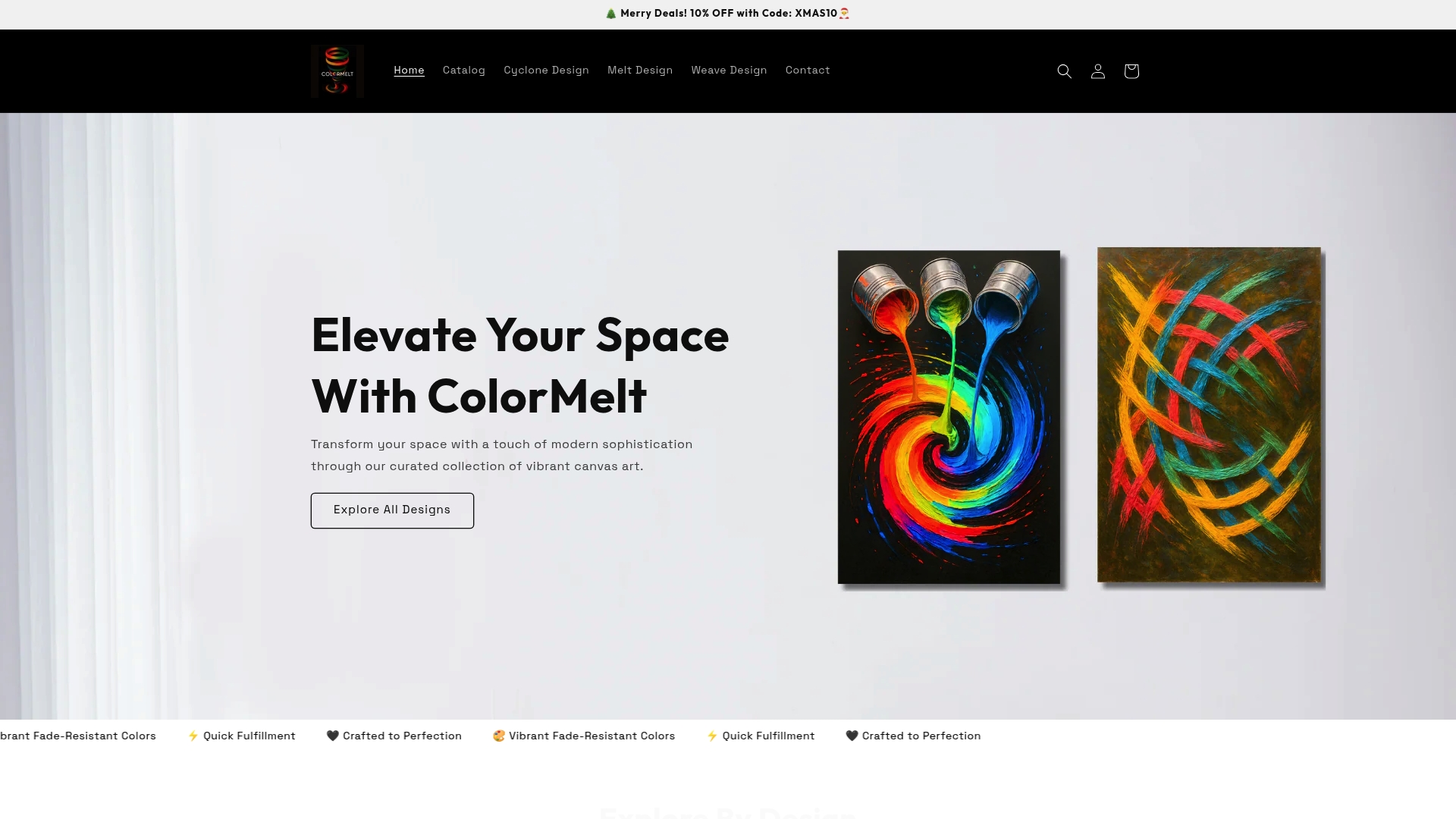
ColorMelt.shop brings all of this together in a curated collection built on exactly the principles covered here: fade-resistant archival inks, quality canvas preparation, and designs that balance bold visual energy with lasting craftsmanship. Browse the full wall art collection for pieces spanning abstract, cyclone, weave, and floral motifs. If you love textural depth and modern color contrasts, the creative wall hanging art in a weave design brings a sophisticated layered effect to any space. For something bolder, the abstract cyclone canvas print delivers dramatic movement and vibrancy that anchors a room instantly. Your next statement wall starts here.
Frequently asked questions
How is canvas art different from framed prints?
Canvas art is printed or painted directly on stretched fabric, offering natural texture and visual depth, while framed prints are typically flat paper behind glass. Canvas prints need no glass, making them ideal for high-traffic areas where durability matters.
What is the best material for canvas art?
Linen is the gold standard for longevity and fine detail because linen canvas is more archival and has a finer weave than cotton, though cotton is a practical, cost-effective option for everyday home use.
How do I keep canvas art from sagging?
Keep canvas art in a dry room and avoid hanging it in humid spaces like bathrooms. Humidity causes sagging in canvas that is unprimed or poorly stretched, so always choose properly prepared pieces.
Can I clean canvas art? How?
Gently dust canvas art with a soft brush or clean microfiber cloth every few months. Avoid water, chemical cleaners, or anything abrasive, as these can damage the ink layer and surface coating.
Is colored gesso a good choice for home decor art?
Colored gesso shifts the mood and luminosity of a piece significantly. White gesso maximizes light reflection, making colors appear vivid and bright, while black or toned gesso creates a more dramatic, moody effect that suits certain design styles perfectly.