

How to Style with Canvas Prints: Room-by-Room Guide
Canvas prints have a way of making or breaking a room’s personality, yet most people hang them without thinking twice about size, placement, or arrangement. If you’ve ever stepped back from a newly hung canvas and thought, “Something feels off,” you’re not alone. Knowing how to style with canvas prints correctly means understanding a few foundational rules about proportion, spacing, and room context. Get those right and you won’t just decorate your walls. You’ll create rooms that feel curated, intentional, and genuinely yours. This guide covers everything you need to go from guesswork to confidence.
Table of Contents
- Key takeaways
- How to style with canvas prints using size and placement rules
- Creative arrangement ideas that go beyond a single print
- Styling canvas prints room by room
- Installation tips that protect your walls and your art
- My honest take on what actually makes canvas prints work
- Find your next statement piece at Colormelt
- FAQ
Key takeaways
| Point | Details |
|---|---|
| Follow the two-thirds rule | Choose canvas width that spans roughly two-thirds of the furniture below it for visual balance. |
| Hang at eye level | Position the vertical center of your artwork at approximately 57 inches from the floor. |
| Test before you commit | Use paper templates or painter’s tape to map your layout before putting holes in the wall. |
| Match print to room function | Choose scale, orientation, and mood based on how the room is used and how much wall space you have. |
| Consistent spacing is everything | Keep 2 to 4 inches between pieces in a gallery wall to avoid a cluttered or disconnected look. |
How to style with canvas prints using size and placement rules
Before you think about color palettes or art styles, you need to get the proportions right. A beautiful print in the wrong size or the wrong position will always look awkward, no matter how stunning the artwork itself is.
The two-thirds rule for furniture-backed walls
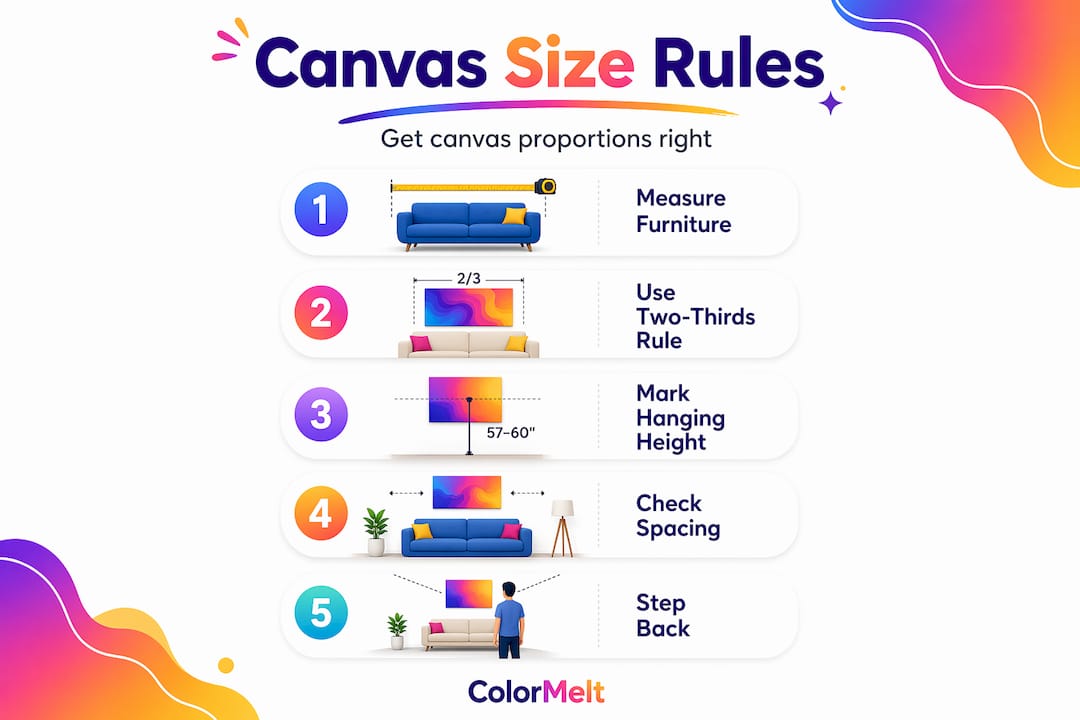
The most reliable starting point for decorating with canvas art is the two-thirds rule. A canvas spanning two-thirds of the width of the sofa, bed, or console table beneath it creates a relationship between the furniture and the art that feels balanced and deliberate. So if your sofa is 90 inches wide, you want a canvas or canvas arrangement that spans roughly 60 inches.
For vertical spacing, the gap above furniture should sit between 6 and 12 inches from the top of the furniture to the bottom of the canvas. Less than 6 inches feels cramped. More than 12 inches breaks the visual connection between the art and the piece it’s meant to anchor.
| Furniture width | Recommended canvas width | Ideal spacing above |
|---|---|---|
| 60 inches (sofa) | 40 inches | 6 to 12 inches |
| 72 inches (bed/headboard) | 48 inches | 6 to 12 inches |
| 36 inches (console table) | 24 inches | 6 to 10 inches |
Hanging height for standalone pieces
For canvas prints that aren’t anchored by furniture below, gallery standard positions the vertical center of the artwork at 57 inches from the floor. That aligns with the average adult eye level and creates a viewing experience that feels natural rather than strained.
For walls without furniture, you also want your artwork to fill the right proportion of the wall itself. A canvas or arrangement that covers 60 to 75 percent of the wall width prevents the piece from looking like a small stamp on a big blank surface. It also prevents a canvas that’s so wide it crowds the wall’s edges.
Pro Tip: Before drilling a single hole, cut paper to the exact size of your canvas and tape it to the wall. Step back, live with it for a day, and adjust as needed. This simple step saves you from filling and repainting holes.
Using paper templates or painter’s tape to visualize placement beforehand is one of the most underused tricks in home decorating. It takes 15 minutes and prevents hours of frustration.
Creative arrangement ideas that go beyond a single print
Once you understand basic placement, you can start thinking creatively about how to arrange multiple pieces or choose formats that create real visual impact.
Building a gallery wall that actually works
A gallery wall done well functions as a single large artwork, with a clear visual center and a cohesive feel. Done poorly, it looks like a random collection of things that didn’t fit anywhere else. The difference usually comes down to three factors: consistent spacing, a shared visual thread, and a deliberate anchor point.
Start by choosing one dominant piece, your largest canvas or most striking print, and position it at eye level as the center of the grouping. Build outward from there, keeping 2 to 4 inches between pieces throughout. That spacing feels professional and lets each piece breathe without creating visual gaps that break the grouping’s unity.
Here’s a step-by-step process for planning your gallery wall:
- Select a unifying theme, color palette, or art style across all pieces so the grouping tells one visual story.
- Lay all pieces on the floor in the arrangement you’re considering before touching the wall.
- Choose your anchor piece and determine where its center will sit at 57 inches on the wall.
- Use painter’s tape to map each piece’s position on the wall before hanging.
- Start hanging from the center anchor and work outward, checking level as you go.
- Step back after each addition to evaluate spacing and visual weight.
Pro Tip: Mix canvas prints with one or two framed photographs or prints for texture variety. Just keep the frames in a consistent metal or wood tone so the mix feels curated rather than accidental.
Multi-panel canvases and mixed formats
Multi-panel canvas sets are one of the best canvas print ideas for people who want visual drama without the complexity of a full gallery wall. A multi-panel canvas arrangement splits a single image or design across two, three, or five panels, creating depth and a sense of motion that a single canvas can’t replicate.
When mixing formats (canvases, framed art, and decorative objects), the key is restraint. Anchor the arrangement visually with your canvas prints, then add one or two complementary pieces. Going further tends to create visual noise rather than style.
Styling canvas prints room by room
Every room has different proportions, lighting, and function. The best canvas print ideas for your living room won’t necessarily work in your hallway or bathroom. Here’s how to think about incorporating canvas artwork in each space.
Living room: This is where large statement pieces shine. A wide horizontal canvas or multi-panel set over the sofa creates instant visual hierarchy. Stick to the two-thirds rule for width and let the piece command attention. Abstract prints with bold contrast work especially well in this setting because they spark conversation and hold up under prolonged viewing.
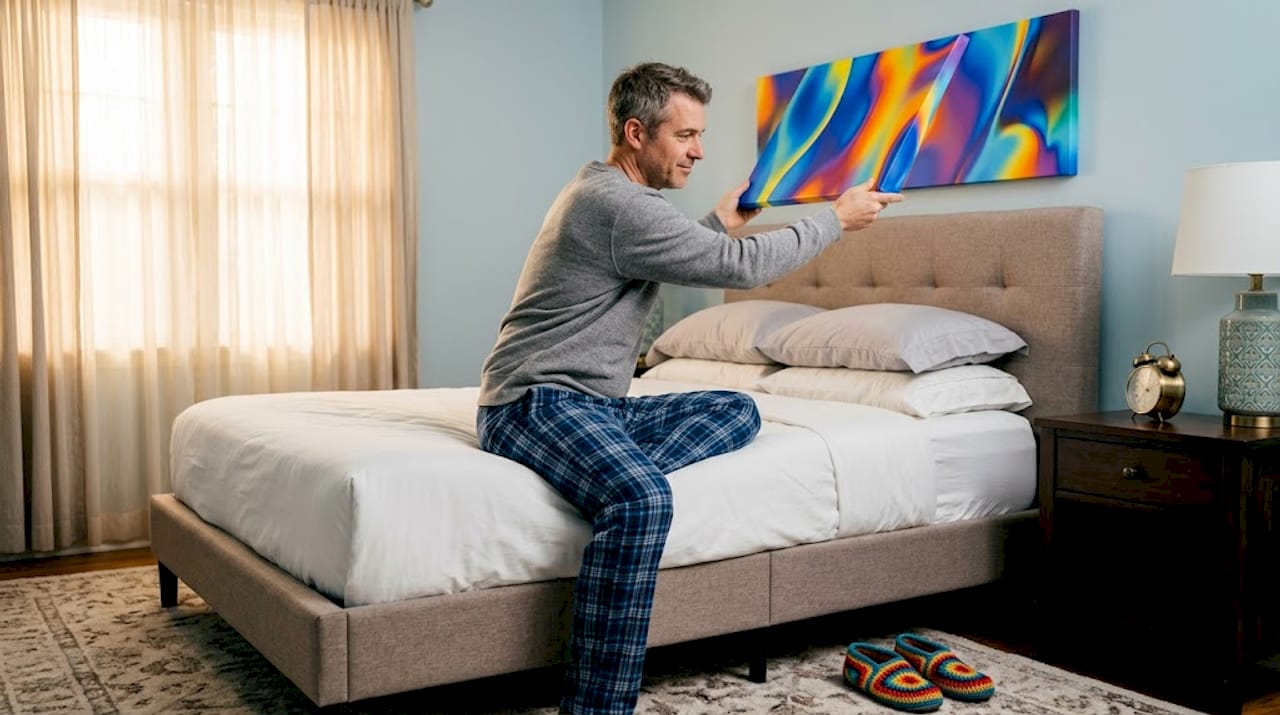
Bedroom: Over the bed is the prime canvas real estate in any bedroom. A large horizontal canvas centered above the headboard sets the tone for the entire room. Choose imagery and color that supports rest: softer palettes, organic shapes, or abstract florals work better here than high-energy geometric designs.
Hallways and entryways: Narrow walls call for a different approach. Vertical canvas prints elongate tight spaces and draw the eye upward, making hallways feel taller and less cramped. A series of small, vertically oriented canvases with consistent spacing along a hallway wall creates a gallery-style experience that transforms a transitional space into something worth pausing at.
Bathrooms: Canvas prints are suitable for bathrooms as long as they’re kept away from direct water contact and high humidity areas near showers. Position them on walls with good ventilation and reasonable distance from moisture sources. Canvas materials resist fading and wear, maintaining their vibrancy for years, but moisture exposure can compromise the frame and canvas over time.
Open-plan spaces: Use canvas prints to define visual zones. A large canvas anchored above a dining table, for example, signals that area as distinct from the adjacent living space. This creates psychological separation in rooms that lack physical walls, making the overall layout feel more organized and intentional.
Installation tips that protect your walls and your art
Getting the placement right is one thing. Getting it to stay right, safely and securely, is another.
- Match hardware to weight: Most standard canvas prints under 5 pounds hang safely on a picture hook rated for that weight. Larger, heavier pieces need wall anchors or should be secured into studs. When in doubt, locate a stud with a stud finder before committing.
- Use a level every time: Eyeballing it rarely works. A small bubble level takes 10 seconds and prevents the slow-creeping tilt that makes a room feel subtly off.
- Keep distance from heat sources: Position canvas prints at least 2 to 3 feet from fireplaces, radiators, and heating vents. Consistent heat exposure dries and warps canvas over time.
- Stay away from direct sunlight: Prolonged UV exposure fades even quality prints. If a wall gets direct afternoon sun, consider UV-filtering window film before hanging your canvas there.
- Clean gently: Dust canvas surfaces with a soft, dry microfiber cloth. Avoid chemical sprays or damp cloths, which can lift color and texture. A light dusting every few weeks keeps prints looking vivid.
Leave at least 12 inches above your canvas to the ceiling. This breathing room prevents the room from feeling compressed and gives the artwork proper visual context.
Pro Tip: For larger pieces, recruit a second person for hanging. One person holds the canvas at the intended position while the other steps back to check alignment and visual balance from the room’s natural vantage point.
My honest take on what actually makes canvas prints work
I’ve spent years watching people overthink art selection and underthink placement. Most of the time, the print itself isn’t the problem. A perfectly good canvas sitting two feet too high or sized too small for its wall will always look like an afterthought, regardless of how much was paid for it.
What I’ve found consistently is this: proportion and placement do more work than the art itself. When you style canvas art with the two-thirds rule in mind and hang it at the right height, even a simple abstract print feels considered and intentional.
The mistake I see most often isn’t poor taste. It’s hanging things too high. People seem to believe art should live near the ceiling rather than at eye level, and the result is a room that feels perpetually off without anyone being able to say why.
My other strong opinion: don’t wait until a room is “finished” to add canvas prints. Art isn’t a finishing touch. It’s a starting point. Choose a print you love, hang it at the right height and proportion, and let the rest of the room respond to it. Some of the best-designed rooms I’ve seen were built around one canvas that the owner couldn’t live without.
Experiment with arrangement, try multi-panel formats, build gallery walls slowly rather than all at once. Personal style confidence comes from action, not planning. Put something on the wall and see what happens.
— Shlomo
Find your next statement piece at Colormelt

If reading through these principles has you ready to rethink your walls, Colormelt has the prints worth building around. The wall art collection spans abstract, floral, weave, and cyclone designs built for modern spaces, each crafted with fade-resistant materials that hold their color for years. Whether you’re looking for a bold statement piece like the abstract Cyclone canvas or something vibrant and layered like the Weave design print, Colormelt ships quickly and delivers quality you can see from across the room. Browse the full collection and find the piece that makes your wall stop being a background.
FAQ
What is the two-thirds rule for canvas prints?
The two-thirds rule means your canvas width should span roughly 66 percent of the width of the furniture beneath it. For a 90-inch sofa, that means a canvas or arrangement approximately 60 inches wide.
How high should I hang a canvas print?
Position the vertical center of your canvas at approximately 57 inches from the floor. This aligns with average adult eye level and is the standard used in professional galleries.
What size canvas works best for a gallery wall?
Use one dominant piece as an anchor, then build around it with varied sizes. Keep consistent spacing of 2 to 4 inches between all pieces so the grouping reads as a unified arrangement rather than a scattered collection.
Can I put canvas prints in a bathroom?
Yes, canvas prints can work in bathrooms when placed on walls away from direct moisture, showers, and steam. Choose a well-ventilated wall and avoid positioning prints directly above sinks or tubs.
How do I choose between vertical and horizontal canvas orientation?
Use vertical canvases in narrow spaces like hallways and entryways to create height. Use horizontal canvases above wide furniture like sofas or beds where you need width to match the furniture proportions below.