
What Is a Wood Print? Your Complete Decor Guide
A wood print is an image printed directly onto a wooden surface, where the natural grain of the wood becomes part of the finished artwork. Unlike a canvas or paper print, the wood itself contributes texture, warmth, and a one-of-a-kind character that no two pieces share. Modern UV flatbed printing technology has made wood prints a serious option for home decor, producing photographic-quality results on materials like birch, maple, and bamboo. If you are researching what is a wood print and whether it belongs in your home, this guide covers everything from how they are made to how to display them well.
What is a wood print, and how does it differ from other art?
A wood print is defined as a photographic or graphic image applied directly to a wood panel using UV-curable ink technology. This is not the same as traditional woodblock printing, where an artist carves a relief image into wood and stamps it onto paper. Modern wood print art is a digital process. The image is sent to a UV flatbed printer, which deposits ink onto the wood surface and cures it instantly with ultraviolet light.
The result is a frameless, gallery-ready piece where the wood grain shows through lighter areas of the image. That grain is not a flaw. It is the defining feature. Every wood print is unique because no two pieces of wood share the same grain pattern. That built-in uniqueness is a major reason collectors and homeowners choose wood prints over mass-produced paper or canvas alternatives.
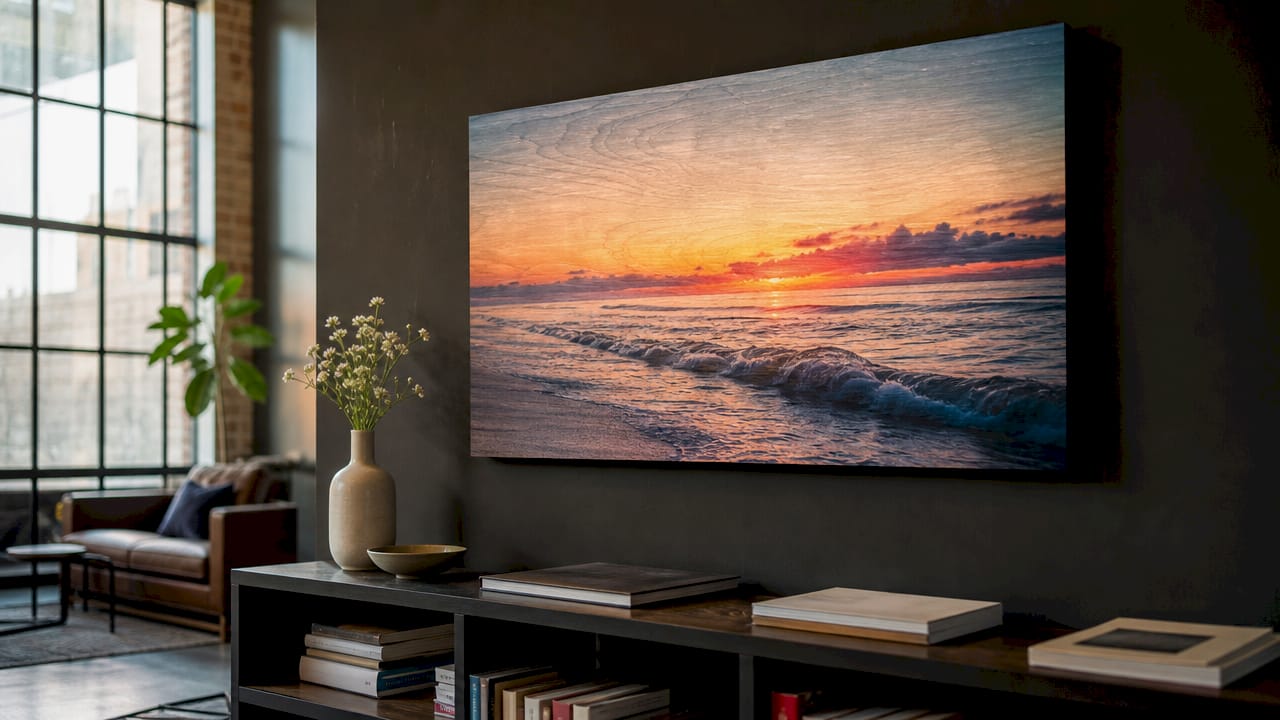
Wood prints are also lighter and easier to hang than framed art. They arrive ready to mount, with no glass, no frame assembly, and no glare to manage.
How are wood prints made?
UV flatbed printing is the industry standard for producing high-quality wood prints. The printer deposits ink droplets in a single pass, and ultraviolet light cures each droplet almost instantly. This creates a durable, vibrant surface that bonds directly to the wood rather than sitting on top of it like a transfer or laminate.
The role of white ink
One detail most buyers never hear about is white ink. Printing on a natural wood surface without a white base layer produces dull, muddy colors, especially on darker wood species. White UV-curable ink is applied as a base layer first, giving subsequent color inks an accurate, bright surface to sit on. Professional wood printers use an 8-color process that includes this white channel. Hobbyist inkjet transfer methods skip this step entirely, which is why the results look so different.
Wood preparation and species selection
The wood species you choose directly affects the final image. Birch produces a tight, pale grain that shows fine image detail well. Maple offers a similar tight grain with slightly warmer tones. Bamboo is technically a grass but behaves like hardwood in printing, with a distinctive linear grain. Reclaimed wood adds visible character marks, knots, and color variation that interact with the printed image in unpredictable ways.
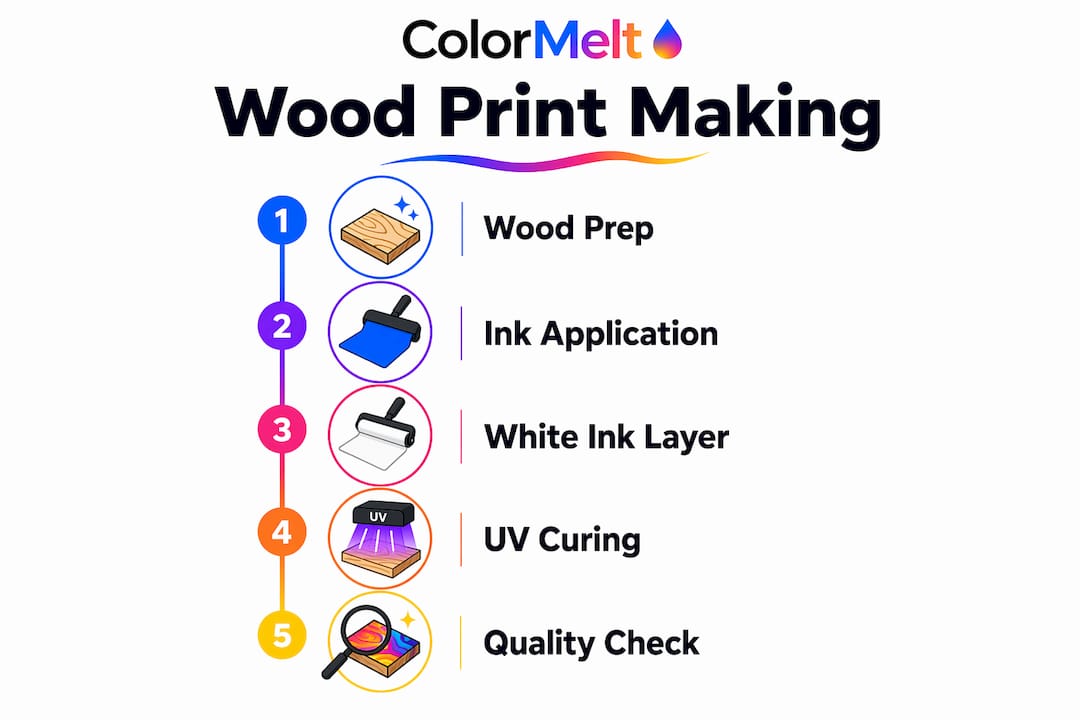
Moisture content and surface preparation also matter. Wood that is too wet or too rough absorbs ink unevenly, producing soft edges and color shifts. Professional printers sand and condition wood panels before printing to control this.
Advanced techniques beyond flat printing
UV flatbed printers adjust print head height dynamically to accommodate textured and live-edge wood slabs. This means a printer can lay ink onto a surface that is not perfectly flat, opening up artistic effects that canvas or paper printing cannot replicate. Professional studios also combine printing with laser cutting and CNC routing to produce custom shapes, cutouts, and engraved textures in the same piece.
Pro Tip: When ordering a wood print, ask whether the printer uses a white ink base layer. If they do not, your colors will look noticeably darker and less accurate on the finished piece.
What styles and images work best for wood prints?
High-contrast and minimalist designs perform best on wood grain surfaces. The reason is straightforward. Lighter image areas reveal the wood grain more strongly, while darker, saturated areas cover it with ink. An image that is mostly mid-tone will look muddy because the grain competes with the detail. A bold black-and-white photograph or a graphic with strong contrast lets both the image and the grain coexist without fighting each other.
Image categories that translate well
- Landscapes and nature photography: Skies, forests, and water scenes benefit from the organic texture wood adds. A mountain photo on birch feels grounded in a way a canvas version does not.
- Black-and-white portraits: The grain adds depth without distracting from the subject, especially when the background is light.
- Abstract and geometric art: Bold shapes and color blocks read clearly over grain. Colormelt’s weave design wood prints are a strong example of how abstract patterns interact with natural wood texture.
- Minimalist typography: Single words or short phrases in large type work well. The grain fills the negative space with visual interest.
Matching style to your decor
- Farmhouse and rustic interiors: Reclaimed wood panels with landscape or botanical images feel at home here.
- Contemporary and minimalist spaces: Birch or maple with abstract or geometric prints keeps the look clean and modern.
- Industrial interiors: Dark-stained wood with high-contrast black-and-white photography fits the palette.
Pro Tip: Avoid images with large areas of fine detail in mid-tones. The grain will compete with the detail and reduce clarity. Test your image by converting it to grayscale first. If the contrast reads clearly in grayscale, it will work on wood.
Wood prints versus canvas and framed prints
Wood prints offer a distinct set of advantages over canvas and framed prints. Wood adds warmth and a rustic touch that canvas simply cannot replicate. Canvas is flexible and lightweight, but it has no inherent texture beyond the weave. A wood print brings a material presence to a wall that feels more like furniture than decoration.
The practical differences are also significant. Wood prints do not require glass, which eliminates glare entirely. Framed prints under glass reflect light from windows and overhead fixtures, making them hard to view from certain angles. Wood prints have no such problem. For more on how canvas compares as a medium, Colormelt’s guide on canvas print benefits covers the key differences in detail.
| Feature | Wood print | Canvas print | Framed print |
|---|---|---|---|
| Surface texture | Natural wood grain | Woven fabric | Flat paper or photo |
| Framing required | No | No | Yes |
| Glass required | No | No | Usually yes |
| Glare | None | None | Moderate to high |
| Weight | Medium | Light | Heavy |
| Best decor style | Farmhouse, contemporary, rustic | Modern, minimal | Traditional, formal |
| Durability | High | Medium | Medium |
Canvas suits spaces where you want a large, lightweight piece with vivid color reproduction. Framed prints suit formal rooms where a traditional presentation matters. Wood prints suit any space where you want warmth, texture, and a piece that looks genuinely handcrafted.
Choosing the right wood and caring for your print
The wood species you select shapes the final result more than most buyers expect. Here is a practical breakdown of the most common options:
- Birch: The most widely used species for wood prints. Its pale, tight grain provides a neutral base that lets colors read accurately. Birch panels are stable and resist warping.
- Maple: Similar to birch but with a slightly warmer undertone. Works well for portraits and warm-toned photography.
- Bamboo: Produces a distinctive linear grain pattern. Its natural green-gray tone can shift cooler colors slightly, which works well for nature and botanical images.
- Reclaimed wood: Adds knots, color variation, and visible history to the piece. Best suited for abstract or rustic imagery where imperfection is part of the appeal.
Wood species and surface preparation directly affect ink absorption and color vibrancy. A poorly prepared surface produces uneven ink saturation and soft edges.
Care tips to protect your investment
Wood prints are easier to maintain than paper prints because the solid wood base eliminates the risk of tears, wrinkles, or buckling. A few simple practices keep them looking sharp for years.
- Wipe the surface with a dry or slightly damp microfiber cloth. Avoid wet cloths or cleaning sprays.
- Keep wood prints away from direct sunlight for extended periods. UV exposure fades ink over time, even UV-cured ink.
- Avoid hanging wood prints in bathrooms or near kitchen steam. Excess moisture causes wood to expand and contract, which can crack the ink layer.
- Hang in a climate-controlled room where temperature and humidity stay relatively stable.
For ideas on placement and display, Colormelt’s guide on displaying art prints offers room-by-room suggestions that apply directly to wood prints.
Key takeaways
Wood prints are the most texturally distinct wall art option available, combining natural wood grain with photographic-quality UV printing to produce pieces that are durable, frameless, and genuinely one of a kind.
| Point | Details |
|---|---|
| Wood print definition | An image printed directly onto wood using UV-curable ink, not a transfer or laminate. |
| White ink base layer | Professional printers use a white ink base to prevent dull, muddy colors on natural wood. |
| Best image styles | High-contrast and minimalist designs read most clearly over natural wood grain. |
| Wood species matters | Birch and maple suit most images; reclaimed wood suits rustic and abstract styles. |
| Care and placement | Avoid moisture and direct sunlight; wipe with a dry microfiber cloth to maintain quality. |
Why wood prints have earned a permanent place on my walls
I have spent years looking at wall art across every medium, and wood prints are the only format that consistently surprises people when they see them in person. Photos online do not capture what happens when light hits a birch panel with a well-chosen abstract print. The grain catches the light differently at different times of day. The piece looks different in the morning than it does in the evening. No canvas does that.
The misconception I hear most often is that wood prints are a rustic-only choice. That is wrong. A tight-grain maple panel with a bold geometric print looks completely at home in a modern apartment. The material is versatile. The style depends entirely on the image and the species you choose.
My advice for first-time buyers is to resist the urge to print a photo with lots of fine mid-tone detail. That is the one image type that consistently disappoints on wood. Choose something with strong contrast or bold color blocks, and the grain will work with the image rather than against it. Colormelt’s circular weave wood print is a good example of a design built specifically to take advantage of wood grain rather than fight it.
The future of wood prints is moving toward more customization. Live-edge panels, custom shapes cut by CNC routing, and combined engraving and printing are all becoming more accessible. If you are buying your first wood print now, you are getting in at a point where the technology is mature but the creative possibilities are still expanding.
— Shlomo
Colormelt’s wood print collection for your home
Colormelt produces wood prints designed to work as statement pieces in real living spaces, not just product photos.

The collection includes abstract weave designs, cyclone patterns, and floral motifs, all printed with fade-resistant inks on quality wood panels. Each piece ships ready to hang, with no framing required. Whether you are furnishing a single accent wall or building a full gallery, Colormelt’s wall art collection gives you a range of styles built for modern homes. The colorful weave wood print is a strong starting point if you want to see how bold color and natural grain work together in practice.
FAQ
What is the wood print definition in simple terms?
A wood print is an image printed directly onto a wood panel using UV-curable ink, where the natural wood grain becomes part of the finished artwork. It is not a transfer, laminate, or woodblock carving.
What wood is best for wood prints?
Birch is the most widely used wood for prints because its pale, tight grain provides a neutral base for accurate color reproduction. Maple and bamboo are strong alternatives depending on the tone and style of the image.
Do wood prints need a frame?
Wood prints are frameless by design. They arrive ready to hang and do not require glass, which also eliminates glare from windows and overhead lighting.
How do I clean a wood print?
Wipe the surface with a dry or slightly damp microfiber cloth. Avoid liquid cleaners, sprays, and wet cloths, which can damage the ink layer or cause the wood to swell.
Are wood prints durable compared to canvas?
Wood prints are more durable than canvas in most conditions. The solid wood base resists tears, warping, and buckling, and the UV-cured ink bonds directly to the surface rather than sitting on top of a fabric weave.