
What Is Complex Art Design? A Guide for Artists
Complex art design is defined as the intentional integration of multiple interconnected elements and layers to create a cohesive whole that surpasses its individual parts. Where minimalist design strips away, complex design builds inward. It rewards study, invites interpretation, and demands more from both the artist and the viewer. From Leonardo da Vinci’s Sfumato technique to M.C. Escher’s mathematical tessellations, the principles of complex design have shaped some of the most enduring works in art history. Understanding what makes art complex is the first step toward creating it with intention.
What is complex art design, and what defines it?
Complex art design is a multifaceted design principle that deliberately combines layers, systems, and visual relationships into a unified composition. The result is a work that creates emergent meaning from the interaction of its parts, not from any single element alone. Think of it as orchestration rather than solo performance.
The concept draws from postmodernism, which rejected the “less is more” doctrine and embraced contradiction, irony, and layered meaning. Postmodern design uses complexity as a narrative and problem-solving framework, treating the act of design as a programming act rooted in human perception. That theoretical foundation is what separates intentional complexity from visual clutter.
Complex design also operates on a cognitive level. Neuroscience research identifies supercomplexity as requiring simultaneous integration of sensory, emotional, cognitive, and social processes. That means a truly complex artwork does not just look intricate. It activates multiple mental systems at once, producing an experience that is genuinely harder to process and richer for it.
What elements and principles make art design complex?
The elements of complex art design are not random. Each one contributes to the overall system of meaning and visual experience. The most important include:
- Layered composition: Multiple visual planes that interact, overlap, or contrast to create depth.
- Visual hierarchy: A deliberate ordering of elements that guides the viewer’s eye without dictating a single path.
- Spatial relationships: The tension and harmony between positive and negative space.
- Interconnected systems: Color, form, texture, and line working as a network rather than independently.
- Emergent properties: Meaning or visual effects that only appear when elements are combined, not visible in any single component.
- Narrative construction: Embedded stories, symbols, or references that reward close looking.
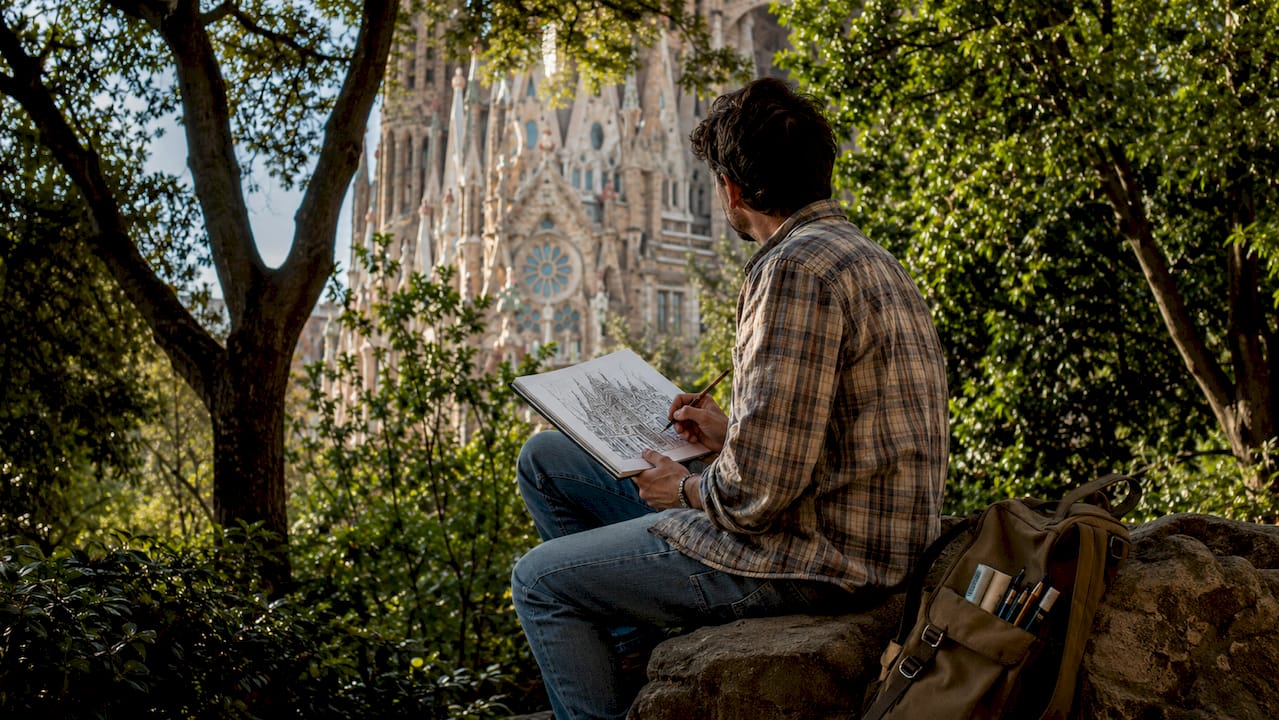
Architecture demonstrates these principles at scale. The Sagrada Família by Antoni Gaudí layers Gothic structure, Art Nouveau ornament, and natural geometry into a building that reads differently from every angle. Digital interface design uses the same logic. A well-designed dashboard by a firm like IBM or Adobe places dozens of data points into a visual hierarchy that feels readable, not chaotic.
Pro Tip: When building a complex composition, map your visual hierarchy before you add any detail. Knowing where the eye enters, travels, and rests will prevent your layers from competing instead of cooperating.
The key distinction is that complexity in art design is always purposeful. Visual arts function as complex dynamic systems with emergent properties arising from the interaction of creation, experience, culture, and value. Complexity without intention produces noise. Complexity with structure produces depth.
How does complex art design differ from simple or minimalist art?
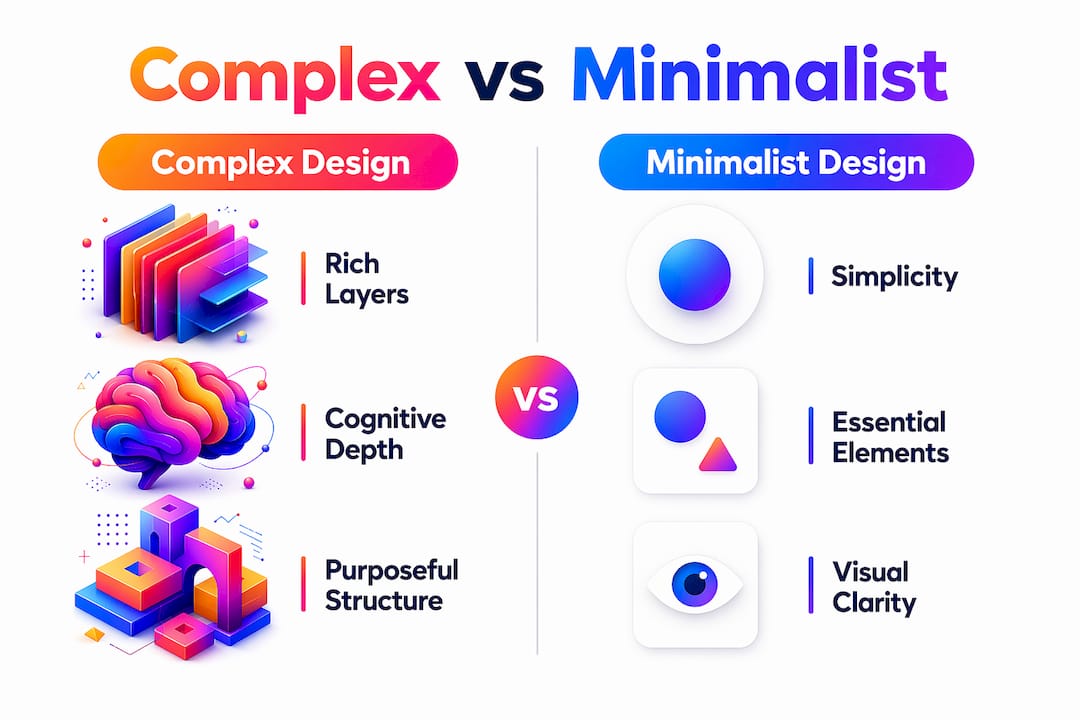
The difference between complex and minimalist design is not a matter of quality. Both are legitimate approaches with distinct goals and audiences. The contrast lies in what each asks of the viewer.
| Attribute | Complex design | Minimalist design |
|---|---|---|
| Visual goal | Richness, depth, layered meaning | Clarity, calm, immediate impact |
| Cognitive demand | High. Requires study and contemplation | Low. Communicates at a glance |
| Emotional register | Awe, curiosity, intellectual engagement | Comfort, focus, serenity |
| Time investment | Long. Rewards repeated viewing | Short. Full impact delivered quickly |
| Postmodern influence | Strong. Embraces irony and contradiction | Weak. Favors reduction and purity |
| Example artists | M.C. Escher, Hieronymus Bosch, Kehinde Wiley | Donald Judd, Agnes Martin, Ellsworth Kelly |
Complex art aims to evoke richer, deeper impressions that require intellectual engagement, unlike simple art which provides immediate but short-lived comfort. That is not a criticism of minimalism. It is a description of different functions. A Zen garden and a Persian carpet serve different psychological purposes.
Postmodernism is the philosophical engine behind most contemporary complex design. It rejected modernism’s faith in simplicity as a universal virtue and argued that the world is too layered, too contradictory, and too culturally varied to be expressed through reduction alone. Artists like Kehinde Wiley embed historical portraiture, decorative pattern, and social commentary into a single canvas. That is complex design operating at full power.
The practical implication for you as an artist or designer is this: choosing complexity is choosing to ask more of your audience. That choice should be deliberate, not accidental.
What techniques are used to achieve complex art design?
Mastering complex art techniques requires both technical skill and project discipline. The methods vary by medium, but the underlying logic is consistent: build in controlled stages, allow each layer to settle, and plan your sequence before you begin.
-
Sfumato and multi-layer glazing. Leonardo da Vinci applied up to 30 ultra-thin paint layers totaling less than 40 micrometers in thickness. Each layer required drying time before the next could be applied. The result is the atmospheric depth visible in the Mona Lisa and Virgin of the Rocks. Modern oil painters use the same principle with glazing mediums to build luminous, complex color fields.
-
Procedural and semi-procedural texture work. Rather than stamping or overlaying textures mechanically, skilled artists use semi-procedural weaving motions to integrate strokes organically. Cross-hatching and weaving create non-uniform depth that reads as natural rather than manufactured.
-
Sequence planning with controlled interventions. Complex patterns like Turkish Ebru marbling and M.C. Escher’s mathematical designs depend on sequence planning, breaking the work into ordered stages rather than approaching it as a chaotic whole. Planned voids and focal centers distinguish sophisticated complexity from visual noise.
-
Disciplined project scheduling. Advanced complex techniques require careful stepwise preparation due to slow curing or drying times. Epoxy resin work, multi-layer encaustic painting, and large-scale mural projects all demand a timeline that accounts for material behavior, not just artistic intent.
-
Iterative review at each stage. Complex work can collapse under its own weight if you do not step back between interventions. Reviewing the composition after each major addition lets you catch imbalances before they become permanent.
Pro Tip: Treat your complex project like a construction schedule. Write down the sequence of layers or stages before you start. Knowing step 7 depends on step 4 being fully cured will save you from costly rework.
How can understanding complex design inspire your creative practice?
Engaging with complex art design produces measurable benefits for your creative development. The act of studying a complex work trains your eye to see relationships, not just objects. That perceptual shift carries into everything you make.
- Cognitive growth: Analyzing complex compositions builds your ability to hold multiple visual ideas simultaneously. This directly improves your capacity to plan and execute layered work.
- Emotional depth: Complex art engages viewers in deeper intellectual and emotional experiences that go beyond surface aesthetics. Creating work with that depth requires you to think about what you want the viewer to feel at each stage of engagement.
- Narrative construction: Embedding layered meaning into your work gives it staying power. A piece that reveals something new on the fifth viewing holds attention in a way that immediate-impact work cannot.
- Application in modern decor: Complex art translates powerfully into interior spaces. A single large-format canvas with layered abstract geometry or interlocking color fields can anchor an entire room. Knowing how to use art in home spaces effectively starts with understanding what makes a piece visually rich enough to sustain daily exposure.
- Digital design crossover: The principles of visual hierarchy, layered systems, and emergent meaning apply directly to UX design, motion graphics, and digital illustration. Complex design theory is not medium-specific.
The practical move is to study works that intimidate you. Bosch’s The Garden of Earthly Delights, a Mughal miniature painting, or a dense typographic poster by Paula Scher all contain structural lessons you can extract and apply. Complexity is learnable. It is a set of decisions, not a talent.
Key takeaways
Complex art design is the deliberate orchestration of interconnected layers, systems, and visual relationships to produce works that engage viewers intellectually, emotionally, and sensorially at once.
| Point | Details |
|---|---|
| Core definition | Complex art design intentionally combines layers and systems to create meaning that exceeds any single element. |
| Postmodern foundation | Postmodernism gave complex design its theoretical backbone, embracing contradiction and layered narrative. |
| Technical discipline | Techniques like Sfumato and Turkish Ebru require staged execution and disciplined scheduling, not improvisation. |
| Complexity vs. minimalism | Complex design asks more of the viewer and rewards repeated study; minimalism delivers immediate, short-lived impact. |
| Creative application | Studying and practicing complex design builds perceptual skills that improve every area of your artistic practice. |
Why complexity in art is worth the effort
I have spent years looking at complex art and trying to make it. The honest truth is that complexity is uncomfortable at first. You stand in front of a Kehinde Wiley portrait or a Gaudí facade and feel slightly overwhelmed. That discomfort is the point.
What changed my relationship with complex design was realizing that the difficulty is not a flaw in the work. It is the work. The friction you feel when a composition refuses to resolve immediately is the artist asking you to stay longer, look harder, and bring more of yourself to the experience. Most art that has stayed with me for years is art that I did not fully understand the first time I saw it.
For artists and designers, this has a practical implication. If your work is immediately and completely understood on first viewing, you may have left depth on the table. That is not always wrong. But if you want your work to hold attention over time, complexity is the tool that does it.
The other thing I have learned is that complexity is not the same as complication. Complication is adding more without a plan. Complexity is building a system where every element earns its place and contributes to a whole that could not exist without it. That distinction is what separates a cluttered canvas from a masterwork. It takes patience, sequencing, and the willingness to stop adding before you go too far.
— Shlomo
Discover complex wall art designs at Colormelt
If studying complex art design has sparked the urge to live with it, Colormelt’s curated collection is a strong place to start. The wall art collection features layered abstract designs, weave patterns, and cyclone motifs that embody the principles covered in this article: visual hierarchy, emergent color relationships, and compositions that reward close attention.
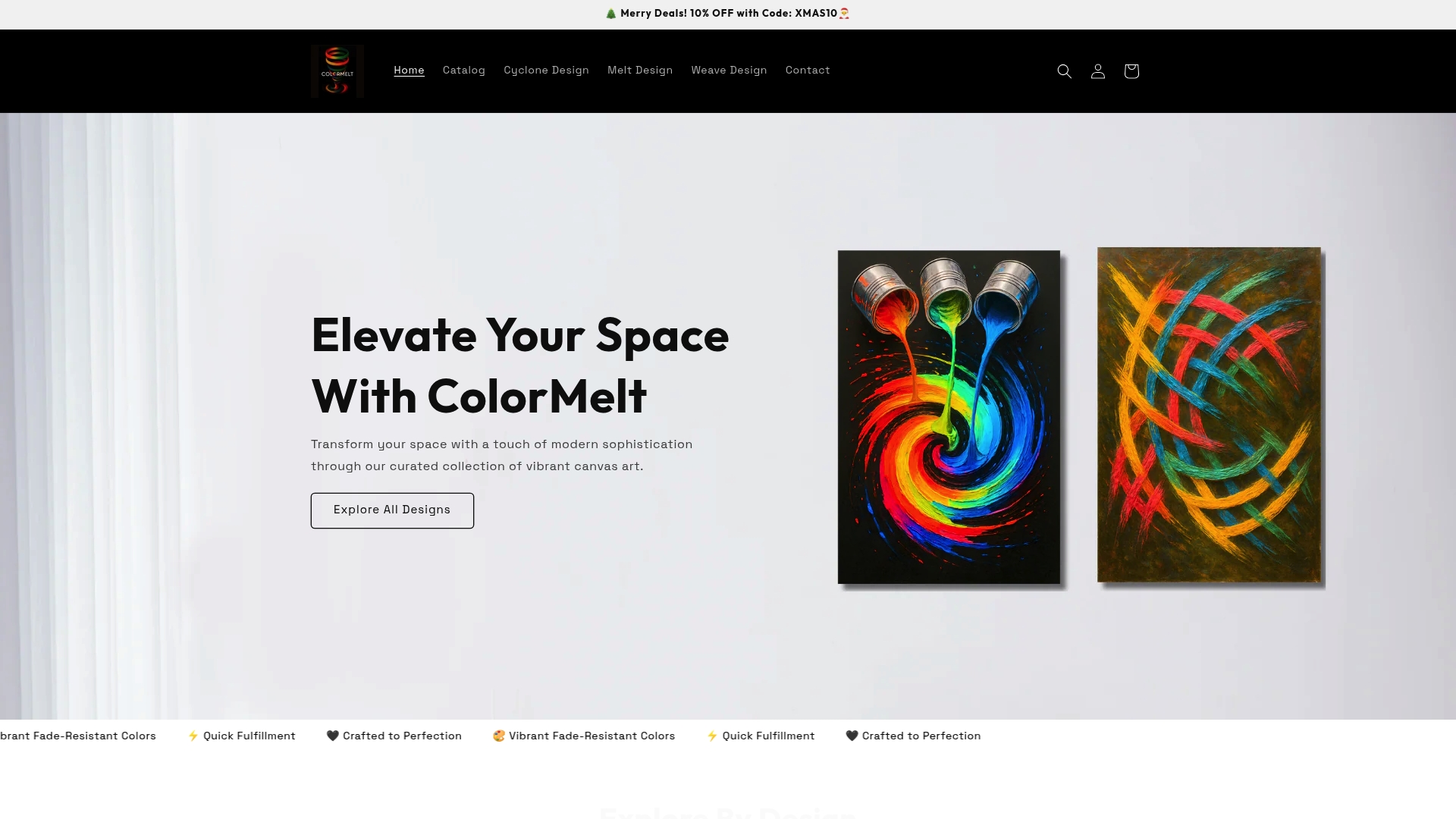
The Vibrant Weave Acrylic Wall Art is a direct example of semi-procedural texture work translated into a finished print, with interlocking color fields that shift depending on viewing distance. Colormelt prints use fade-resistant inks and are fulfilled quickly, so the piece you see on screen is the piece that arrives on your wall. For artists and enthusiasts who want to see complex design principles in action every day, these pieces work as both decor and ongoing study material.
FAQ
What is the simplest definition of complex art design?
Complex art design is the intentional combination of multiple interconnected layers, systems, and visual elements into a cohesive work that produces meaning greater than any single component. The complexity is purposeful, not accidental.
What makes art complex rather than just busy or cluttered?
Complex art has a planned visual hierarchy and sequenced structure where every element contributes to the whole. Clutter lacks that structure. The difference is intention and the presence of emergent meaning from the interaction of parts.
What are the best examples of complex art design?
Leonardo da Vinci’s Sfumato paintings, M.C. Escher’s mathematical tessellations, Turkish Ebru marbling, and Kehinde Wiley’s layered portrait canvases are all strong examples of complex art design across different mediums and eras.
How long does it take to create complex art?
Timeline varies widely by technique. Sfumato oil painting with up to 30 paint layers can take weeks or months. Even digital complex compositions require significant planning and iterative revision to achieve genuine depth.
Can beginners learn complex art techniques?
Yes. The foundational skills, including layering, sequence planning, and visual hierarchy, are teachable and learnable. Starting with structured techniques like cross-hatching or glazing builds the discipline needed for more advanced complex work over time.