
Why Art Enhances Interiors: a Homeowner's Guide
Most people hang art after the furniture arrives. They treat it like a finishing touch, something to fill blank wall space once the real design decisions are done. That thinking is exactly why art enhances interiors so much more when it’s treated as a foundation rather than an afterthought. Art shapes how a room feels before you even sit down. It communicates personality, sets emotional tone, and gives a space the one thing furniture simply cannot provide: meaning. This guide unpacks the full picture, from psychology and science to practical placement strategies that actually work.
Table of Contents
- Key takeaways
- Why art enhances interiors more than most people realize
- The science behind art’s benefits in interiors
- How art integrates with interior design elements
- How to select art that actually elevates your home
- My honest take: art is where a home’s story starts
- Transform your space with Colormelt’s wall art
- FAQ
Key takeaways
| Point | Details |
|---|---|
| Art creates emotional atmosphere | Color, scale, and subject matter in artwork shape how a room feels faster than any furniture choice. |
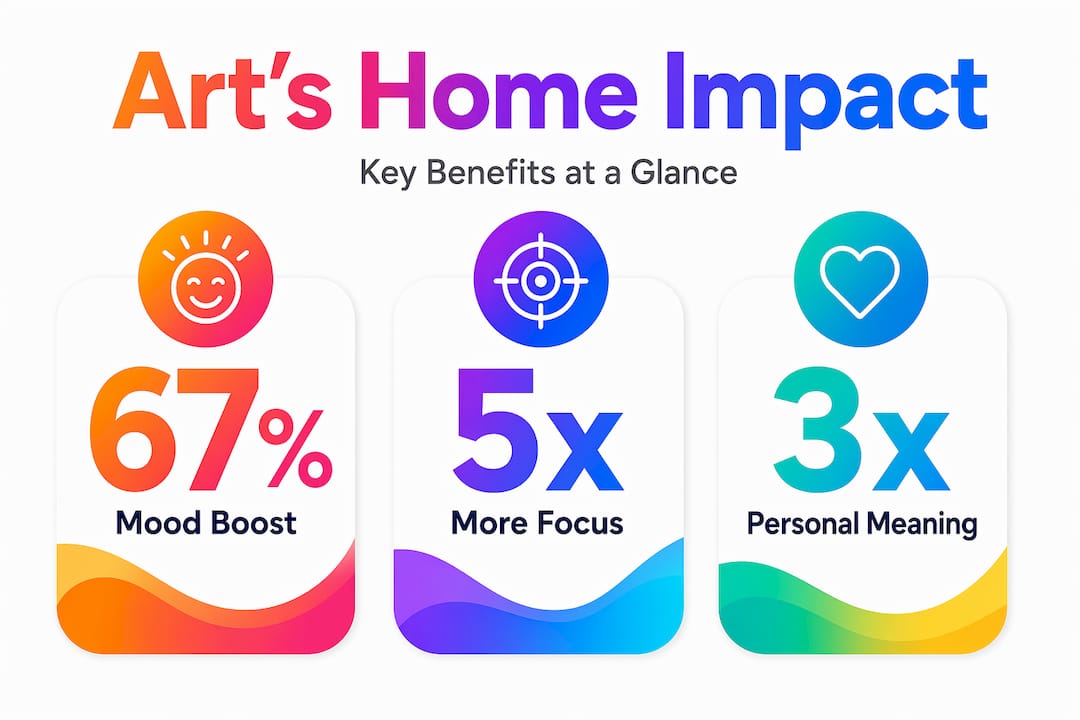
| Science supports art in interiors | Biophilic art environments reduce depression by 67% and anxiety by 72%, backed by peer-reviewed research. |
| Art defines identity in a space | Artwork communicates personal values and memory in ways that a sofa or rug never can. |
| Start with art, then design around it | Choosing art first gives your interior a coherent emotional direction from the very beginning. |
| Scale and mix matter | Combining different sizes, styles, and mediums creates layered focal points and sophisticated visual depth. |
Why art enhances interiors more than most people realize
Here is a question worth sitting with: what do you actually remember about the most beautiful home you have ever visited? Not the sofa model or the tile grout color. You remember the large abstract canvas over the fireplace, or the cluster of framed prints in the hallway that made you stop and look. Emotional memory in spaces is anchored by artwork far more reliably than by furniture.
Designer Angelica Angeli frames this distinction precisely:
“Furniture supplies usability, but art supplies meaning. A sofa tells you where to sit. A painting tells you who lives here.”
That separation of function and meaning is the core reason why understanding how art improves atmosphere matters so much. Furniture fills a room. Art defines it.
The emotional cues art delivers are faster and more visceral than anything structural. A bold, dark-toned abstract canvas makes a living room feel moody and cinematic almost instantly. A large botanical print does the opposite, opening the space with calm, organic energy. Color, scale, composition, and subject matter all communicate directly to the emotional brain before logic catches up. This is why two rooms with identical furniture layouts can feel completely different depending solely on the art hanging on their walls.
Art also carries personal narrative in a way no manufactured product can replicate. A collection of travel photography, a commissioned portrait, or even a vintage print found at a market tells visitors something true about the person who lives there. That sense of identity and story transforms a house into a home. Without it, even a beautifully furnished space can feel like a showroom.
The science behind art’s benefits in interiors
The argument for art in home design is not just aesthetic. The research is compelling enough to change how you think about any room in your house.
A March 2026 longitudinal study published in BMC Psychology found that biophilic art environments reduce depression symptoms by 67% and cut anxiety symptoms by 72% in participants over the study period. These were not gallery visitors or museum goers. These were people living and working in spaces where art featuring natural forms and organic compositions was integrated into the environment. The implications for residential interiors are significant.
The benefits do not stop at mood regulation. Research from University College London found that weekly arts engagement correlates with being biologically one year younger, based on blood sample analysis. That finding connects regular exposure to creative works with measurable physiological benefits. You do not need to paint or sculpt to get this effect. Living with art you love and engaging with it genuinely appears to count.
Here is a summary of the key science-backed findings:
| Benefit | Finding | Source |
|---|---|---|
| Reduced depression symptoms | 67% improvement in biophilic art environments | BMC Psychology, 2026 |
| Reduced anxiety symptoms | 72% reduction with integrated art environments | BMC Psychology, 2026 |
| Biological age reduction | Weekly arts engagement linked to being 1 year biologically younger | University College London, 2026 |
| Stress and cognitive restoration | Art stimulates emotional regulation and attention recovery | Multiple studies |
The mechanism behind these benefits of artwork in interiors involves what researchers call attention restoration. Visual art, particularly work that incorporates organic forms, natural colors, or rich compositional detail, gives the prefrontal cortex a kind of productive rest. You are engaged without being taxed. That state is genuinely restorative in a way that a blank white wall or a generic print simply cannot deliver. Understanding this reframes the entire conversation about why displaying art at home is worth taking seriously.
How art integrates with interior design elements
Art and design do not operate independently. Interior designer Young Huh states clearly that art is inseparable from design, and the relationship runs in both directions. Good design creates the right context for art to be seen and felt properly. Art, in return, gives the design an identity and an emotional center of gravity.
This reciprocal relationship shows up in practical ways across every room.
Art as architecture. Large-scale installations and sculptures do not just sit in a room. They affect how people move through it, where the eye travels, and how tall or intimate the space feels. A floor-to-ceiling canvas draws the eye upward and makes ceilings feel higher. A horizontal triptych anchors a long wall and grounds a room that might otherwise feel unresolved.
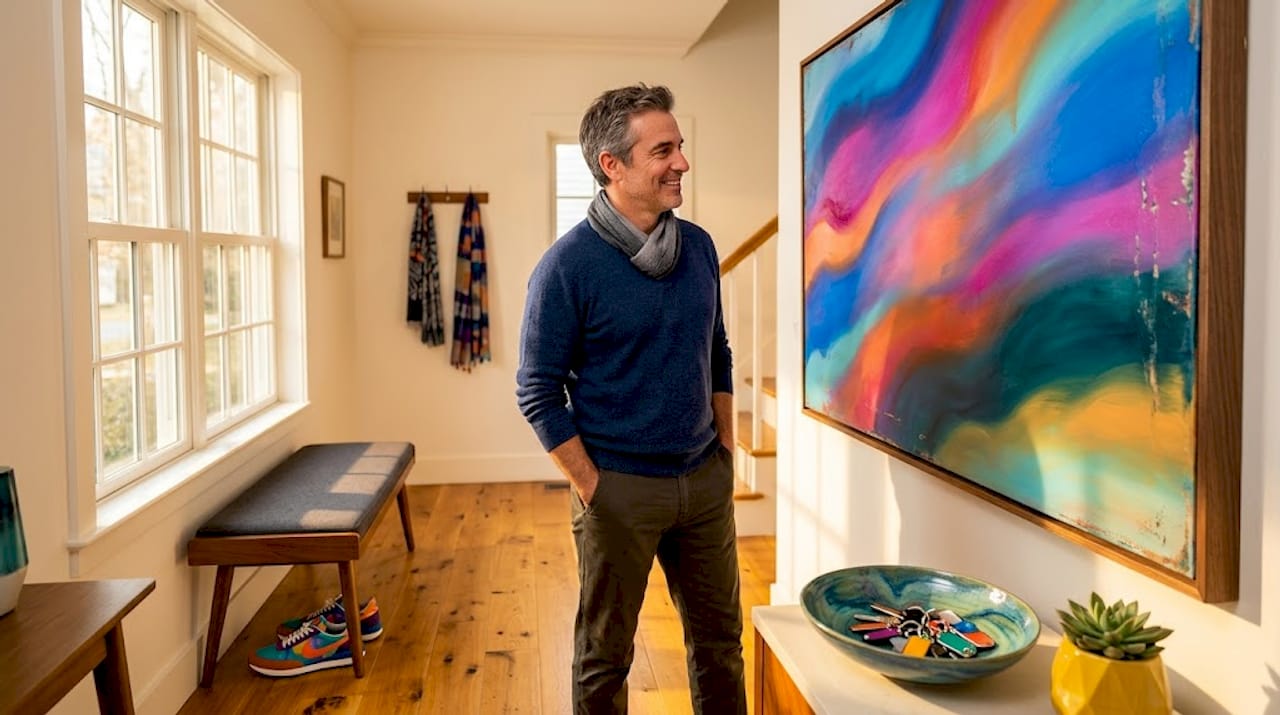
Mixing styles with confidence. Blending old master paintings with minimalist modern interiors creates a kind of sophisticated tension that neither style could achieve alone. The contrast signals taste and confidence rather than confusion. The key is intentionality: the contrast should feel deliberate, not accidental.
Textiles as art. Textile art is one of the most underused tools in residential design. It adds warmth, texture, and narrative simultaneously. Experts note that flat-weave pieces work best for wall hangings because they are lighter, easier to mount securely, and visually cleaner than heavy-pile alternatives. A well-chosen woven textile can anchor a bedroom or dining room in a way that a framed print cannot, simply because the material itself adds a tactile dimension to the visual experience.
Pro Tip: When hanging art near lighting, treat the light source as part of the composition. A picture light or directed track light does not just illuminate art; it creates shadow, depth, and presence that flat overhead lighting destroys. The same piece can look entirely different depending on how it is lit.
When you approach decorating with art as an integrated design act rather than a decorating checklist, every element in the room starts working together. The art informs the furniture choices, the furniture scale informs where and how the art is displayed, and the lighting serves both.
How to select art that actually elevates your home
Knowing the theory is useful. Having a selection strategy is better. Here is a practical approach to incorporating art that aligns with how real people actually live in and love their homes.
-
Define the emotional tone first. Before you look at a single piece, decide how you want the room to feel. Calm and restorative? Energized and bold? Intimate and warm? That emotional brief is your filter. Every art decision flows from it.
-
Consider scale before style. The most common mistake in decorating with art is buying pieces that are too small for the wall. A small painting on a large wall does not feel intimate. It feels lost. Scale communicates confidence. Go larger than feels comfortable and see what happens.
-
Use intentional color alignment or contrast. Art does not need to match your color palette, but it needs to relate to it. A piece that shares one color from the room feels connected. A piece that deliberately contrasts creates energy and visual interest. Both are valid. Accidental mismatch is the only approach to avoid.
-
Apply the “stretch and buy” strategy. When you find a piece you genuinely love, buy it before placement is finalized. The right spot will reveal itself. Waiting until you have the “perfect wall” often means you miss the piece entirely.
-
Mix sizes to build depth. A single large piece creates a statement. A mix of sizes creates a gallery. Layering large anchors with medium and small works on adjacent walls gives a room visual rhythm rather than visual monotony.
| Art type | Emotional impact | Best placement |
|---|---|---|
| Large canvas painting | Bold, immersive, room-defining | Above sofa, primary wall, staircase |
| Framed photography | Intimate, narrative, personal | Hallways, home office, bedroom |
| Textile/woven wall art | Warm, textural, organic | Bedroom, dining room, reading nook |
| Sculpture | Dimensional, grounding, tactile | Shelving, entryway, coffee table |
| Abstract print | Energetic, open to interpretation | Living room, studio, creative spaces |
The goal is not a perfectly curated gallery. The goal is a home that feels genuinely like you, and where every piece you live with adds something beyond the visual. For deeper ideas on how to personalize your home with art, the process starts with honest reflection on what you actually respond to emotionally.
My honest take: art is where a home’s story starts
I have spent years looking at well-designed homes, and the ones that genuinely move me share one characteristic. Art was not the last decision. It was the first.
In my experience, the designers and homeowners who get this right do not start with a sofa and then wonder what to hang above it. They start with a piece they love, sometimes before the room is even painted, and build outward from there. The art sets the emotional register, and every subsequent choice in the room either honors that register or undermines it.
What I have found consistently frustrating about popular design advice is how confidently it places art at the bottom of the priority list. “Get the bones right, then add the art.” That logic sounds sensible. But it produces rooms that are technically correct and emotionally empty. Furniture without art is just inventory. The role of art in home design is not supplementary. It is foundational.
The spaces I remember most vividly are never the ones with the most expensive furniture. They are the ones where someone clearly made a deliberate, personal choice about what to put on the walls and why. That intention is visible. It communicates something no sofa brand ever could. Start with the art. Let the rest catch up.
— Shlomo
Transform your space with Colormelt’s wall art
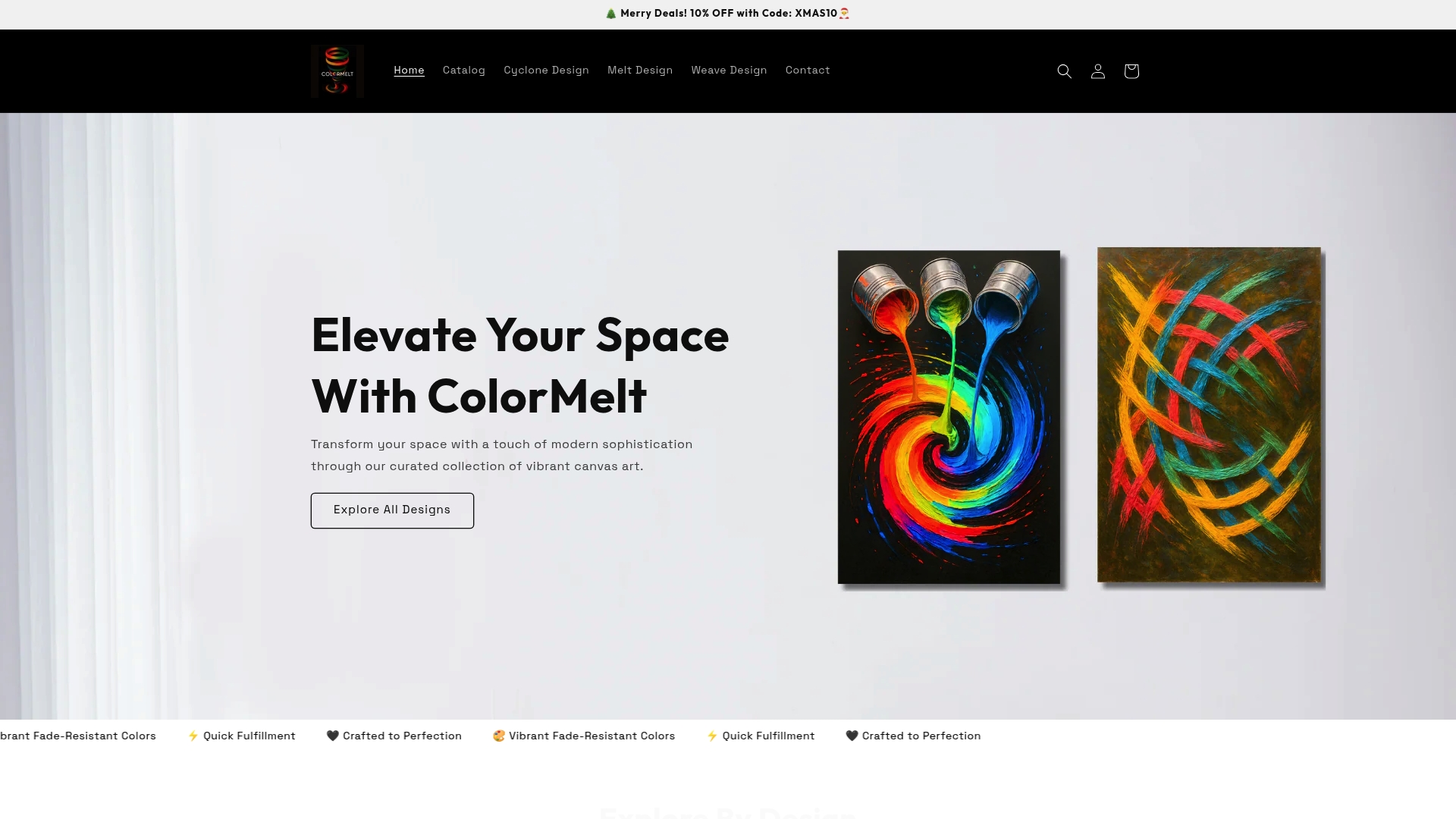
If this article has made you think differently about the walls in your home, Colormelt makes it easy to act on that. The Colormelt wall art collection features canvas prints, acrylic and wood prints, and framed artwork across abstract, cyclone, floral, and weave designs built to anchor real interiors with real presence. Every piece is printed with fade-resistant inks and fulfilled quickly, so the art you love actually looks the way it should for years.
For something with texture and dimension, the weave design wall hanging adds the kind of warmth that flat prints cannot replicate. For rooms that need energy and color, the cyclone design canvas delivers exactly that. Browse the full collection and find the piece that gives your space its story.
FAQ
Why does art matter more than furniture in home design?
Art provides the emotional meaning of a space while furniture provides function. According to designer Angelica Angeli, furniture tells you where to sit; art tells you who lives there.
How does art improve the atmosphere of a room?
Art communicates emotional tone through color, scale, and subject matter, shaping how a room feels almost immediately. Research confirms that art environments measurably reduce stress and anxiety in the people who inhabit them.
What are the science-backed benefits of artwork in interiors?
A 2026 study in BMC Psychology found that biophilic art environments reduced depression symptoms by 67% and anxiety by 72%. Separate University College London research linked weekly arts engagement to being biologically one year younger.
Where should you start when decorating with art?
Start by defining the emotional tone you want the room to have, then choose art that matches that feeling before making major furniture decisions. Scale and color relationship matter more than stylistic matching.
Can you mix different art styles in the same interior?
Yes, and intentionally mixing styles often produces more sophisticated results than strict matching. Blending traditional and modern art in the same space creates contrast that signals confidence and design depth.