
Role of art in home: a guide to vibrant modern decor
Most people hang a painting because the wall looks empty. That is exactly why their homes feel like hotel rooms. The role of art in home life goes far deeper than filling space — research now shows that living with art daily reduces anxiety, lowers cortisol levels, and creates a form of ongoing emotional presence that furniture simply cannot replicate. If you have been treating wall art as an afterthought, this guide will change that.
Table of Contents
- How art affects well-being and mood in your home
- How to choose art that resonates with your space and self
- The functional roles of art in modern interior design
- Expert strategies for curating and caring for your home art collection
- Why art in the home is a living story, not just decoration
- Discover vibrant wall art to transform your home
- Frequently asked questions
Key Takeaways
| Point | Details |
|---|---|
| Art boosts mental health | Regular exposure to art can significantly reduce depression and anxiety symptoms. |
| Choose art intentionally | Select pieces based on space, light, scale, and emotional resonance rather than just decor matching. |
| Art anchors modern design | Wall art shapes spatial hierarchy and connects room elements for harmony. |
| Care preserves art | Proper light management and materials conservation keep artworks vibrant over time. |
| Art tells your story | Art is a living presence reflecting your identity and evolving with your mood. |
How art affects well-being and mood in your home
Art is not passive. Every time you walk past a piece you genuinely connect with, something happens in your brain. Your attention shifts from the noise of the day to a single, contained visual experience. That is not poetry — it is how attention restoration works, and it is why the art and well-being benefits conversation has moved firmly into clinical research territory.
Residents exposed to biophilic art showed significant improvements in depression and anxiety over 12 months. That is not a minor lifestyle perk. That is the kind of result you expect from a structured wellness intervention, delivered by the art hanging on the wall. The effects compound when exposure is daily and the art is personally meaningful rather than randomly selected.
“Art experiences reduce anxiety and depressive symptoms and promote psychological well-being, offering measurable emotional and cognitive benefits beyond aesthetic pleasure.”
The science-backed art benefits point to a specific mechanism: structured visual engagement lowers cortisol, the stress hormone, by redirecting the nervous system from reactive mode to reflective mode. Paintings with depth, movement, and contrast — think bold abstract work or richly layered color fields — give the eye something to explore, which creates a brief but meaningful meditative moment. You are not analyzing the art. You are resting inside it.
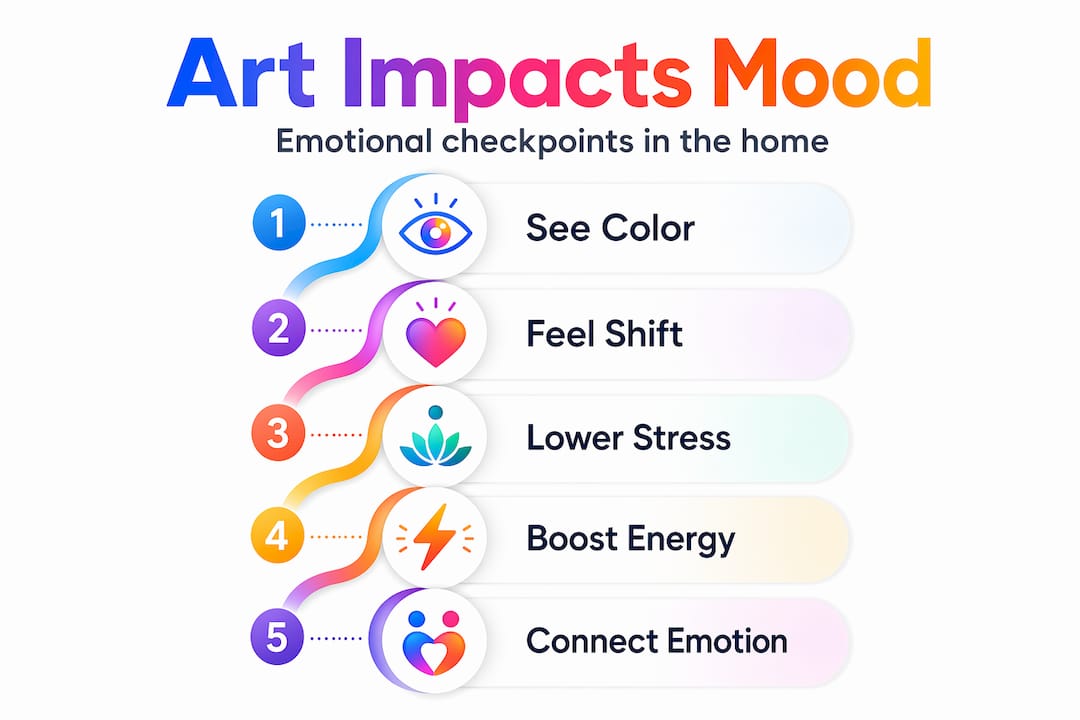
Art also creates what psychologists call emotional checkpoints in the home. A piece with warm, energetic color in the kitchen sets a different morning tone than a calm, cool canvas in the bedroom does at night. These are not accidents. They are design decisions with measurable mood consequences.
How to choose art that resonates with your space and self
Here is where most people go wrong: they buy art they like in a gallery and then wonder why it looks wrong on the wall at home. Choosing art involves studying room proportions, natural light movement, and how you actually use the space — not just picking something that matches the couch.
Start by observing your room at different times of day. North-facing rooms with cool, flat light need art with warmth and texture to compensate. South-facing rooms flooded with afternoon sun can handle cooler, more minimal pieces without feeling cold. Light transforms art entirely. A canvas that looks moody and dramatic under gallery lighting can look flat and lifeless in a poorly lit corner.
Here is a practical checklist for choosing quality wall art:
- Match scale to the wall, not the room. Art should cover roughly two-thirds of the wall space above a sofa or bed frame. Undersized art is the number one mistake in home decor.
- Assess dominant and accent colors in the room. Art does not need to match — it needs to converse. A bold abstract that pulls one accent color from your rug ties a room together far more elegantly than a painting chosen to match the wall color.
- Decide on mood before style. Ask what emotional tone you want in the room first. Energizing, calming, contemplative, playful? Then find art that delivers that tone.
- Avoid mass-produced catalog prints. They fill space but build no character. Art should age with you, carry meaning, and tell a story about who lives there.
- Think about the room’s purpose. Art in a home office where you need focus behaves differently than art in a living room meant for connection and conversation.
The importance of art at home is also deeply tied to identity. Personalizing your art choice means selecting pieces that reflect your actual visual language, not a trend catalog. Art you chose because it moved you will always outperform art you chose because it was popular.
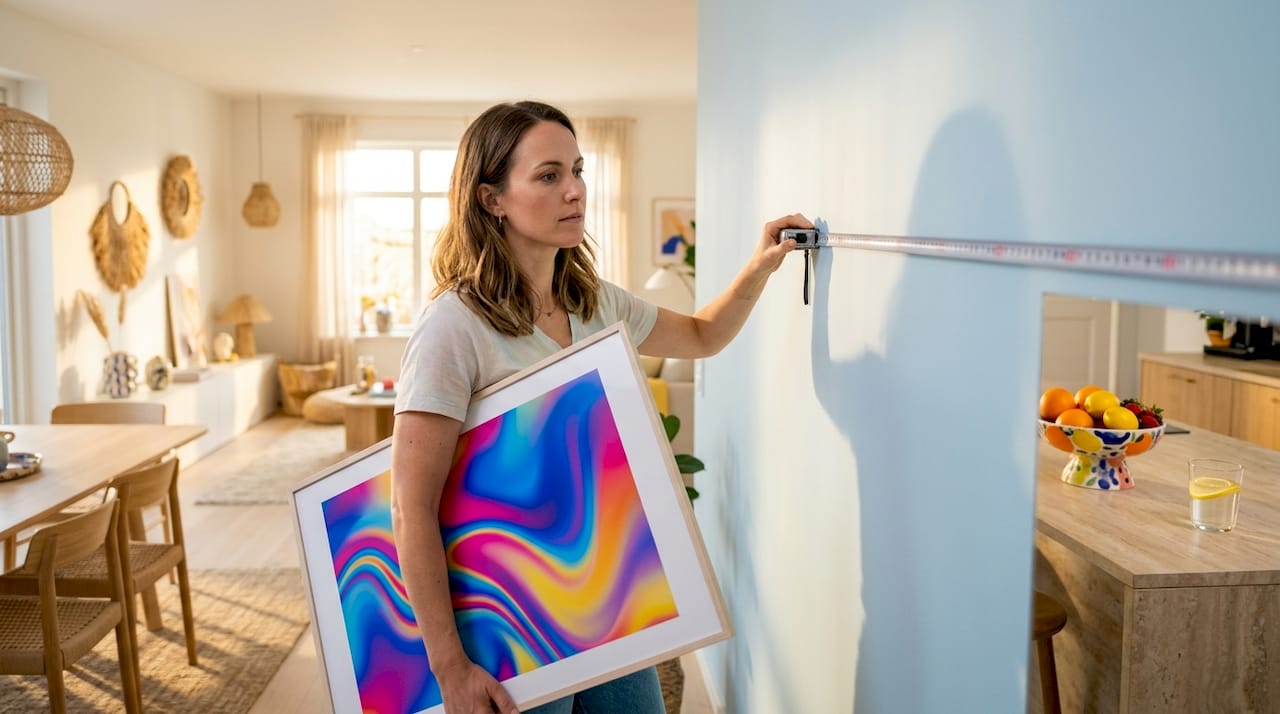
Pro Tip: Before buying, take a photo of your wall with a measuring tape visible, then use a simple editing app to paste a scaled image of the artwork onto it. Scale surprises more buyers than color does.
The functional roles of art in modern interior design
Beyond personal resonance, art also plays vital design roles that shape how your home looks and feels on a structural level. Wall art anchors spaces, creates visual hierarchy, and provides focal points that refine interiors without any architectural changes.
Open-plan layouts — now standard in modern homes — are particularly dependent on art for definition. Without walls to divide zones, art becomes the device that says this is the living area and this is where you eat. A large statement canvas above a sectional sofa creates a room within a room. Remove it and the space deflates into an undefined expanse of furniture.
Here is how art functions across key design scenarios:
- Creating a focal point. In a room without a fireplace or strong architectural feature, a single large-format piece gives the eye a place to land and the body a place to orient.
- Connecting disparate elements. Art that echoes a color from the curtains, the rug, and the throw pillows acts as visual glue, making unrelated furniture feel curated.
- Softening hard architecture. A canvas with organic shapes or flowing forms against a room full of right angles introduces visual tension that feels sophisticated rather than harsh.
- Regulating perceived room size. Dark, textured art on a small wall makes a room feel intimate and intentional. Light, expansive art on a large wall creates a sense of breathing room.
- Bridging old and new. A single contemporary piece in a traditionally furnished room signals confidence and personality — the mix reads as curated, not confused.
Here is a quick comparison to show art’s functional impact versus the lack of it:
| Design scenario | With intentional art | Without art |
|---|---|---|
| Open-plan living area | Defined zones, clear focal point | Undefined, impersonal |
| Bedroom above headboard | Grounded, restful, anchored | Floating, unfinished |
| Hallway or entry | Welcoming and character-rich | Forgotten, transitional |
| Home office wall | Inspiring, identity-reflecting | Sterile, unmemorable |
The modern art design impact comes precisely from treating art as a structural element rather than a finishing touch. If art is the last thing you add after everything else is decided, you are using it as wallpaper. If it is part of the design conversation from the beginning, it transforms the result entirely. Review modern art decor tips to see how this plays out in practical room arrangements.
Expert strategies for curating and caring for your home art collection
To ensure your art remains a vibrant, comforting presence, here are strategies for selecting and preserving your collection over time.
Curation is a different skill than buying. Buying is transactional. Curation is deliberate — it builds a visual story across pieces, rooms, and years. The best home collections mix scales, periods, and moods. A bold abstract canvas next to a small, quiet botanical study creates the kind of tension that keeps a room visually interesting without becoming chaotic.
Key principles for building a collection worth living with:
- Treat glazing and light direction as curation essentials. Light direction protects light-sensitive artworks like photography and works on paper from UV damage. Position fixtures at 30 degrees from the wall to minimize glare and heat exposure.
- Mix established confidence with emerging energy. One or two pieces by artists you genuinely believe in add authenticity that no amount of expensive gallery work can replicate.
- Never curate from a blank-wall panic. Filling space impulsively produces collections without coherence. Buy one piece you love, live with it, and let the next piece respond to it.
- Repurpose and reframe with intention. A found print in an unusual frame, an heirloom object mounted as wall art — these one-of-a-kind decisions build more character than any retail collection.
- Review your quality and care for wall art practices seasonally. Move pieces that fade in summer light. Rotate works that need rest from strong exposure.
Art care and well-being are intertwined in a way most people overlook. A faded, damaged print stops delivering its emotional value long before you consciously notice the deterioration. Protecting the physical quality of the work protects the psychological benefits it provides.
Pro Tip: When in doubt about a piece’s placement, hang it somewhere you see it first thing in the morning. That moment of daily contact is where art does its deepest emotional work.
Why art in the home is a living story, not just decoration
Here is the opinion most design advice avoids: the idea that art should match your decor is one of the most limiting frameworks you can apply to your living space. Matching is for socks. Art should do something more uncomfortable and more rewarding than that.
Art functions more like resonance — a living presence that evolves with your moods rather than a decorative object that holds a fixed meaning. The piece you bought after a difficult period will mean something different to you five years later when life has shifted. That change in meaning is not a flaw. It is the entire value of owning art over time.
We also believe that choosing art is an identity decision, not an aesthetic one. Every piece you select and display is a statement about what you value, what moves you, and what kind of visual world you want to inhabit daily. Homes without intentional art feel like they belong to no one in particular. Homes with it feel inhabited, considered, and alive.
The conventional advice says: choose art that complements your color palette. The better advice is: choose art that asks something of you — that makes you pause, wonder, or feel something you did not expect. That friction, repeated daily, is where the psychological benefit actually lives. Personalizing art as storytelling means accepting that your walls are not a backdrop. They are a biography.
Art should also change. Rotate pieces seasonally. Retire pieces that no longer speak to you. Move works to different rooms as your relationship with them shifts. A collection that never moves is a collection that has stopped growing — and so, in a quiet way, has the person living with it.
Discover vibrant wall art to transform your home
Now that you understand how deeply the role of art in home design goes — from emotional health to spatial structure — the next step is finding pieces that actually deliver on that potential. Generic prints from big-box stores will not get you there.
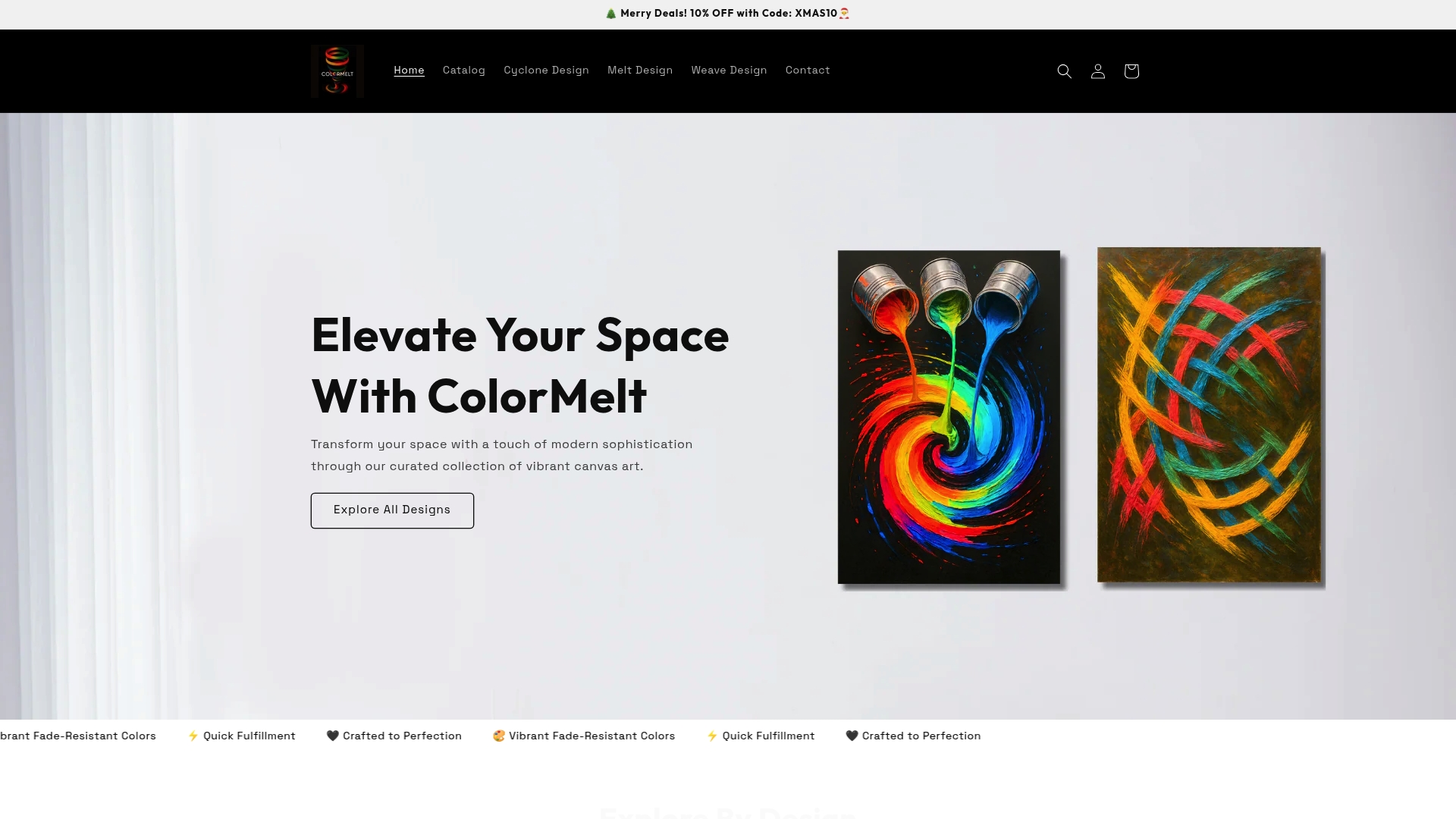
ColorMelt’s vibrant wall art collection is built around exactly the contrasts that make art psychologically engaging: light against dark, movement against stillness, bold color against neutral space. Each piece is crafted with fade-resistant inks and premium materials to ensure your investment holds its visual power for years. Whether you are drawn to the kinetic energy of the abstract canvas prints cyclone design or the organic sophistication of the creative wall hanging art weave design, there is a piece sized and styled to anchor your space with real intention. Browse the full collection and find the one that asks something of you.
Frequently asked questions
Can art really improve mental health at home?
Yes, research confirms that regular exposure to art reduces symptoms of depression and anxiety and promotes measurable psychological well-being — especially when the exposure is daily and the art is personally meaningful.
How do I choose art that fits my space?
Study room proportions and natural light movement first, then match the scale of the art to the wall rather than the room, and prioritize the emotional tone you want before choosing a style.
What is the role of wall art in modern interior design?
Wall art anchors open spaces, creates visual hierarchy, and personalizes interiors by connecting architectural elements with furnishings — it functions as a structural design tool, not a finishing touch.
How can I care for delicate artworks at home?
Protect light-sensitive art by avoiding direct sunlight, using UV-protective glazing on framed pieces, and positioning overhead fixtures at an angle to reduce glare and heat damage.