
Scandinavian Decor: Style, History, and How to Use It
What is Scandinavian decor, and why does it work so well?
Scandinavian decor is a design philosophy built on three interlocking ideas: keep it simple, make it functional, and make it warm. It originated in the Nordic countries, where long, dark winters made the home a sanctuary worth getting right. The result is a style that feels calm without feeling cold, and minimal without feeling empty.
The core elements show up consistently across every well-executed Scandinavian interior:
- Light neutral walls in white, off-white, warm gray, or soft beige
- Natural materials including light-toned wood, wool, linen, leather, and stone
- Clean lines on furniture with no unnecessary ornamentation
- Layered textiles such as wool throws, sheepskin rugs, and linen cushions
- Maximized natural light through unobstructed windows and reflective surfaces
- Hygge (pronounced “hoo-gah”), the Danish concept of cozy contentment built into the layout itself
- Purposeful objects where every piece earns its place by being both useful and beautiful
The balance between simplicity and warmth is what separates this style from plain minimalism. A bare white room is not Scandinavian. A white room with a chunky knit throw, a birch side table, and a single piece of art on the wall? That is.
Where Scandinavian design came from
The Scandinavian design movement emerged in the early 20th century across Denmark, Finland, Iceland, Norway, and Sweden. It was not an accident of aesthetics. Nordic winters are brutal, daylight is scarce for months at a stretch, and heating a home costs real money. Designers responded by prioritizing interiors that felt bright, warm, and efficient.
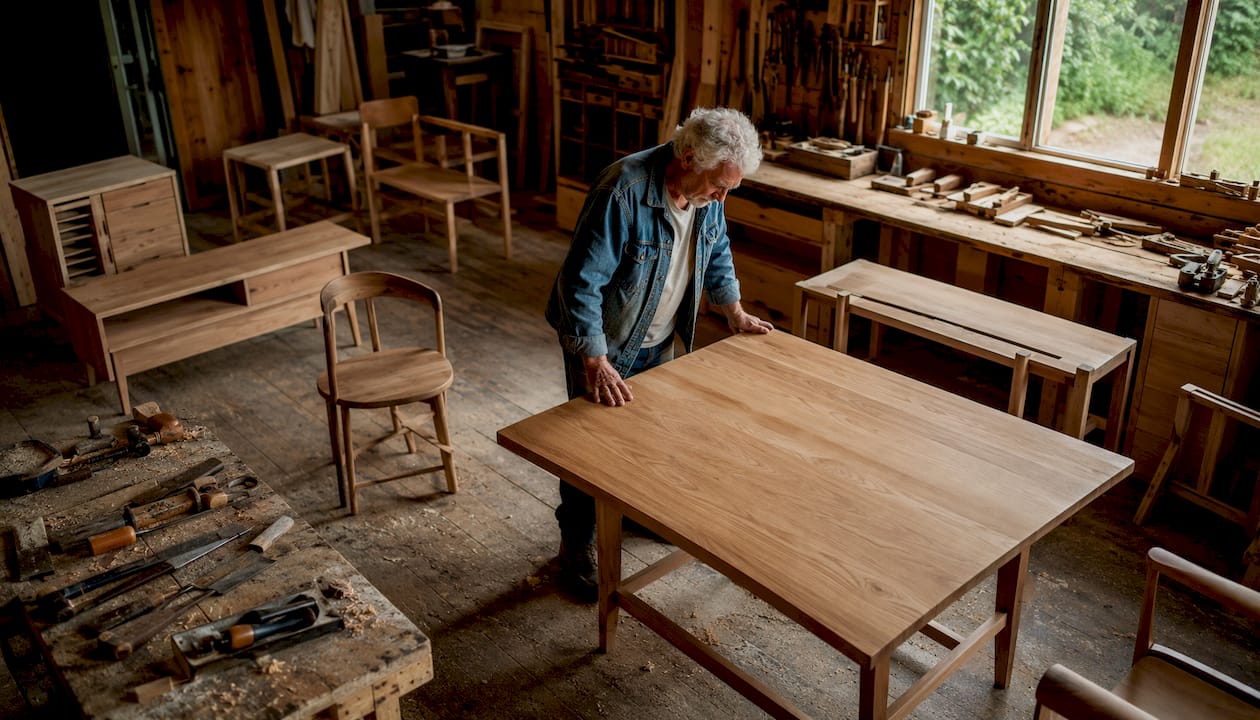
The movement gained its biggest international moment in 1954, when the Brooklyn Museum held its landmark “Design in Scandinavia” exhibition. American audiences saw furniture, ceramics, textiles, and glass that looked nothing like the ornate European styles they knew. The clean lines and honest use of materials were a revelation, and “Scandinavian Modern” became a genuine trend in the United States almost overnight.
What made the movement stick was its democratic core. Designers like Hans Wegner, Alvar Aalto, and Arne Jacobsen were not designing for wealthy collectors. They were designing well-made objects that ordinary people could actually live with. That philosophy, beauty with function, is still the defining standard today.
Swedish design in particular became known for minimalist furniture with clean lines, while Danish design leaned into craft and warmth. Finnish designers like Aalto pushed organic forms in wood and glass. Together, these national traditions created a regional aesthetic that felt unified without being identical.
Key characteristics that make Scandinavian interiors recognizable
The style has a clear visual signature, but understanding why each element exists makes it much easier to apply correctly.
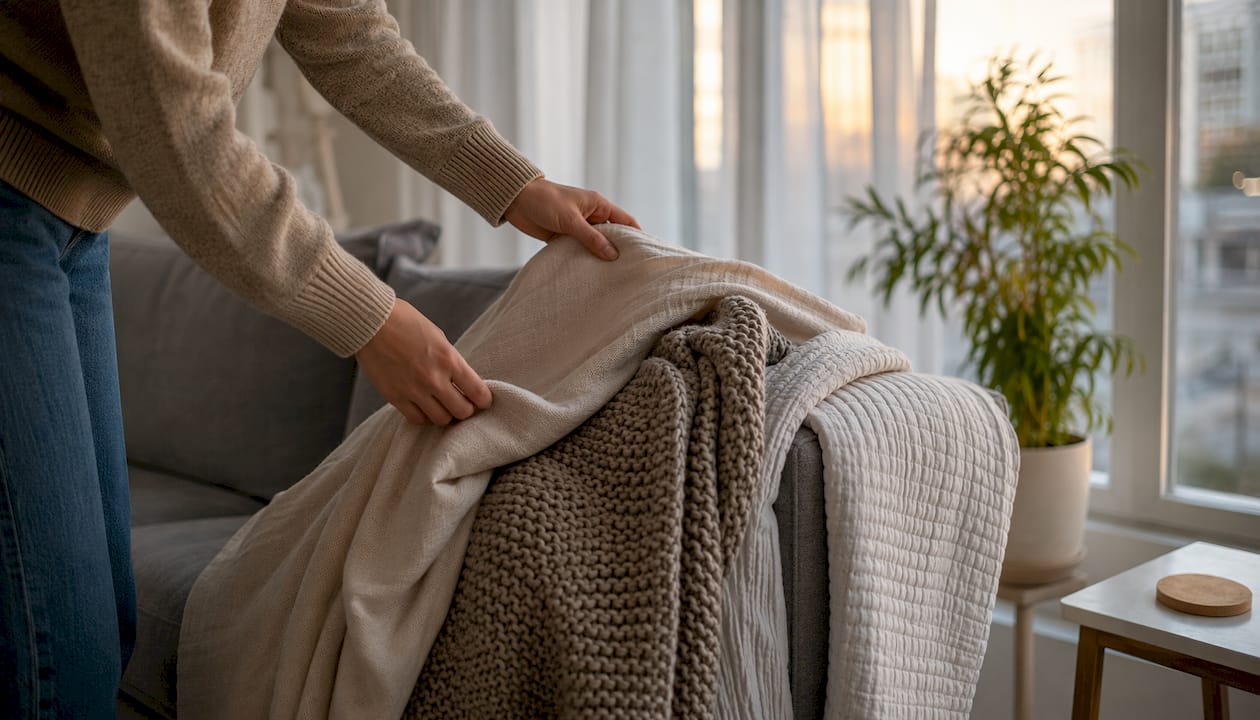
Minimalism with warmth, not sterility. A common mistake is treating Scandinavian decor as bare-bones minimalism. The real approach layers soft textures and organic materials to prevent any room from feeling cold. Sheepskin rugs, wool throws, and linen upholstery do the heavy lifting here.
Color palettes that go beyond white. The base is almost always neutral: white, warm gray, taupe, or soft beige. Accent colors tend to be muted rather than saturated. Think dusty blue, sage green, terracotta, or a warm mustard. These accents appear in textiles, ceramics, or a single piece of art, never across every surface.
Natural materials throughout. Light wood tones like birch, ash, and pine dominate flooring and furniture. Leather, wool, linen, and stone appear as secondary textures. The goal is to bring the outdoors in, which matters enormously when the outdoors is frozen for half the year.
Lighting as a design system. Nordic homes treat lighting as a layered strategy, not an afterthought. Pendant lights, floor lamps, table lamps, and candles work together to create warmth at different heights and intensities. Sculptural fixtures, especially in brass or matte black, double as art objects.
Clean lines and open layouts. Furniture sits low to the ground and avoids heavy ornamentation. Rooms stay uncluttered, with open floor plans that let light travel freely. Every piece of furniture has a clear purpose.
Common furniture and accessories you will find in a well-styled Scandinavian home:
- Wishbone chairs or Y-chairs (Hans Wegner’s 1949 design remains a benchmark)
- Tapered-leg sofas in natural linen or bouclé
- Birch or oak dining tables with simple joinery
- Woven baskets for storage
- Ceramic vases in matte earth tones
- Indoor plants, especially fiddle-leaf figs, pothos, or eucalyptus
- Abstract or nature-inspired wall art in a limited palette
Pro Tip: Hygge is not just a mood. Treat it as a spatial decision. Designate one corner of a room as a comfort zone: a reading chair with a floor lamp, a small side table, and a wool throw. That single zone changes how the whole room feels.
How to bring Scandinavian style into your home
Getting the look right comes down to restraint and layering, applied in the right order.
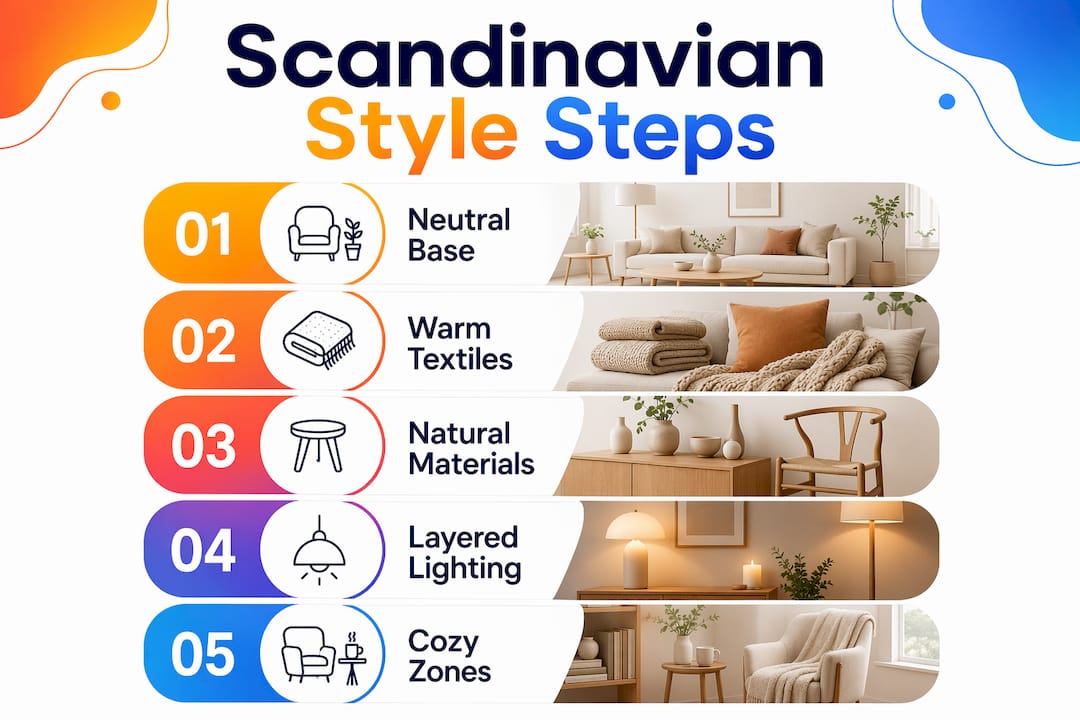
Start with the walls and floors. Paint walls in warm white or a soft neutral, not a stark, cool white. If you have hardwood floors, leave them light and natural. If you are working with carpet, a large jute or wool rug in a neutral tone sets the right foundation.
Choose furniture for function first. Every piece should have a clear job. A bench at the entry doubles as storage. A coffee table with a lower shelf holds books and baskets. Avoid furniture that exists purely for decoration.
Layer textiles deliberately. This is where warmth comes from. A linen sofa gets a wool throw. A wood floor gets a sheepskin accent rug. Cushions in varying textures, but a consistent color family, pull it together without visual noise.
Use multiple light sources. Overhead lighting alone flattens a room. Add a floor lamp in a reading corner, a pendant over the dining table, and a table lamp on a sideboard. Candles on a coffee table or windowsill add the final layer of warmth, especially in winter.
Practical steps for applying Scandinavian decor ideas at home:
- Keep the color palette to three or four tones maximum
- Choose one or two accent colors and repeat them in small doses across textiles and accessories
- Edit ruthlessly: if an object has no function and no meaning, remove it
- Mix one or two vintage or handmade pieces into an otherwise modern room for character
- Hang art at eye level and give it breathing room on the wall
Pro Tip: Hygge works as a structural concept, not just a styling mood. Before you buy a single piece of furniture, identify where people will actually sit together, read alone, or gather for a meal. Design those zones first, then fill the rest of the room around them.
Curating a Scandinavian home over time, with a blend of modern staples and meaningful personal objects, creates authentic warmth that a single shopping trip never will.
How modern Scandinavian decor is evolving, and where Colormelt fits in
The all-white Scandinavian interior is giving way to something richer. Current trends favor warmer, tonal palettes: muted blues, buttery yellows, and soft beiges that feel personal and livable year-round. Designers call this shift “curated eclecticism,” a mix of traditional Nordic staples with vintage finds, handmade objects, and contemporary art.
Wall art has become one of the most effective tools for this evolution. A single bold canvas can anchor a neutral room without disrupting its calm. Abstract pieces with fluid gradients or layered color fields work especially well because they add visual energy while keeping the palette controlled.
Colormelt’s abstract wall art fits directly into this approach. The brand’s canvas prints, framed pieces, and acrylic prints use gradient-rich color fields and fluid forms that complement rather than compete with a neutral Scandinavian base. A Cyclone or Weave design in warm amber and cream reads as a natural extension of a birch-and-linen room. A deeper, more saturated piece in navy or forest green gives a tonal palette its focal point.
What makes this pairing work is a shared commitment to craft. Scandinavian design has always valued quality craftsmanship over disposable trends. Colormelt’s fade-resistant prints and carefully finished frames reflect the same standard.
Key ways to integrate contemporary art into a Scandinavian-style home:
- Hang one large-format piece on the main wall of a living room rather than a gallery cluster
- Choose art with a color that echoes one accent tone already present in the room
- Use a framed canvas over a low credenza or sideboard for a classic Nordic composition
- Let the art be the room’s most expressive element, keeping everything else quieter

Colormelt’s collection of vibrant canvas prints gives you a direct way to add that focal point without rethinking your entire room. Browse the full range and find the piece that makes your neutral walls come alive.
Key Takeaways
Scandinavian decor works because it solves a real problem: how to make a home feel warm, calm, and beautiful without filling it with things you do not need.
| Point | Details |
|---|---|
| Minimalism plus warmth | Scandinavian style layers textiles and natural materials to prevent minimalism from feeling cold or sterile. |
| Hygge as structure | Designate comfort zones like reading nooks or gathering areas before selecting furniture or accessories. |
| Lighting is a system | Use pendant lights, floor lamps, table lamps, and candles together to build warmth at multiple levels. |
| Neutral base, controlled accents | Keep walls and floors neutral, then introduce muted accent colors through textiles, ceramics, and art. |
| Art as a focal point | One well-chosen piece of wall art anchors a neutral room and adds personality without disrupting the palette. |