
Why Art Makes a Difference in Your Life and World
Art is defined as one of the most powerful forces shaping human health, community, and culture. Research from the University of Arizona Health Sciences confirms that just 45 minutes of art making significantly reduces cortisol, the body’s primary stress hormone. A 2026 systematic review published in Frontiers in Public Health found that Arts on Prescription programs consistently improve well-being across diverse populations. UNESCO identifies art as a vehicle for empathy and Futures Literacy, the capacity to imagine and navigate complex possibilities. Understanding why art makes a difference starts here: it is not a luxury. It is a core human need with measurable effects on body, mind, and society.
Why art makes a difference to your health
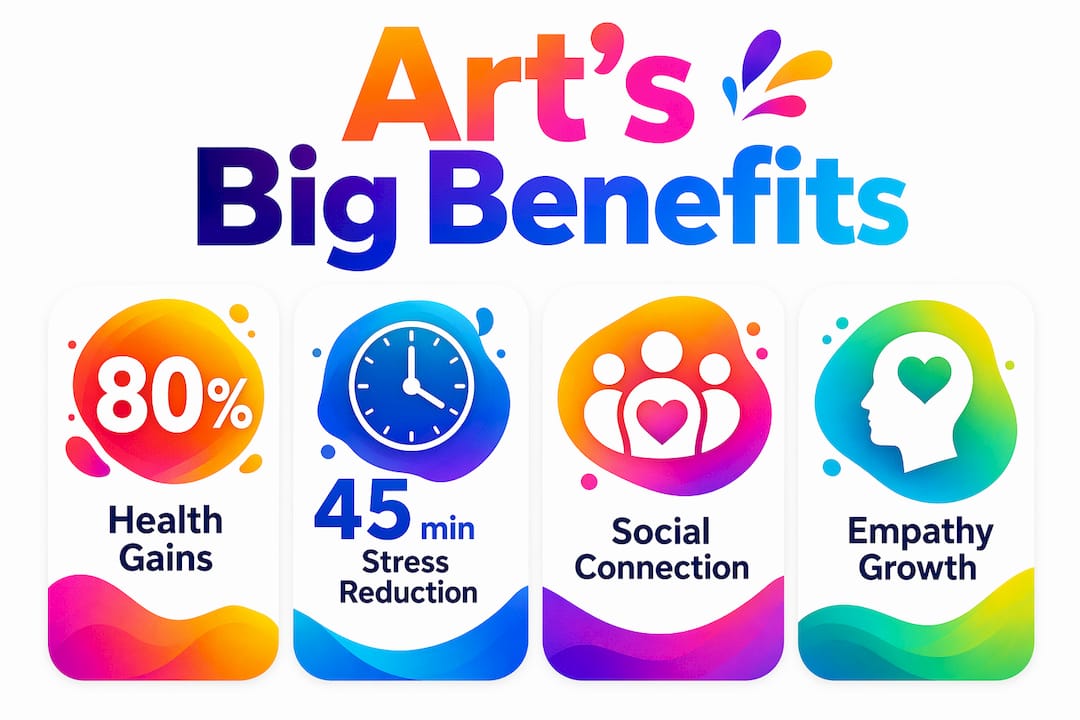
The physiological impact of art is concrete and well documented. More than 80% of arts-based interventions studied show measurable reductions in stress. That figure means art outperforms many lifestyle interventions that receive far more attention and funding.
Art engagement activates brain reward centers, increasing dopamine and modulating the autonomic nervous system by lowering heart rate and blood pressure. Dopamine is the same neurotransmitter linked to motivation and pleasure. Regular arts engagement also lowers inflammation, a biological marker tied to both mental and physical disease.

The benefits extend deeper than mood. Scientific evidence links sustained arts engagement to increased grey matter volume in memory regions of the brain and slower biological aging measured by epigenetic clocks. Put simply, people who engage with art regularly may age more slowly at a cellular level.
Passive engagement counts too. Viewing art in museums activates the same neural circuits for emotion regulation and reward as creating art. This makes art one of the most accessible health interventions available, requiring no prescription, gym membership, or special skill.
- Stress reduction: 45 minutes of art making measurably lowers cortisol levels.
- Brain health: Arts engagement increases grey matter and slows cognitive aging.
- Emotional regulation: Creative activity activates reward circuits and stabilizes mood.
- Inflammation: Regular engagement lowers inflammatory markers linked to chronic disease.
- Accessibility: Passive viewing produces real physiological benefits, not just active creation.
Pro Tip: You do not need to be a skilled artist to get the health benefits. Doodling, coloring, or arranging objects counts. The neural and hormonal responses activate regardless of artistic ability.
How does art build community and social resilience?
Art functions as social infrastructure. This is not a metaphor. Social psychological research formally describes art as a social cure for group emotional regulation, meaning it helps communities process collective stress and build shared identity. A neighborhood mural, a community choir, or a public sculpture does work that policy alone cannot do.
The mechanism is belonging. Shared creative experiences create common reference points. They give people a reason to gather, a story to tell together, and a sense that their community has a distinct identity worth preserving. Isolation, by contrast, is one of the strongest predictors of poor mental and physical health outcomes.
Community arts programs directly address isolation. They bring people into contact with others they would not otherwise meet, across age, background, and experience. The social cure framework shows this contact, when organized around creative activity, produces lasting improvements in group well-being, not just temporary mood lifts.
Art also enables collective narrative. Communities that can tell their own story, through murals, theater, music, or public art, hold more agency over how they are perceived and how they move forward. This is why art and social change have been inseparable throughout history, from the Harlem Renaissance to civil rights protest songs to contemporary street art.
Here are four ways art builds social resilience at the community level:
- Shared experience: Participating in or viewing art together creates common emotional ground and reduces social fragmentation.
- Reduced isolation: Community arts programs bring together people who might otherwise remain disconnected, improving group well-being.
- Collective identity: Public art gives communities a visible, shared story that reinforces belonging and pride.
- Emotional processing: Art provides a structured way for groups to process grief, trauma, or change without requiring verbal articulation.
In what ways does art shape culture and future possibilities?
Art’s influence on culture operates on a longer timeline than its health benefits, but the effects are no less real. UNESCO’s research on Futures Literacy identifies art as one of the primary tools societies use to imagine scenarios beyond the present. Futures Literacy is the ability to think in complex, non-linear ways about what could come next. Art trains that capacity.
Empathy is the mechanism. When you engage with a painting, a film, or a piece of music created by someone with a different life experience, you practice inhabiting another perspective. That practice transfers. Societies with rich arts cultures demonstrate greater capacity for the kind of perspective-taking that complex global challenges require.
| Art’s cultural function | How it works | Why it matters |
|---|---|---|
| Futures Literacy | Art presents non-linear scenarios and possibilities | Societies better equipped to navigate uncertainty |
| Empathy development | Exposure to diverse creative voices builds perspective-taking | Stronger cross-cultural understanding |
| Awe and well-being | Museum visits and aesthetic experiences lower inflammation | Physical health benefits tied to cultural participation |
| Collective memory | Art preserves stories that formal history omits | Communities maintain identity across generations |
| Social imagination | Art proposes alternatives to the status quo | Drives social change and cultural evolution |
Awe deserves specific attention. Studies document that museum visits increase awe, which lowers inflammatory markers and reduces somatic symptoms. Awe is the emotional experience of encountering something vast and meaningful. Art reliably produces it. That experience promotes both mental and physical health, making cultural participation a genuine health intervention at the population level.
The anticipation of an art experience also matters. Research suggests that expecting a museum visit may itself reduce cortisol before you even walk through the door. The brain begins processing the benefit in advance. This finding reframes how we think about arts access: getting tickets to a gallery show is not a treat. It is a health decision.
What practical steps help you use art to make a real impact?
Integrating art into daily life does not require a studio, a gallery membership, or natural talent. The importance of art lies partly in how low the barrier to entry actually is. The key shift is prioritizing process over product.
Experts at the University of Arizona Health Sciences warn that focusing on the outcome can paradoxically increase stress rather than reduce it. When you paint to make something beautiful, you add performance pressure. When you paint to experience the act of painting, you access the full physiological benefit. This distinction matters enormously for people who say they are “not creative.”
Practical ways to start:
- Spend 45 minutes creating something. Draw, paint, write, sculpt, or arrange. The specific medium is less important than the duration and the process-focused mindset.
- Visit a museum or gallery. Even a single visit boosts subjective well-being through measurable affective change. Highly stressed individuals benefit even more.
- Join a community arts program. Many cities offer free or low-cost programs through libraries, community centers, and public health initiatives. Arts on Prescription programs are now available through some primary care settings.
- Display art in your home. Surrounding yourself with images that evoke positive emotion creates a low-effort, ongoing exposure to art’s benefits. Research on art in home environments shows consistent mood and well-being improvements.
- Engage with art passively. Listen to music intentionally, watch a film with attention, or spend time with a single artwork. Passive engagement activates the same reward circuits as creation.
Pro Tip: If you feel blocked by the idea of “making art,” reframe the activity. Call it mark-making, arranging, or experimenting. The brain does not require the label “art” to receive the benefit. The activity itself does the work.
The benefits of artistic expression scale with consistency. A single session reduces cortisol. Regular engagement over months alters brain structure and slows biological aging. Treating art as a daily or weekly practice, rather than an occasional event, produces the most durable results.
Key Takeaways
Art is a measurable health intervention, a social infrastructure, and a cultural force that shapes how individuals and communities navigate the present and imagine the future.
| Point | Details |
|---|---|
| Art reduces stress physically | Just 45 minutes of art making lowers cortisol, with over 80% of arts interventions showing measurable stress reduction. |
| Passive viewing counts | Visiting a museum or displaying art at home activates the same brain reward circuits as active creation. |
| Art builds community | The social cure framework shows shared creative experiences reduce isolation and improve group well-being. |
| Culture and futures | UNESCO links art to Futures Literacy, the capacity to imagine and navigate complex possibilities with empathy. |
| Process beats product | Focusing on the creative process rather than the outcome unlocks the full physiological and psychological benefit. |
Art as a health asset, not an afterthought
Researcher Daisy Fancourt made a point that has stayed with me: if the arts produced a drug with similar health benefits, we would prescribe it every day. That framing cuts through the noise. We do not debate whether exercise or sleep matters. Art deserves the same status.
What I have noticed, working around art and design for years, is that the biggest barrier is not access. It is permission. People wait to engage with art until they feel they have earned it, or until they feel “creative enough.” That wait is costing them real health benefits, real social connection, and real cultural participation.
The research on how art influences society is no longer soft or anecdotal. Grey matter changes, epigenetic aging markers, inflammatory biomarkers: these are hard outcomes. The conversation needs to shift from “art is nice to have” to “art is a core investment in human health and social cohesion.”
My honest view is that the most underused entry point is the home environment. You do not need to join a program or visit a gallery to start. Putting a piece of art on your wall that genuinely moves you is a daily exposure. It is low effort and high return. Start there.
— Shlomo
Bring the benefits of art into your home with Colormelt
Art’s impact on mood, stress, and well-being does not stop at the gallery door. The same physiological benefits that researchers document in museum settings apply to the art you live with every day.
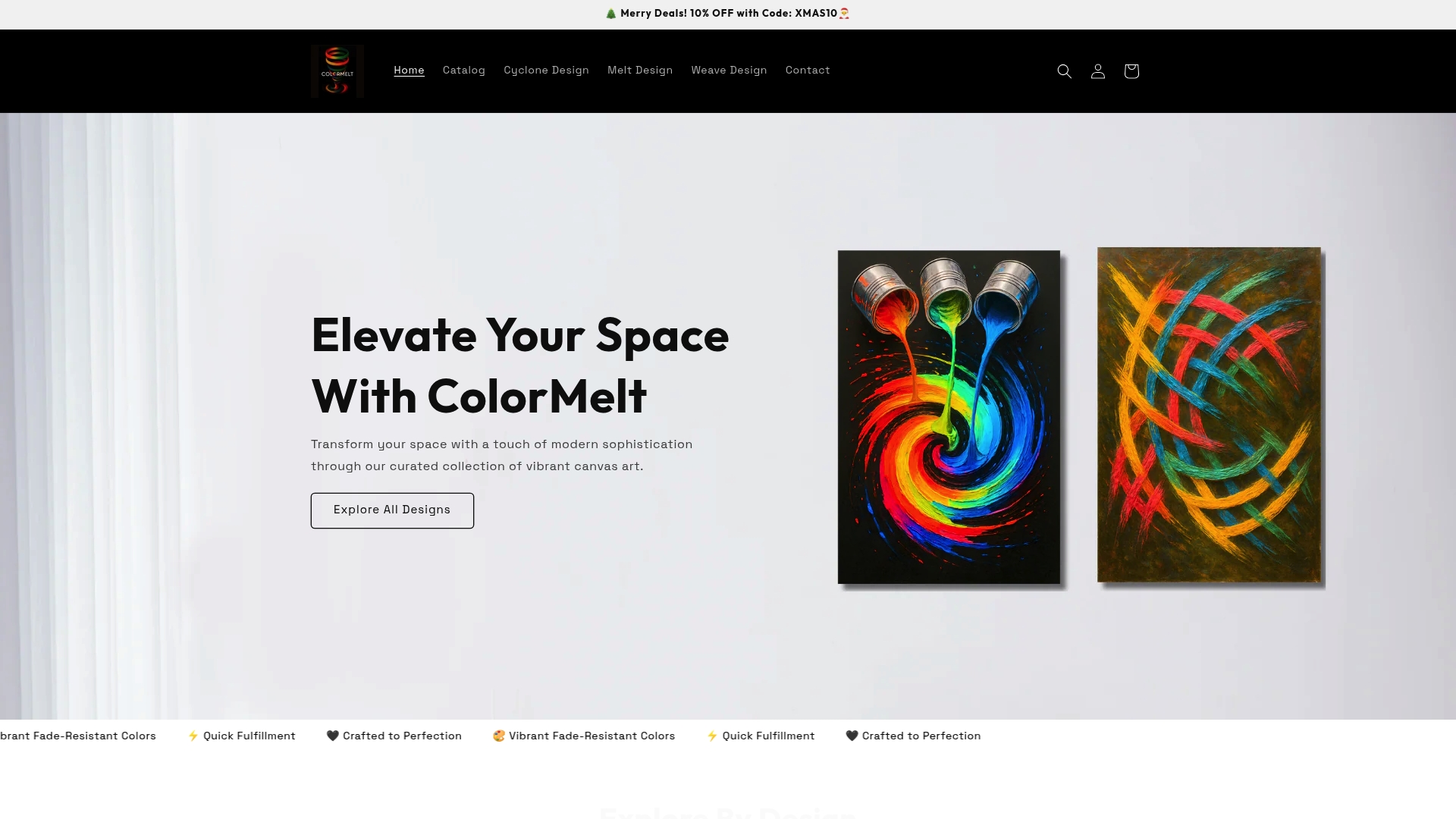
Colormelt’s vibrant wall art collection brings bold, color-rich designs into your living space, from abstract canvas prints to framed weave and cyclone motifs built to hold their color for years. Each piece is crafted with fade-resistant materials and ships quickly, so the gap between deciding and displaying stays short. Whether you are drawn to the energy of the Melt Design framed canvas or the structured movement of the Weave series, Colormelt offers a direct way to make art a daily part of your environment and your well-being.
FAQ
What does art do to the brain?
Art engagement activates brain reward centers, increases dopamine, and modulates the autonomic nervous system by lowering heart rate and blood pressure. Sustained engagement over time increases grey matter volume and slows biological aging measured by epigenetic clocks.
Does viewing art count, or do you have to create it?
Both active creation and passive viewing activate neural circuits for emotion regulation and reward. Museum visits consistently boost well-being and lower inflammatory markers, making passive art engagement a legitimate health intervention.
How does art help communities?
Art functions as social infrastructure by creating shared experiences that reduce isolation, build collective identity, and help groups process stress and trauma. Social psychological research describes this as the “social cure” effect.
What is Futures Literacy and how does art develop it?
Futures Literacy is the capacity to think in complex, non-linear ways about what could happen next. UNESCO identifies art as a primary tool for developing this skill because it trains empathy and imagination through exposure to diverse perspectives and scenarios.
How much art engagement is needed to see benefits?
A single 45-minute session of art making measurably reduces cortisol. Consistent engagement over months produces structural brain changes and slower biological aging, making frequency the key variable for long-term benefit.