
How Art Defines Space: Transform Any Room
Art defines space by actively shaping the areas around, between, and within objects in an environment, making it far more than decoration. Research models art as a proto-environment that viewers mentally inhabit, navigating its spatial framework as they would a physical room. This means every piece you hang or place is doing structural work, not just aesthetic work. Understanding how art defines space gives you real control over how a room feels, flows, and functions. Whether you are redesigning a living room or rethinking an office layout, the principles here apply directly.
How does art define and manipulate space?
Space in art refers to the areas around, between, and within objects, and artists manipulate these zones deliberately to control what you see and feel. The two foundational categories are positive space and negative space. Positive space is the subject itself. Negative space is everything surrounding it. When these two are balanced well, a composition feels intentional. When negative space dominates, a piece reads as open and calm. When positive space crowds the frame, it feels dense and energetic.
Beyond positive and negative, artists work with open versus closed space, and shallow versus deep space. Open compositions invite the eye to wander freely. Closed compositions contain the viewer’s attention within a defined boundary. Shallow space keeps all elements close to the picture plane, creating a flat, graphic effect. Deep space uses perspective, overlapping, and scale shifts to simulate distance, pulling the viewer into the image.
Two-dimensional and three-dimensional spatial constructs work differently but serve the same goal: controlling perception. Paintings use linear perspective, atmospheric haze, and foreshortening to fake depth on a flat surface. Sculpture and installation art occupy actual physical space, forcing the viewer to move around them. Depth perception in art is viewer-dependent and shifts dynamically as the observer moves. Leonardo da Vinci’s Renaissance paintings are a documented example of this effect.
- Positive space draws attention to a focal point and anchors a composition.
- Negative space creates breathing room and controls visual weight.
- Shallow space produces graphic, bold, modern effects suited to contemporary interiors.
- Deep space adds perceived distance, making a room feel larger than it is.
- Three-dimensional works redirect foot traffic and create physical focal points in a room.
Pro Tip: Place a deep-space landscape painting on a short wall to visually push the wall back and make a narrow room feel wider.
Does art affect mood and perception in real spaces?
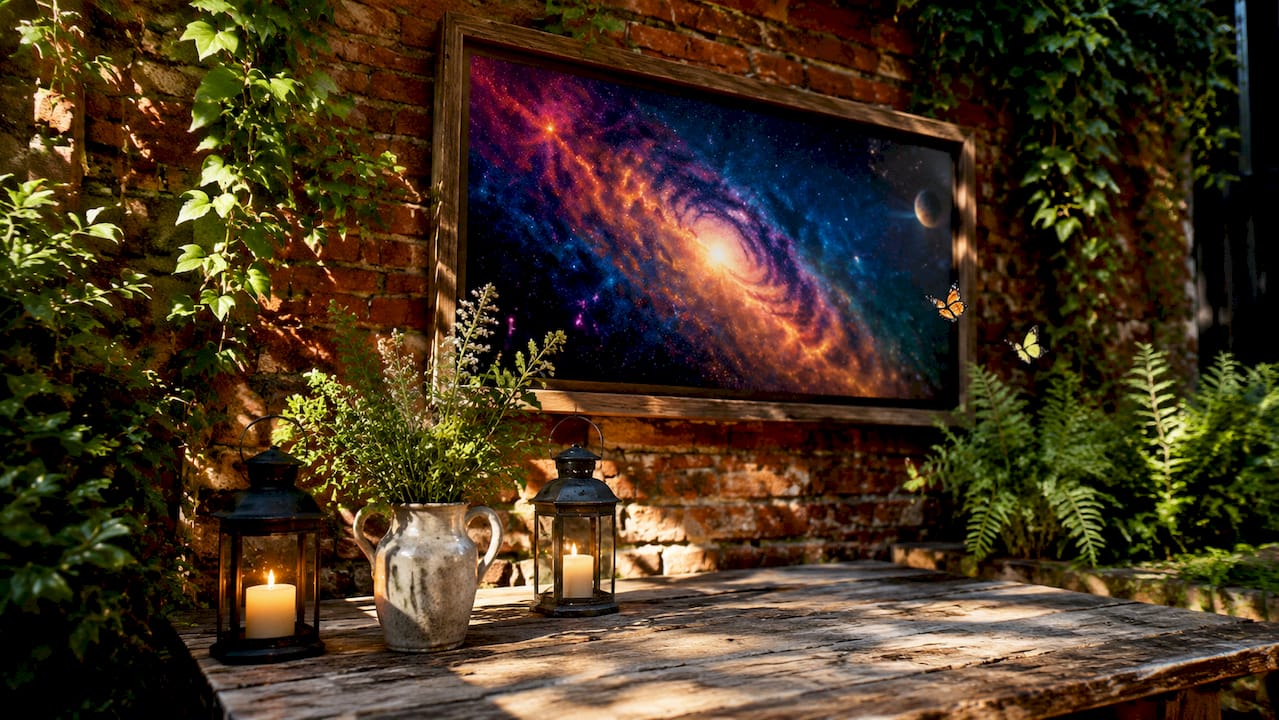
Art does not just look good. It changes how people feel and perform in a space. A 2026 longitudinal study with 300 participants found that biophilic art environments produced a 67% improvement in depression symptoms and a 72% reduction in anxiety. That is not a subtle effect. It means the art on your walls has a measurable clinical impact on mental health.
Immersive art environments take this further. An experiment with 40 subjects using a hexagonal mirror-display installation found that viewing art in immersive spaces significantly boosted motivation, creativity, and overall positive impressions compared to geometric shapes or empty settings. The effect was statistically significant at the 1% level. This matters for anyone designing a creative studio, home office, or collaborative workspace.
“Art acts as a proto-environment where viewers mentally inhabit and navigate the artwork’s spatial framework, affecting attention and movement.” — Frontiers in Psychology, 2025
Public art produces similar results at the urban scale. Research on pedestrian environments found that public art increases perceived restorativeness of commercial streetscapes, and the form of the artwork matters more than its theme. This finding is counterintuitive. Most people assume subject matter drives emotional response. The data says shape and composition do more work. That insight transfers directly to interior choices: the structure of a piece often outperforms its literal content.
The science behind displaying art at home confirms that nature-inspired pieces in residential settings reduce stress and improve emotional health, reinforcing what the clinical studies show.
What design methods help art transform a space?
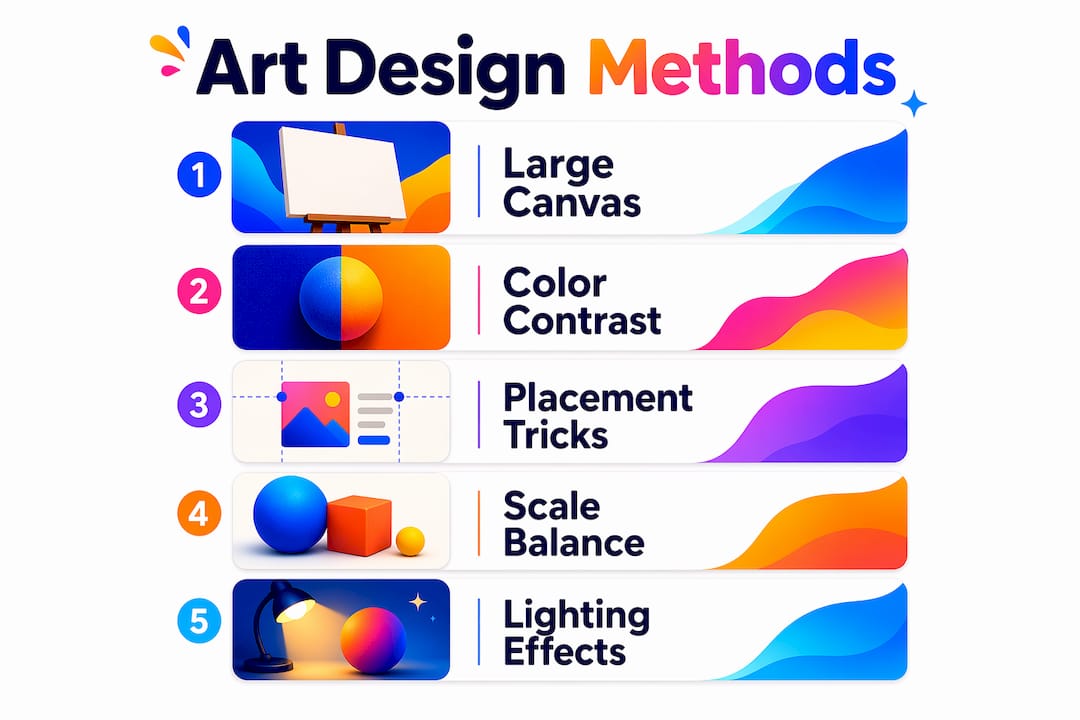
Professional designers use four primary levers when placing art to define space: scale, gesture, color, and positioning. Each one produces a distinct spatial effect, and combining them intentionally creates environments that feel curated rather than assembled.
-
Scale and gesture. Larger gestural art pieces invite social engagement and set the pace of a room. Smaller, minimal works promote calm and intimacy. A single oversized canvas in a living room pulls people toward it and creates a natural gathering point. A series of small prints along a hallway slows foot traffic and encourages closer inspection.
-
Illusion techniques. Mirroring combined with art imagery expands perceived space effectively. Placing a large abstract print beside a mirror doubles its visual field and makes a compact room read as open. This technique comes directly from immersive installation art and translates cleanly to residential interiors.
-
Color and chromatic interaction. Color interactions between artwork and walls influence perceived spatial size and temperature, building on Josef Albers’ foundational color theory. Warm-toned art on a cool gray wall advances visually, making the wall feel closer. Cool-toned art on a warm wall recedes, pushing the wall back. This is not subjective preference. It is a documented perceptual mechanism.
-
Murals and large-scale works. Murals humanize architectural space, transforming sterile or transactional environments into places with identity and emotional weight. A 2025 field study confirmed that murals foster community and positive engagement in urban and interior settings alike.
| Method | Spatial Effect |
|---|---|
| Large gestural canvas | Creates social focal point, increases energy |
| Small minimal prints | Promotes calm, defines intimate zones |
| Cool-toned art on warm wall | Recedes visually, expands perceived depth |
| Warm-toned art on cool wall | Advances visually, adds warmth and closeness |
| Mirror paired with art | Doubles visual field, enlarges perceived space |
Pro Tip: Before buying a piece, hold a same-size paper cutout against the wall at the intended hanging height. Viewer-dependent depth shifts mean the effect changes with distance, so test from your most common seated or standing position.
How does art’s role differ across homes, offices, and public spaces?
The impact of art on space varies significantly by setting. Each environment has different functional demands, and the art choices that work in one context can fail in another.
In residential spaces, the goal is usually comfort, identity, and emotional resonance. Strategic art placement influences the sense of space and mood in ways that furniture alone cannot. A large abstract canvas above a sofa anchors the seating area and gives the room a visual center. Smaller works in a bedroom should favor calm palettes and minimal composition to support rest.
In workplaces, the priority shifts to creativity, focus, and social dynamics. Wall art in workspaces changes how people perceive and use the space around them. Open-plan offices benefit from large-scale works that define zones without physical barriers. Private offices respond better to pieces that reduce visual noise and support concentration.
In public and urban environments, art serves a community function. The research on public art and perceived restorativeness shows that form drives impact more than theme. This means abstract murals and sculptural installations often outperform literal or narrative works in terms of how people feel in the space.
- Residential: prioritize emotional resonance, personal identity, and scale relative to furniture.
- Workplace: use art to define zones, boost creative energy, and reduce visual monotony.
- Urban: favor bold form over complex narrative; abstract shapes restore attention more effectively.
- All settings: viewer-dependent depth shifts require testing placement from the most common viewing position before committing.
The integrative approach combines architectural awareness with artistic intentionality. Art placed without considering sightlines, lighting, and room function rarely achieves its full spatial effect.
Key takeaways
Art defines space through deliberate manipulation of perception, scale, color, and placement, making every artistic choice a spatial design decision.
| Point | Details |
|---|---|
| Art is structural, not decorative | Every piece actively shapes how a room feels, flows, and functions. |
| Negative space controls visual weight | Balancing positive and negative space determines whether a room reads as calm or energetic. |
| Color interactions shift perceived size | Cool-toned art expands space visually; warm-toned art brings walls closer. |
| Scale drives social behavior | Large gestural works invite gathering; small minimal pieces create intimacy. |
| Setting determines the right approach | Homes, offices, and public spaces each require different art strategies to achieve their goals. |
What i’ve learned about art and space after years of observation
Most people treat art selection as the last step in decorating a room. They get the furniture right, paint the walls, and then look for something to fill the blank space above the sofa. That sequence almost always produces a mismatch between the art and the room’s actual spatial needs.
The pieces that genuinely transform a space are chosen before the furniture is finalized. Scale is the variable most people underestimate. I have seen a room with a beautiful painting that reads as an afterthought simply because the canvas was six inches too small for the wall. The same composition at the right scale would have anchored the entire room.
Lighting is the other factor that most guides ignore. A piece with deep spatial illusions, the kind that use atmospheric perspective or layered color, loses most of its effect under flat overhead lighting. Directional light from a track fixture or a picture light changes how depth reads in a painting. The spatial effect you bought is often sitting dormant because the light is wrong.
The research on art as a proto-environment resonates with what I observe in practice. People do not just look at art. They orient themselves relative to it. They move toward it, pause in front of it, and use it as a reference point in the room. That behavioral reality means placement is not just about aesthetics. It is about choreographing how people move through and experience a space. Intentional curation, grounded in that understanding, produces rooms that feel genuinely different from rooms that are simply decorated.
— Shlomo
How Colormelt can help you define your space
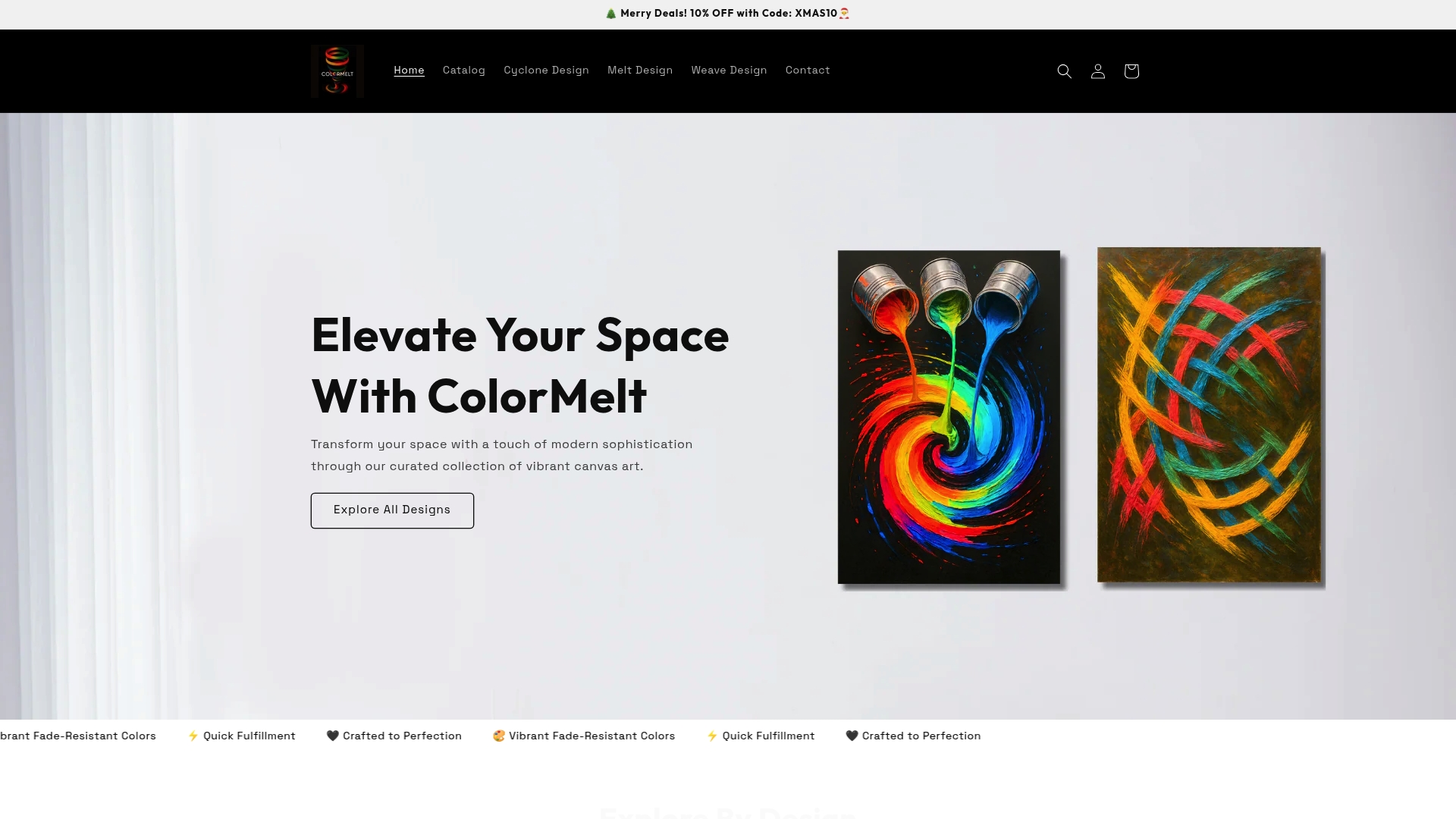
Colormelt’s wall art collections are built around the principles this article covers: scale, color interaction, and the spatial impact of bold, intentional design. Each piece is crafted with fade-resistant colors and produced for quality that holds up over time. Whether you need a large gestural canvas to anchor a living room, a vibrant abstract print to energize a workspace, or a textured weave design wall hanging to add depth to a narrow wall, Colormelt has options designed to do real spatial work. Browse the full collection and find the piece that fits your room’s specific needs.
FAQ
What does it mean for art to define space?
Art defines space by shaping the areas around, between, and within objects in an environment, influencing how large, warm, calm, or energetic a room feels. Research models this as a proto-environment effect, where viewers mentally navigate the artwork’s spatial framework.
How does color in art affect the perceived size of a room?
Color interactions between artwork and surrounding walls influence perceived spatial size and temperature, a mechanism grounded in Josef Albers’ color theory. Cool-toned art makes walls recede visually; warm-toned art brings them forward.
Does art placement really change how people behave in a space?
Yes. Larger gestural works invite social engagement and create gathering points, while smaller minimal pieces promote calm and intimacy. Placement also affects foot traffic patterns, as people orient and move relative to prominent art.
What type of art works best in a home office?
Immersive or nature-inspired art works best in home offices. A 2026 study found that biophilic art environments reduced anxiety by 72% and improved mood significantly, making them well-suited to spaces where focus and wellbeing matter.
How do murals differ from framed art in their spatial impact?
Murals humanize architectural space at a scale that framed art rarely matches, transforming sterile environments into places with community identity and emotional weight. Framed art offers more flexibility in placement and scale adjustment for specific zones within a room.