
How wall art transforms your workspace and boosts creativity
Most professionals treat wall art as an afterthought, something to fill empty space once the desk and chair are sorted. That instinct undersells wall art completely. Research shows that workplace aesthetics boost productivityclean%20version%20FINAL%20with%20tables%20and%20figures%20included.pdf), well-being, and creativity in measurable ways, compared with bare or minimally furnished environments. What hangs on your walls is not decoration. It is an active ingredient in how you think, feel, and perform every single workday.
Table of Contents
- Why wall art matters: Science-backed benefits
- The emotional and physiological impact of wall art
- Personalization: Making your workspace truly yours
- How to choose the right wall art: Practical tips for professionals
- A designer’s perspective: What most workspace art advice misses
- Find wall art that fits your vision
- Frequently asked questions
Key Takeaways
| Point | Details |
|---|---|
| Wall art boosts work performance | Art and aesthetics in your workspace enhance productivity, creativity, and mood. |
| Personalization increases motivation | Choosing wall art that reflects your taste can raise motivation and ownership. |
| Art affects emotional well-being | Viewing art can lower stress and improve focus through emotional and physiological pathways. |
| Right choices matter | Selecting colors and types of art intentionally ensures you get the desired productivity and mood benefits. |
Why wall art matters: Science-backed benefits
For a long time, workspace design was treated as a facilities problem, not a performance problem. You needed a desk, a chair, good lighting, and that was about it. The research community has spent the last decade proving that view wrong, and the findings are hard to ignore.
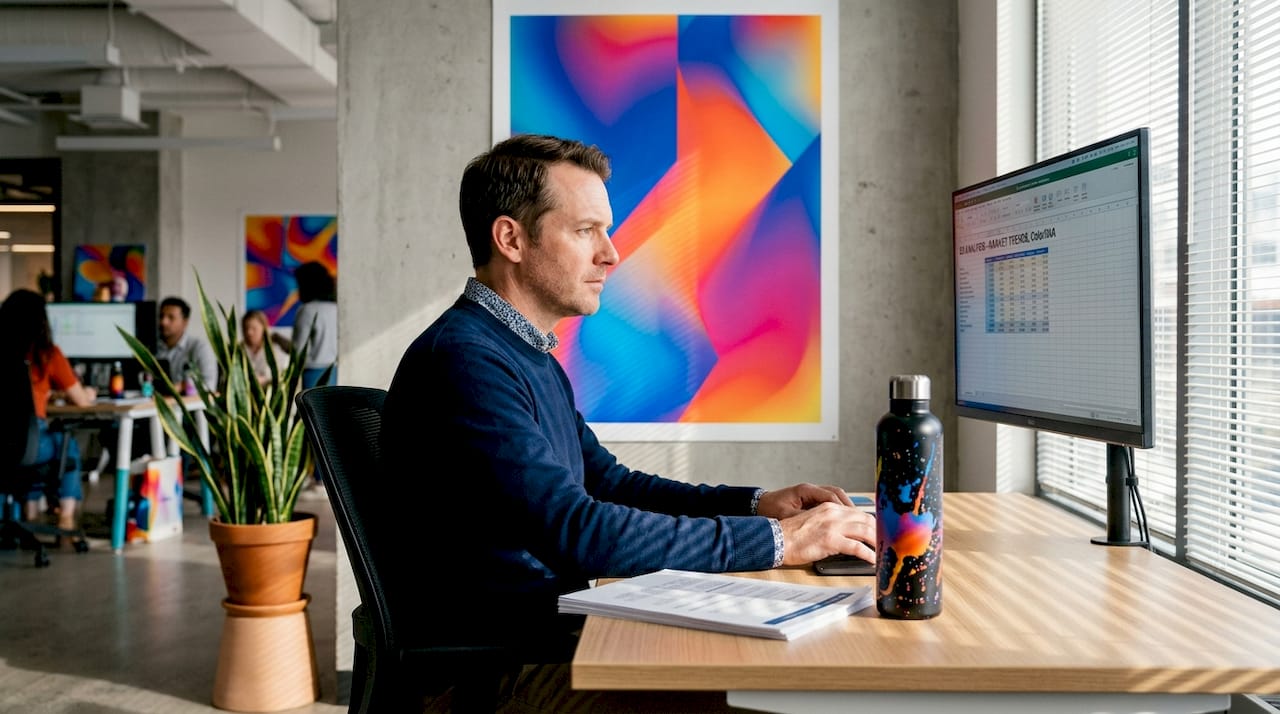
Workplace aestheticsclean%20version%20FINAL%20with%20tables%20and%20figures%20included.pdf) including art, color, and plants are consistently linked with better productivity, stronger well-being, and greater creative output compared with sparse interiors. This is not a soft finding. Multiple study designs, from office surveys to controlled simulations, point in the same direction.
A virtual reality workspace simulation published in Scientific Reports found that wall and room variables measurably shift both productivity and emotional state. When participants worked in visually richer environments, their output and mood improved. The walls themselves were an active part of the experiment, not background noise.
The numbers tell a compelling story on their own. Here is a quick summary of what the evidence supports:
| Environmental element | Documented effect |
|---|---|
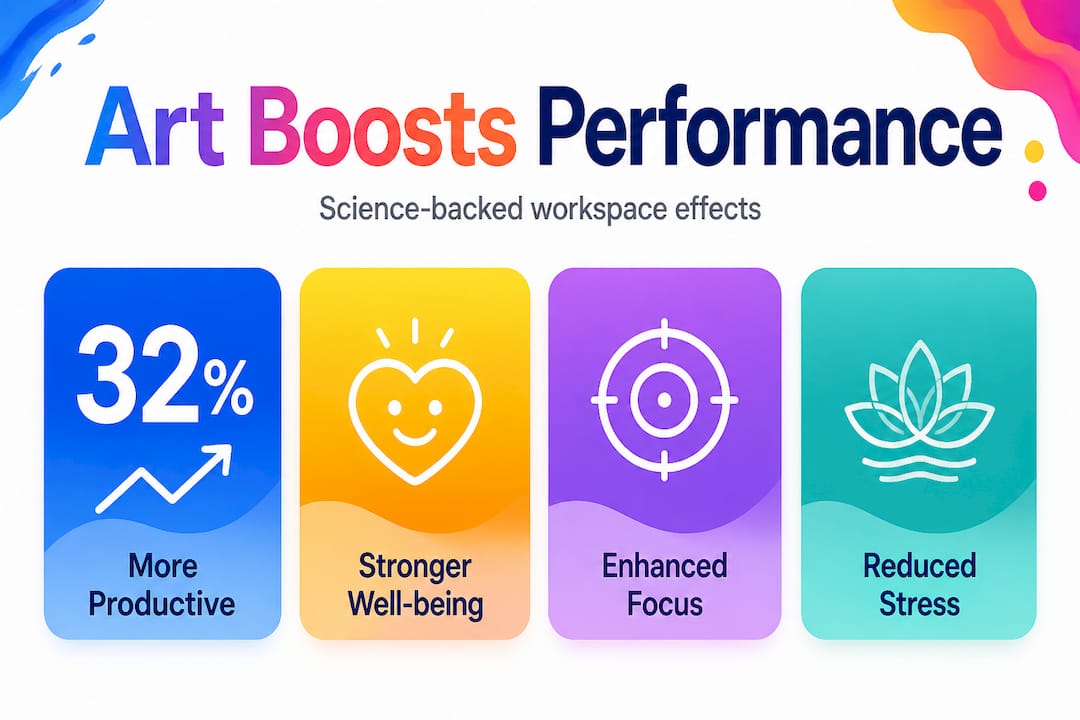
| Personalized workspace | Up to 32% productivity boost |
| Color variation on walls | Measurable mood and output shifts |
| Biophilic or green elements | Reduced stress, improved attention |
| Art in office settings | Higher reported well-being and engagement |
Beyond the numbers, the mechanism makes intuitive sense. When your visual environment signals care, intention, and personality, your brain registers that this is a space worth engaging with. Compare that to a blank white wall that signals nothing. Your nervous system does not stay neutral. It reads the environment constantly, and bland reads as unstimulating.
Key benefits backed by the research include:
- Improved focus when art reduces visual noise without creating monotony
- Stronger creative thinking in environments with visual variety
- Higher reported job satisfaction in personalized or aesthetically considered spaces
- Lower fatigue during long work sessions in visually engaging rooms
Our science-backed guide to art’s impact breaks this research down further if you want to go deeper on the mechanisms.
The emotional and physiological impact of wall art
Understanding that wall art affects productivity is useful. Understanding why it does is what lets you make smarter choices. The answer lives partly in your emotional system and partly in your body’s physical stress response.
Research from King’s College London found that viewing art engages the body in ways that may reduce stress-related inflammatory signaling, at least when engaging with original artworks in gallery settings. While most of us are not working in galleries, the underlying principle holds. Visual engagement with meaningful or beautiful images activates the brain’s reward pathways, which directly counteracts stress responses.
“Art is not a luxury for the workspace. It is a functional tool that signals your brain to stay engaged, curious, and calm, all at the same time.”
Color is one of the most immediate emotional levers available to you. Warm tones like deep reds and oranges can increase energy and stimulation. Cool blues and greens tend to support relaxation and focused thinking. Abstract patterns with high contrast can trigger curiosity and lateral thinking. This is why choosing art is not just a style decision. It is a mood management decision.
Biophilic design adds another layer. A study published in Frontiers in Psychology found that green wall installations produced measurable benefits for health, attention, and relaxation compared with bare walls. Even the shape and morphology of plant-like elements altered the effects, showing that the details matter as much as the broad category.
For home office workers specifically, the emotional stakes are even higher. Without physical separation between home and work, your visual environment carries extra weight. It is the primary signal your brain uses to know whether it is in “work mode” or “rest mode.” Wall art that you chose intentionally, and that genuinely engages you, helps sharpen that mental boundary.
Pro Tip: If you work in a small room, avoid art that feels visually heavy or chaotic directly in your sightline. Place energizing, high-contrast pieces on side walls, and use calming, simpler compositions directly in front of you to reduce eye fatigue during screen-heavy sessions.
The emotional benefits stack in ways that compound over time:
- Positive emotions early in the day set the tone for your entire workflow
- Less fatigue means more quality output in the afternoon hours
- Greater mental engagement makes deep work feel less effortful
- Reduced irritability improves team communication and decision quality
To personalize your home with art in ways that support both moods means thinking beyond what looks good in a photo. Think about what makes you feel sharp, calm, or inspired when you actually sit in the space. That instinct is neuroscience at work.
For a closer look at art’s effect on mood and how specific styles influence emotional states in real rooms, we have seen dramatic differences just from swapping out a neutral print for something with genuine color depth.
Personalization: Making your workspace truly yours
Generic office art, the kind selected by a facilities team to offend nobody, is optimized for one thing: invisibility. It blends in so completely that your brain stops registering it within days. That invisibility is exactly the problem.
Personalized workspaces create a sense of ownership, and ownership is directly tied to motivation. Workplace design guidance from the IFMA Knowledge Library confirms that personalization supports a sense of ownership, and that well-designed, personalized environments can boost productivity by up to 32%. For remote workers especially, where the home office is entirely your domain, the ceiling on personalization is very high.
Here is a quick contrast worth internalizing:
| Workspace type | Effect on worker |
|---|---|
| Impersonal, corporate art | Low engagement, low ownership |
| Bare walls, no décor | Brain reads as unstimulating |
| Personalized, self-chosen art | Higher motivation, stronger focus |
| Over-decorated, cluttered walls | Can increase visual noise and distraction |
The sweet spot is intentional personalization, not maximalism. You want art that reflects something real about how you think, what you value, or what energizes you, without turning your wall into a collage.
Here is a practical approach to personalizing your workspace with art:
- Start with one wall. Pick your primary focal wall, the one you look at most during the workday, and treat that as your anchor.
- Choose art that means something to you. This does not mean sentimental only. Vibrant abstract pieces that genuinely energize you count. So does a bold color palette that matches your creative temperament.
- Match the scale to the room. Large art in a small room can feel overwhelming. One well-sized piece can do more work than three small ones competing for attention.
- Consider your work type. Writers and deep thinkers often do well with calming, minimal compositions. Designers and creative professionals tend to thrive with more visual stimulation.
- Revisit and rotate. Habituation, the brain’s tendency to stop noticing what stays constant, is real. Rotating pieces every few months keeps your visual environment fresh.
Pro Tip: When choosing between two pieces you love equally, test which one you still notice after two weeks. The one you keep seeing is doing its job. The one that fades into the wall is not.
Explore personalized wall art ideas to see how different styles land in real workspace settings, and read more about the reasons to personalize wall art if you want a deeper case for why self-expression at your desk is not vanity, but strategy.
How to choose the right wall art: Practical tips for professionals
Knowing that wall art matters is the starting point. Knowing how to choose the right piece is where the real work happens. Not every striking image belongs in your workspace, and not every workspace calls for the same solution.
Environmental variables in workspaces measurably shift both productivity and emotional state depending on specific factors like color, brightness, and composition. That means your choices carry real consequences, positive or negative.
Here is a step-by-step framework for professionals:
- Define your goal first. Are you trying to boost energy and creative thinking? Improve calm focus? Build a space that signals professionalism during video calls? Each goal points toward different art choices.
- Think in color temperature. Warm-toned art energizes. Cool-toned art focuses. Neutral palettes with strong form stimulate visual interest without emotional charge.
- Size the piece correctly. As a rule, the main art piece on a focal wall should fill roughly two-thirds of the wall width. Going too small makes the piece disappear. Going too large can feel oppressive in small home offices.
- Create zones intentionally. If your workspace has a creative corner and a focused task area, choose art that matches each zone. A vibrant, complex abstract piece in your brainstorming corner. A simple, bold composition in your concentration zone.
- Watch the lighting. Art looks completely different under warm versus cool light. Before committing, see how a piece looks in the actual lighting conditions of your space at different times of day.
- Avoid unintentional productivity traps. Research has shown counterintuitive results around color. In one controlled VR study, a green wall environment actually reduced productivity compared with red, blue, or yellow conditions. This does not mean avoid green entirely, but it does mean context, hue, luminance, and task type all matter.
Pro Tip: If you rely heavily on deep focused work, lean toward art with strong, simple compositions and controlled color palettes. Save maximalist or pattern-heavy art for creative spaces or living areas. Your brain cannot fully suppress the processing of complex visual stimuli, so what is on your wall is always competing for a small slice of your attention.
For a complete breakdown of how to evaluate pieces before you buy, our quality wall art selection guide covers materials, print quality, and long-term durability alongside style considerations.
A designer’s perspective: What most workspace art advice misses
Here is something most workspace design checklists will not tell you: a lot of popular color psychology advice is oversimplified to the point of being misleading.
The idea that blue walls always improve focus, or that yellow always boosts creativity, comes from studies that often do not account for luminance levels, hue saturation, task type, or individual differences. The real picture is messier and more interesting.
Take the green example again. In a controlled VR simulation, the green color condition reduced productivity compared with other colors for the specific tasks measured. That flies in the face of the standard “green equals calm and productive” narrative. The takeaway is not to avoid green. It is to recognize that the right choice is always contextual.
The second gap in most advice is the tendency to treat art as an isolated variable. In practice, what the strongest research actually shows is that biophilic and environmental elements work as a system, not in isolation. A single canvas print hanging in an otherwise poorly lit, cluttered, uncomfortable space will not unlock the productivity gains the studies describe. The art is part of an ecosystem.
The practical takeaway from years of looking at workspace transformations is this: layer your choices. Great wall art works best when it sits within a broader environment that also gets lighting, spatial layout, material texture, and air quality right. Art amplifies a good environment. It does not rescue a bad one.
This is also why we encourage professionals to think about the visual relationship between art and everything else in the room. A vibrant, high-contrast piece on colorful wall decor ideas that we style for real spaces always considers the surrounding furniture tones, the natural light direction, and the user’s actual workday rhythm.
The professionals who get the most from their workspace art are not the ones who followed a checklist. They are the ones who stayed curious, paid attention to how different pieces made them feel over time, and adjusted accordingly.
Find wall art that fits your vision
You now have the research, the framework, and the practical guidance to choose wall art that genuinely works. The next step is finding pieces that match your vision for your space.
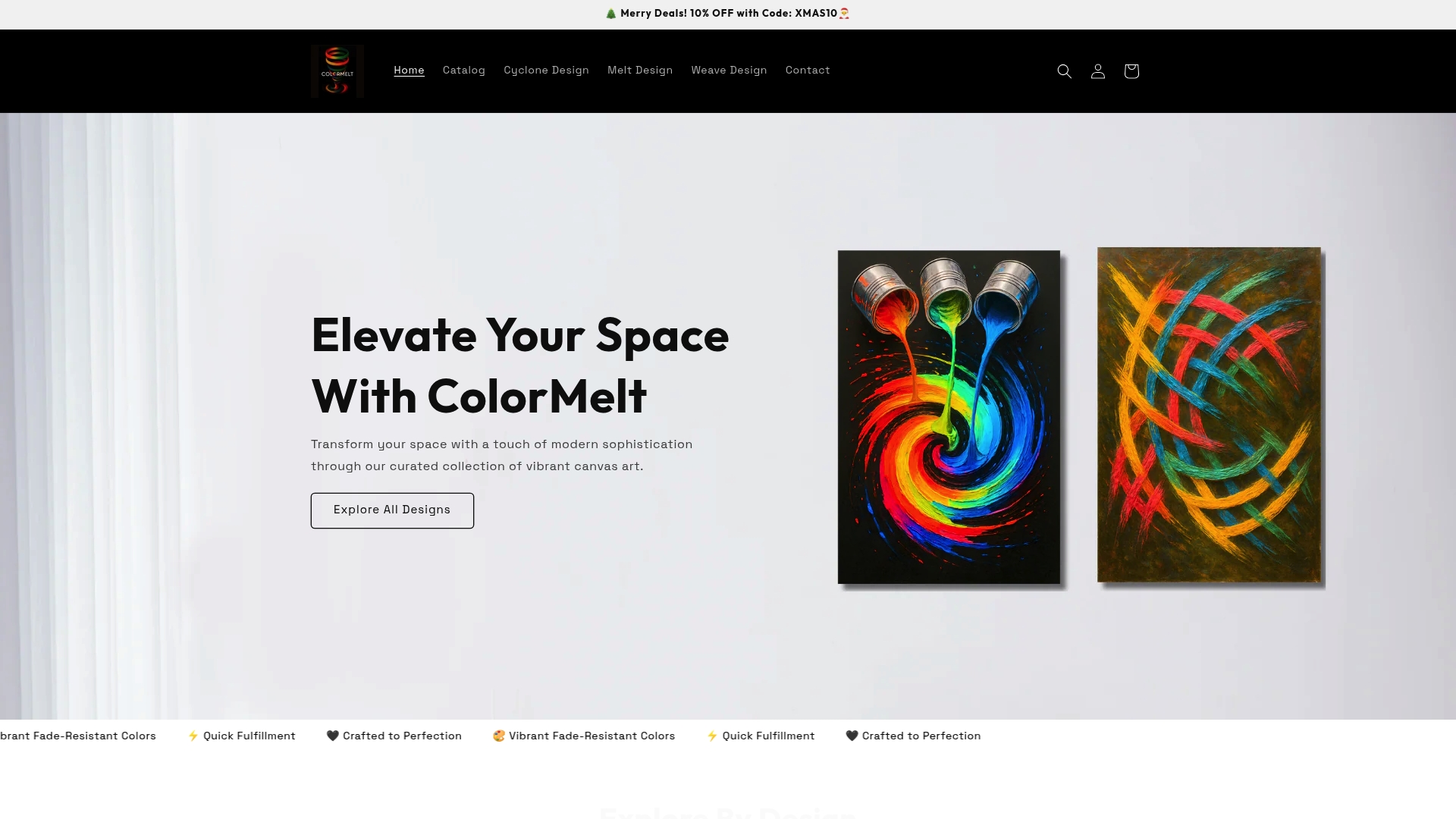
Our vibrant wall art collection at ColorMelt.shop is built specifically for people who want more from their walls. Every piece is printed with fade-resistant inks on quality materials, so the vibrancy you see on screen is the vibrancy you live with every day. If you want a starting point that combines texture, movement, and bold design, the creative wall hanging art in our weave series is a standout choice for workspaces that blend creativity with professionalism. Browse the collection, find what energizes you, and put something genuinely meaningful on your walls.
Frequently asked questions
Does the type of wall art matter for home offices?
Yes, different wall art styles and colors can uniquely affect your mood, productivity, and sense of ownership in a home office. Research confirms that workspace environmental variables measurably shift both productivity and emotional state depending on what surrounds you.
How does wall art reduce stress in the workplace?
Viewing art can lower stress-related physiological signals and support relaxation and focus, particularly when you choose calming colors or natural themes. Evidence from King’s College London shows that art engages the body in ways that may reduce stress-related inflammatory signaling.
Can choosing the wrong wall art hurt productivity?
Yes, context and color choices matter more than most people expect. For example, studies found that green wall conditions reduced productivity for some tasks compared with red, blue, or yellow conditions.
Why is personalization important in workspace design?
Personalized workspaces directly support motivation and a sense of ownership. According to workplace design research, personalized spaces boost productivity by up to 32%, making self-chosen art one of the highest-return investments you can make in your work environment.