
Why Decor Matters: Transform Your Space and Mood
Decor is the intentional arrangement of colors, textures, lighting, and objects that directly shapes your mood, cognitive clarity, and sense of identity at home. Interior design professionals call this the study of environmental psychology, and the science behind why decor matters is far more concrete than most people realize. Intentional decor changes can reduce daily stress by 21% and improve focus over time. That number represents a measurable shift in how your nervous system responds to the space around you, not just a vague sense of feeling better. Your home is constantly sending signals to your brain, and the decor you choose determines whether those signals read as safety or chaos.
Why decor matters more than you think
The field of environmental psychology defines the home as a primary health environment input. Your nervous system continuously scans your surroundings for cues about safety, threat, and resource availability. Cluttered surfaces, mismatched colors, and poor lighting all register as low-level stressors, draining cognitive energy before you have made a single decision. This is not a metaphor. Visual noise and clutter drain cognitive energy in measurable ways, a concept researchers call sensory overload.
The importance of home decor becomes clearest when you look at what organized spaces actually produce. People living in clean, well-organized homes report 25% higher emotional stability and better sleep quality. Better sleep and lower baseline stress compound over weeks and months into sharper focus, more patience, and greater productivity. Decor is not decoration in the superficial sense. It is the architecture of your daily emotional experience.
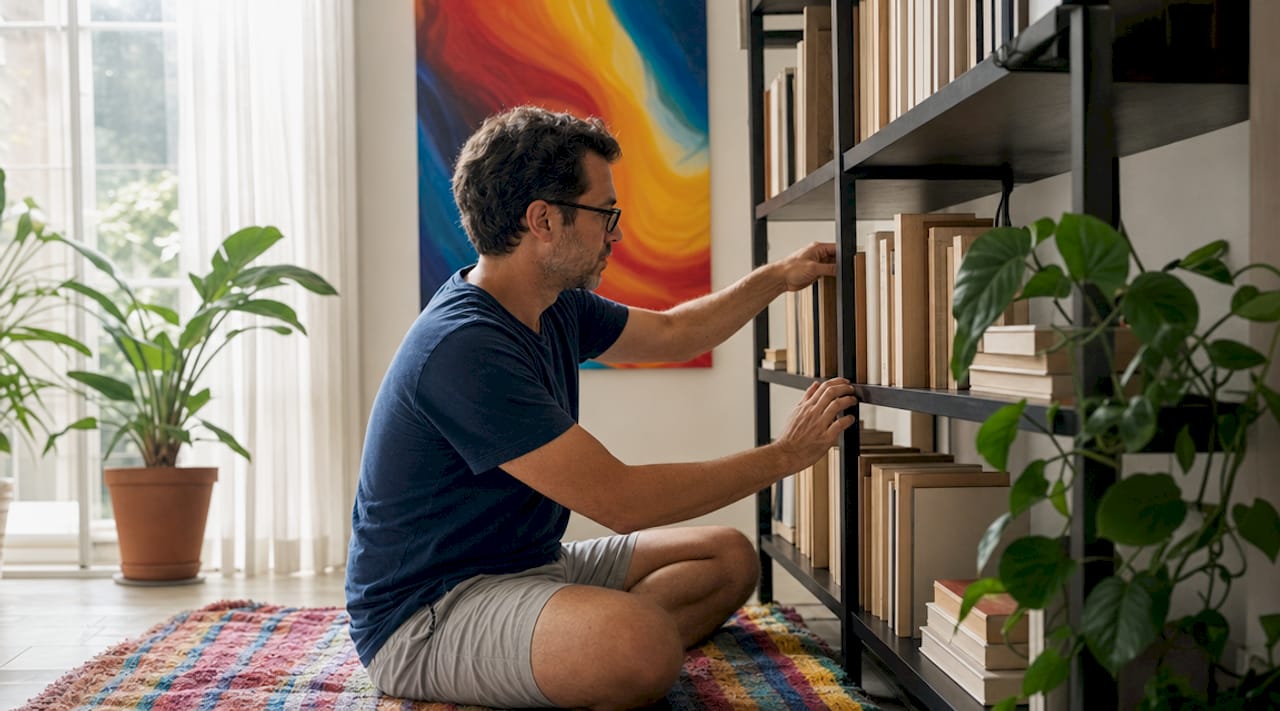
Personal expression adds another layer. The objects, colors, and art you choose communicate your values and history back to you every time you walk through a room. Psychologists describe this as “externalizing identity,” and it plays a real role in self-continuity and confidence. The significance of decorative elements goes well beyond aesthetics. Each piece you place in a room is a small act of authorship over your own environment.
How does decor affect your mood and mental clarity?
The mechanisms connecting decor to mood operate through three primary channels: lighting, color, and spatial organization. Understanding each one gives you real leverage over how your home feels.
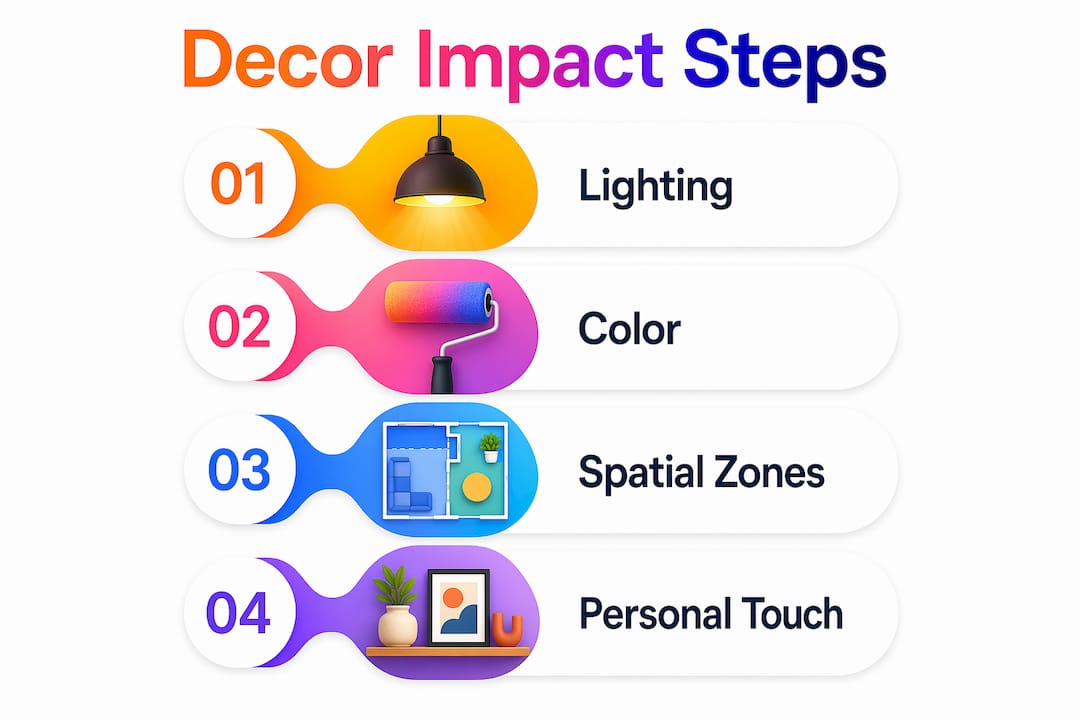
Lighting is the most underestimated variable. Layered lighting that combines natural, task, and ambient sources supports your circadian rhythm and emotional regulation. Harsh overhead fluorescents suppress melatonin at night and create a clinical, high-alert atmosphere. Warm ambient light in the evening signals the nervous system to downshift. A single lamp swap in your living room can change the entire emotional register of the space after dark.
Color operates through both psychological association and physiological response. Cool blues and greens lower heart rate and signal calm. Warm reds and oranges increase alertness and appetite, which is why they dominate restaurant interiors. The role of color in decor is structural, not decorative. Color is the fastest way to change how a room feels without moving a single piece of furniture.
Spatial organization directly affects decision fatigue. Designers use the concept of micro-zones, dedicated areas for specific activities, to reduce decision fatigue and improve focus. A reading corner with a single lamp and a small shelf teaches your brain that this spot means calm concentration. A cluttered desk with charging cables, mail, and coffee mugs teaches it the opposite.
Pro Tip: Before adding anything new to a room, spend ten minutes removing three items that create visual noise. Subtraction almost always produces a stronger mood shift than addition.
Key mood-supporting decor moves include:
- Replace cool-white bulbs with warm-white (2700K to 3000K) in living and bedroom spaces
- Use a single dominant color in 60% of a room to create visual coherence
- Add one natural texture, such as linen, wood, or stone, to ground high-saturation color choices
- Create at least one clear surface in every room to give the eye a place to rest
What role does color theory play in effective home decor?
Color theory in interior design is a structural framework, not a set of aesthetic preferences. The most widely applied rule is the 60-30-10 distribution, which divides a room’s color into a dominant hue (60%), a secondary hue (30%), and an accent (10%). This ratio creates a visual hierarchy that prevents the subconscious “messy” perception that comes from competing colors fighting for attention.
Light Reflectance Value (LRV) is a metric that measures how much light a color reflects on a scale from 0 (pure black) to 100 (pure white). Rooms with higher LRV and lower chroma are perceived as calmer, reducing visual “busyness” by 30 points on standardized perception scales. This is why soft whites, warm greiges, and pale sage greens dominate wellness-focused interiors. They reflect more light and carry less visual weight.
The contrast between “dopamine decor” and balanced neutrals illustrates the trade-off every decorator faces. Public interest in dopamine decor, the practice of using vivid, saturated colors to trigger positive emotional responses, rose over 110% in 12 months according to Google search trends. The appeal is real. Bold color genuinely lifts mood in the short term. But excessive saturation can tire the nervous system over time, while balanced inclusion of natural textures creates sustainable emotional comfort.
| Color approach | Effect on mood | Best used in |
|---|---|---|
| High LRV neutrals (soft white, greige) | Calming, spacious, low visual fatigue | Bedrooms, home offices, meditation spaces |
| Dopamine decor (vivid saturated hues) | Energizing, mood-lifting, stimulating | Accent walls, creative studios, entryways |
| 60-30-10 balanced palette | Cohesive, grounded, visually organized | Living rooms, open-plan spaces |
| Biophilic tones (sage, terracotta, warm wood) | Restorative, emotionally grounding | Any room needing calm without coldness |
One detail most decorators overlook is undertone harmony. Even popular neutrals carry subtle undertones, pink, green, or yellow, that clash with adjacent colors when not analyzed carefully. Color undertones must be rigorously harmonized for overall cohesion. Always sample paint colors in the actual room at different times of day before committing. The color on the chip and the color on your wall are rarely the same.
How does personalized decor express identity and support well-being?
Personalized decor creates what psychologists call an “authentic environment,” a space that reflects who you are rather than who a catalog suggests you should be. This matters because familiar, personally meaningful objects activate the brain’s reward circuitry and reduce low-grade anxiety. A shelf of books you have actually read, a print from a city you love, or a plant you have kept alive for two years all contribute to a sense of continuity and competence.
The challenge is avoiding the trap of over-personalization. Externalizing identity through decor works best when it is edited rather than exhaustive. A room packed with meaningful objects becomes visually overwhelming, which cancels out the psychological benefit of each individual piece. The goal is curation, not accumulation.
Biophilic elements, natural materials, plants, water features, and organic textures, offer a particularly effective way to bridge color excitement and emotional repose, according to psychologist Dr. Natasha Sharma. A bold abstract print paired with a trailing pothos plant and a linen throw creates visual interest without nervous system fatigue. The natural elements act as a counterweight to the stimulation of color and pattern.
Practical ways to personalize without overwhelming:
- Use removable wall art and prints to shift your style seasonally without permanent commitment
- Limit “statement” objects to one per surface to preserve visual breathing room
- Choose art that reflects your actual taste, not current trends, for longer-lasting emotional resonance
- Apply the modern decor styling principle of warm cohesion: one unifying color thread across all personal objects
Hyper-personalized, trend-driven decor also carries a practical risk. Spaces built entirely around a single trend may impair a home’s resale value. Neutral bases with removable accents maintain both personal identity and market liquidity, a balance worth considering even if you are not planning to sell.
What practical steps optimize your home for mood and function?
Optimizing your home decor for mood and function does not require a renovation. Small environmental adjustments, including lighting, layout, and greenery, improve psychological well-being without structural changes. The key is sequencing your changes so each one builds on the last.
- Start with sensory editing. Walk through each room and remove anything that creates visual noise without serving a function or bringing genuine pleasure. Removing clutter is more effective at reducing mental fatigue than adding storage. This step costs nothing and produces immediate results.
- Create micro-zones. Designate specific areas for specific activities: a reading chair with a side table and lamp, a work desk with nothing on it except work tools, a dining area free of screens. Each zone trains your brain to shift cognitive modes on cue.
- Layer your lighting. Add a floor lamp or table lamp to every room that currently relies on a single overhead fixture. Combine natural light, task lighting for focused work, and warm ambient light for evening relaxation. Explore layered lighting strategies to match each zone’s purpose.
- Apply the 60-30-10 rule. Identify your dominant color (walls and large furniture), your secondary color (rugs, curtains, and upholstery), and your accent color (art, cushions, and small objects). Adjust until the ratio feels balanced rather than busy.
- Add one biophilic element per room. A single plant, a wood-framed print, or a stone bowl introduces natural texture that grounds high-saturation color choices and reduces visual fatigue.
Pro Tip: Rearrange furniture before buying anything new. Changing the flow of a room costs nothing and often produces a bigger psychological shift than any new purchase.
Key takeaways
Decor shapes emotional well-being, cognitive clarity, and personal identity through the deliberate use of color, lighting, spatial organization, and meaningful objects.
| Point | Details |
|---|---|
| Decor reduces stress measurably | Intentional changes cut daily stress by 21% and improve focus, according to environmental psychology research. |
| Color is structural, not decorative | The 60-30-10 rule and LRV principles create visual coherence that prevents subconscious cognitive fatigue. |
| Sensory editing beats storage | Removing visual noise reduces mental fatigue more effectively than adding organizational products. |
| Personalization needs curation | Meaningful objects support well-being, but over-accumulation cancels the benefit. Edit ruthlessly. |
| Small changes produce real results | Lighting swaps, micro-zones, and a single plant improve mood without renovation or large budgets. |
Decor is not superficial. It never was.
I have spent years watching people dismiss their own discomfort in a space as a personality flaw rather than an environmental one. They assume they are anxious, distracted, or low-energy when the actual problem is a room with no natural light, three competing color palettes, and surfaces covered in unprocessed mail. The moment they address the space, the symptoms ease.
The misconception that decor is a luxury or a vanity project is one of the most counterproductive ideas in modern home culture. You would not accept a workplace with broken lighting and no organization. Your home deserves the same standard of intentionality. The psychological effects of art and thoughtful design on daily mood are documented, not speculative.
What I have found in practice is that people do not need a complete overhaul. They need one clear win. Remove the clutter from one surface. Swap one bulb. Hang one piece of art that actually means something to them. That first win builds the confidence and momentum to keep going. Decor is not a project you finish. It is a practice you return to as you change, and the spaces that serve you best are the ones that change with you.
— Shlomo
Transform your space with Colormelt wall art
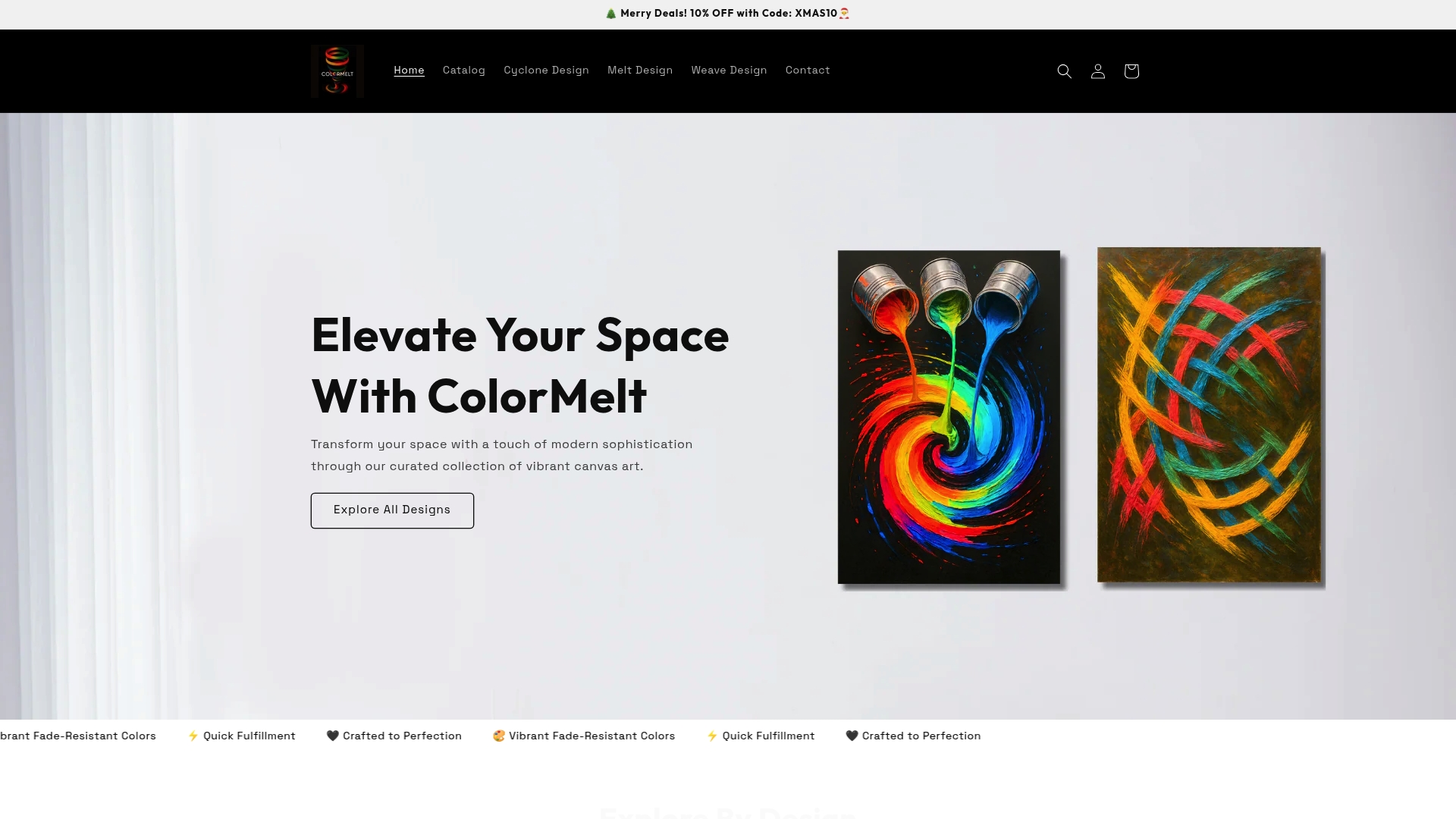
Applying color theory and environmental psychology principles to your home becomes significantly easier when the art itself does the heavy lifting. Colormelt’s curated collection of canvas and wall art is designed around the same contrasts that make spaces feel alive: light against dark, simplicity against complexity, calm against energy. Each piece uses fade-resistant pigments and precision printing so the color you choose on screen is the color that arrives on your wall. Whether you are building a dopamine-inspired accent wall or anchoring a neutral room with a single bold print, Colormelt offers the vibrant wall decor that makes the 60-30-10 rule genuinely satisfying to apply.
FAQ
Why does decor matter for mental health?
Decor functions as a constant environmental signal to your nervous system. Organized, intentionally designed spaces reduce baseline stress by 21% and are linked to 25% higher emotional stability and better sleep quality.
What is the role of color in home decor?
Color is a structural tool that controls perceived space, mood, and visual coherence. The 60-30-10 rule distributes dominant, secondary, and accent colors to prevent cognitive fatigue and create a cohesive atmosphere.
How does clutter affect mood and productivity?
Visual clutter drains cognitive energy by forcing the brain to continuously process competing stimuli. Removing visual noise is more effective at reducing mental fatigue than adding storage, according to environmental psychology research.
What is dopamine decor and does it work?
Dopamine decor uses vivid, saturated colors to trigger positive emotional responses. Search interest rose over 110% in 12 months, but sustained exposure to high saturation can tire the nervous system. Pairing bold color with natural textures balances stimulation and calm.
How can I improve my home decor without a big budget?
Start with sensory editing by removing visual clutter, then swap overhead bulbs for warm-white alternatives, add one plant per room, and rearrange furniture to create distinct activity zones. These steps cost little but produce measurable mood improvements.