
How to Care for Canvas Prints and Keep Them Vibrant
Canvas print care is defined as the combination of environmental management, gentle cleaning, and careful handling that preserves artwork quality and longevity over time. Knowing how to care for canvas prints correctly prevents fading, warping, cracking, and mold before they start. The core principles are simple: control your environment, clean gently and rarely, and handle your prints with respect. Follow these practices and a quality canvas print stays vivid for decades, not years.
How to care for canvas prints: setting the right environment
The single most powerful thing you can do for canvas print maintenance is control the room where your print lives. Canvas is a natural material. It expands and contracts with temperature and humidity shifts, and those movements cause cracking and warping over time.
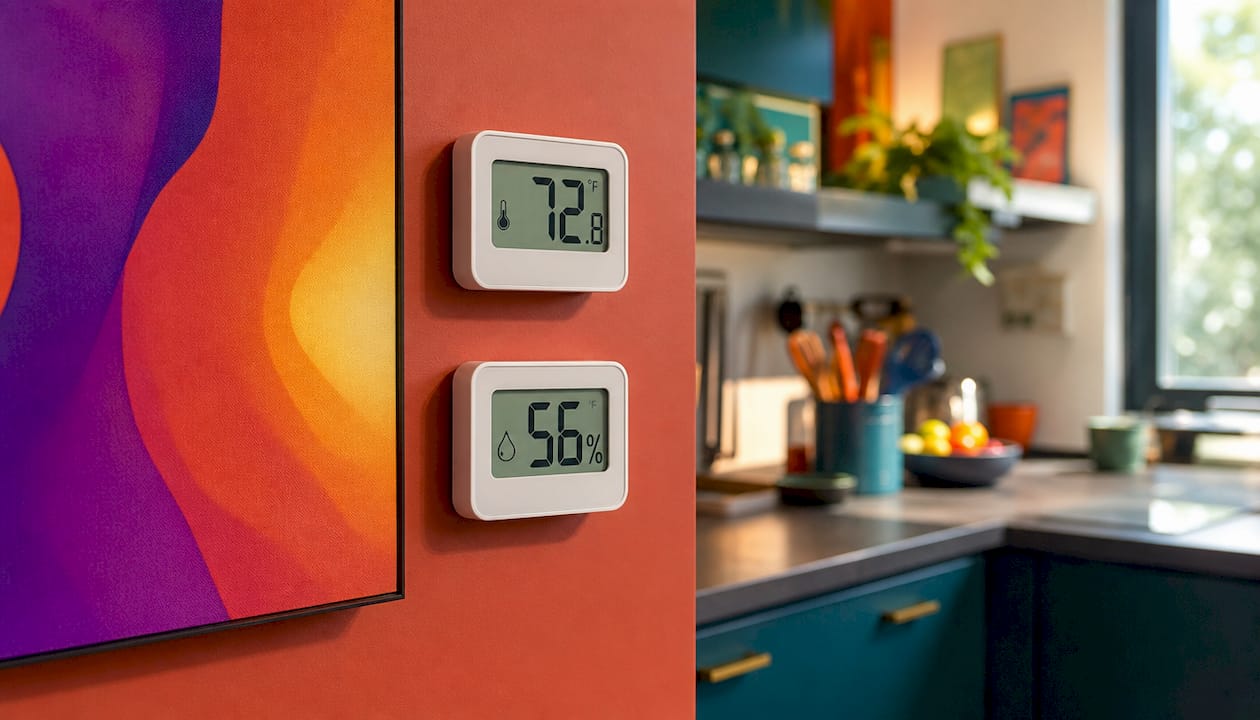
Optimal preservation conditions require a stable temperature between 65–75°F and relative humidity between 40–55%. That range keeps the canvas fiber and ink layer stable without becoming brittle or attracting mold. A basic digital hygrometer placed near your print costs very little and tells you immediately when conditions drift outside that range.
Light is the other major threat. UV light accelerates chemical breakdown in ink pigments, causing color degradation even in prints marketed as fade-resistant. The maximum recommended light exposure for displayed artwork is 150 lux. Position prints away from south-facing windows, and use UV-filtering window film or UV-filtering glass in frames where possible.
HVAC and HEPA filtration systems help maintain stable temperature and humidity while reducing airborne particles that settle on canvas surfaces. Filtered air cuts down on the dust and chemical pollutants that cause gradual staining. If your home uses forced-air heating, check that vents do not blow directly onto any wall where a canvas hangs.
Pro Tip: Place a small digital thermometer and hygrometer on the same wall as your canvas print. Check it weekly for the first month to understand how your room naturally fluctuates.
| Condition | Safe range | Risky range |
|---|---|---|
| Temperature | 65–75°F | Below 60°F or above 80°F |
| Relative humidity | 40–55% | Below 30% or above 65% |
| Light exposure | Under 150 lux | Direct sunlight or strong artificial UV |
| Air quality | HEPA-filtered, stable | Dusty, smoky, or chemically polluted |
What is the safest way to clean canvas prints?
Cleaning canvas prints is less about deep cleaning and more about consistent, gentle maintenance. The goal is to remove surface dust before it bonds with the ink layer or canvas weave.
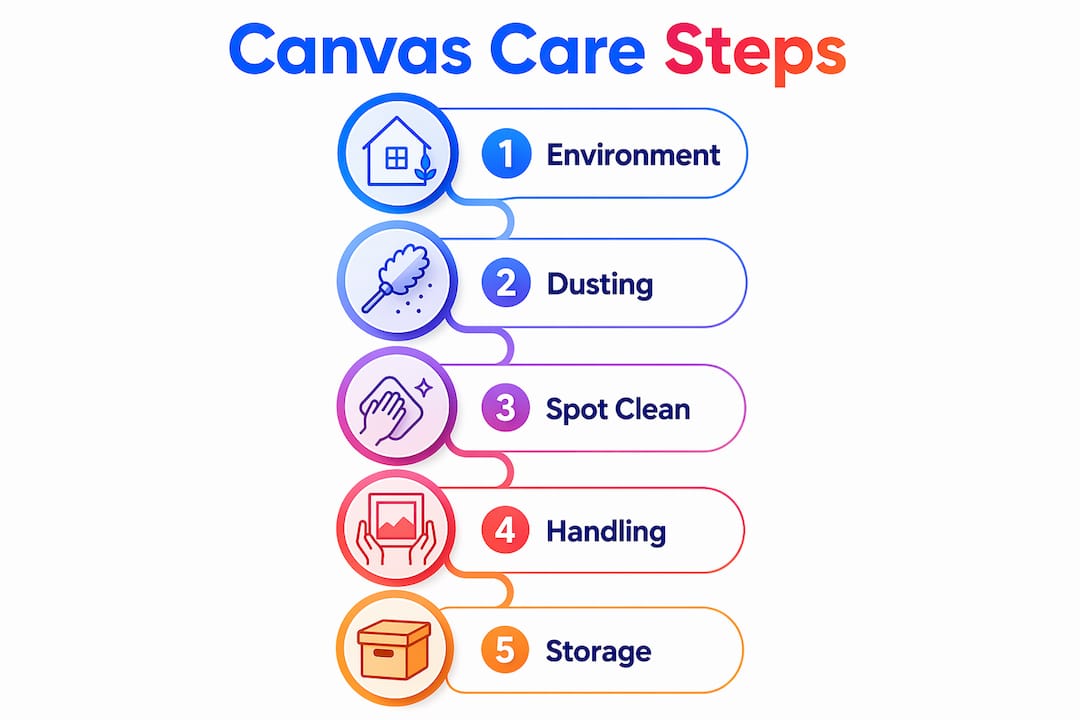
Dust your canvas monthly using a soft-bristled brush or a clean microfiber cloth. Always use single-direction strokes, moving from the top of the print downward. Circular scrubbing grinds particles into the surface and risks lifting ink, so avoid it entirely.
For deeper cleaning, use distilled water and a pH-neutral solution formulated for artwork. Tap water contains minerals that leave deposits and increase staining risk. Dampen a cloth lightly, never saturate it, and work in small sections.
Avoid any cleaning agent not specifically labeled as safe for artwork. Household cleaners, alcohol wipes, and glass sprays contain solvents that dissolve the ink layer or degrade the canvas coating. A single careless wipe can cause permanent discoloration that no restoration will fully reverse.
Pro Tip: Before applying any cleaning solution to a visible area, test it on the back edge of the canvas where the print wraps around the stretcher bar. Wait 10 minutes and check for any color lift or texture change.
Cleaning materials you need:
- Soft-bristled artist’s brush (natural or synthetic, not stiff)
- Clean microfiber cloths (lint-free, unused for other surfaces)
- Distilled water in a small spray bottle
- pH-neutral art-safe cleaning solution
- Absorbent cotton pads for blotting moisture
For water spots, act immediately by blotting with an absorbent material. Do not rub. Rubbing spreads the contamination and drives moisture deeper into the canvas fiber. Grease stains and biological stains require professional conservator attention. Attempting DIY removal with household products almost always worsens the damage.
How should you hang and store canvas prints properly?
Proper handling starts before the print ever touches the wall. Handle canvas prints by the edges or stretcher bars only. Direct contact with the printed surface transfers skin oils and dirt, which degrade the ink layer gradually and attract more dust.
Choosing the right location matters as much as choosing the right hardware. Avoid placing canvas prints near heat vents, fireplaces, bathrooms, or kitchens. Heat and humidity fluctuations in those areas cause warping and cracking over time. A hallway or living room wall away from direct sunlight is the ideal display spot. For room-specific placement advice, the room-by-room styling guide from Colormelt covers the best locations for each type of space.
Step-by-step hanging and storage best practices:
- Choose a wall location with stable temperature, low humidity, and no direct sunlight.
- Use appropriate hanging hardware rated for the weight of your canvas, including wall anchors for heavier pieces.
- Level the print carefully and check that it sits flush against the wall to prevent warping from uneven pressure.
- Inspect the hanging hardware every six months and tighten or replace as needed.
- For temporary storage, wrap the canvas in acid-free tissue paper and place it flat in an acid-free box.
- For long-term storage, store prints flat or vertically with dividers, maintaining the same climate control conditions as display.
- Avoid basements and attics. Both environments experience extreme temperature and humidity swings that damage canvas and ink.
- For high-value pieces, consult a professional art storage facility that offers climate-controlled vaults.
For detailed hanging hardware guidance, Colormelt’s canvas art hanging guide walks through safe installation for every wall type.
How do you spot and fix common canvas print damage?
Recognizing damage early is the most cost-effective form of canvas print preservation. Visible signs like cracking, color fading, or sagging signal the need for professional assessment. Early intervention prevents major restoration work and extends the life of the print significantly.
Fading appears first in the lightest tones of an image, particularly whites and pale yellows. Cracking shows up as a fine network of lines across the surface, usually caused by rapid humidity changes. Sagging means the canvas has lost tension on the stretcher bars, often from prolonged moisture exposure. Mold appears as dark spots or a powdery surface film and requires immediate professional attention.
Common mistakes that cause canvas print damage:
- Hanging prints in direct sunlight or under strong halogen spotlights
- Using household cleaning sprays or paper towels on the surface
- Storing prints in garages, basements, or attics without climate control
- Touching the printed surface with bare hands during hanging or moving
- Ignoring small water spots until they become permanent stains
- Stacking unprotected canvases face-to-face during storage
For minor dust accumulation, the monthly microfiber routine described above handles it without risk. For small water spots caught immediately, gentle blotting with a dry absorbent cloth is the correct response. For anything more serious, including mold, structural damage, or significant fading, contact a professional art conservator. Attempting aggressive DIY repairs on a damaged canvas print almost always causes irreversible harm.
Key Takeaways
Consistent environmental control, gentle monthly dusting, and careful handling are the three practices that determine how long a canvas print stays vibrant and structurally sound.
| Point | Details |
|---|---|
| Control temperature and humidity | Keep the room at 65–75°F and 40–55% relative humidity to prevent cracking and mold. |
| Limit light exposure | Stay under 150 lux and use UV-filtering treatments to prevent ink fading. |
| Clean gently and rarely | Dust monthly with a microfiber cloth using single-direction strokes; avoid water unless necessary. |
| Handle by the edges only | Never touch the printed surface; oils and dirt from hands degrade ink over time. |
| Store in acid-free materials | Use acid-free boxes or dividers in a climate-controlled space, never a basement or attic. |
What I’ve learned from years of living with canvas art
Most people treat canvas prints like they treat framed posters: hang them and forget them. That approach works fine for a year or two. After that, you start noticing the subtle shifts. The whites look a little less crisp. A corner starts to bow. A faint dusty film dulls the whole piece.
The biggest lesson I’ve taken from talking with professional conservators is that prevention costs almost nothing compared to restoration. A $15 hygrometer and a monthly two-minute dusting routine will do more for your canvas than any restoration product sold online. Reactive care, meaning waiting until you see a problem and then trying to fix it, is almost always more expensive and less effective than consistent gentle maintenance.
The other thing most guides miss is the emotional dimension. Canvas prints are personal. They represent a moment, a style choice, a piece of your home’s identity. Treating them with the same casual attitude you’d give a throw pillow is a mistake. A little intentional care, checking the environment seasonally, inspecting the hardware twice a year, keeping cleaning products away from the surface, keeps that personal investment looking exactly the way you intended it.
If you are buying a new canvas print, choose one built with fade-resistant inks from the start. That single decision reduces your long-term maintenance burden more than any cleaning technique. Colormelt’s canvas art collection explains what to look for in a durable print before you buy.
— Shlomo
Colormelt’s canvas prints are built to last with the right care

Colormelt designs every canvas print with fade-resistant inks and quality materials that respond well to the care practices covered here. The wall art collection includes abstract, weave, cyclone, and floral designs built for long-term display in real home environments. Each piece ships ready to hang, with the structural integrity to hold up when you follow proper environmental and handling guidelines. If you want a canvas that rewards good care with decades of vibrant color, Colormelt’s curated range is the place to start. Browse the full collection and find a piece that fits your space and your style.
FAQ
How often should I clean my canvas print?
Dust your canvas print once a month using a soft microfiber cloth or a soft-bristled brush with single-direction strokes. Deeper cleaning with distilled water and a pH-neutral solution is only needed when visible staining occurs.
What temperature and humidity are best for canvas prints?
The ideal range is 65–75°F with relative humidity between 40–55%. Conditions outside that range cause the canvas to expand and contract, leading to cracking, warping, or mold growth.
Can I use household cleaners on a canvas print?
No. Household cleaners contain solvents that dissolve ink layers and degrade canvas coatings. Use only distilled water and pH-neutral solutions formulated specifically for artwork.
Where should I not hang a canvas print?
Avoid hanging canvas prints near heat vents, fireplaces, kitchens, or bathrooms. Those locations expose the canvas to heat and humidity fluctuations that cause warping and cracking over time.
When should I call a professional conservator?
Contact a professional conservator when you notice mold, significant cracking, structural sagging, or color fading that cannot be addressed with gentle surface cleaning. Early professional intervention prevents major and costly restoration work.