
What Is Interior Styling? A Guide for Homeowners
Interior styling is defined as the process of enhancing a room’s aesthetic and emotional appeal through furniture, textiles, art, and accessories, without any structural changes to the space. Unlike a full renovation, styling works with what you already have. It is the discipline that sits between decoration and design, and it is far more accessible than most homeowners realize. If you have ever rearranged a bookshelf, swapped out throw pillows, or hung a canvas print to change how a room feels, you have already practiced what is interior styling in its most direct form.
What are the fundamental elements of interior styling?
Interior styling is built on seven core elements: color, texture, space, line, form, light, and pattern. These elements are the raw materials every stylist works with, whether they are decorating a studio apartment or a five-bedroom home. Understanding them gives you a framework instead of guesswork.
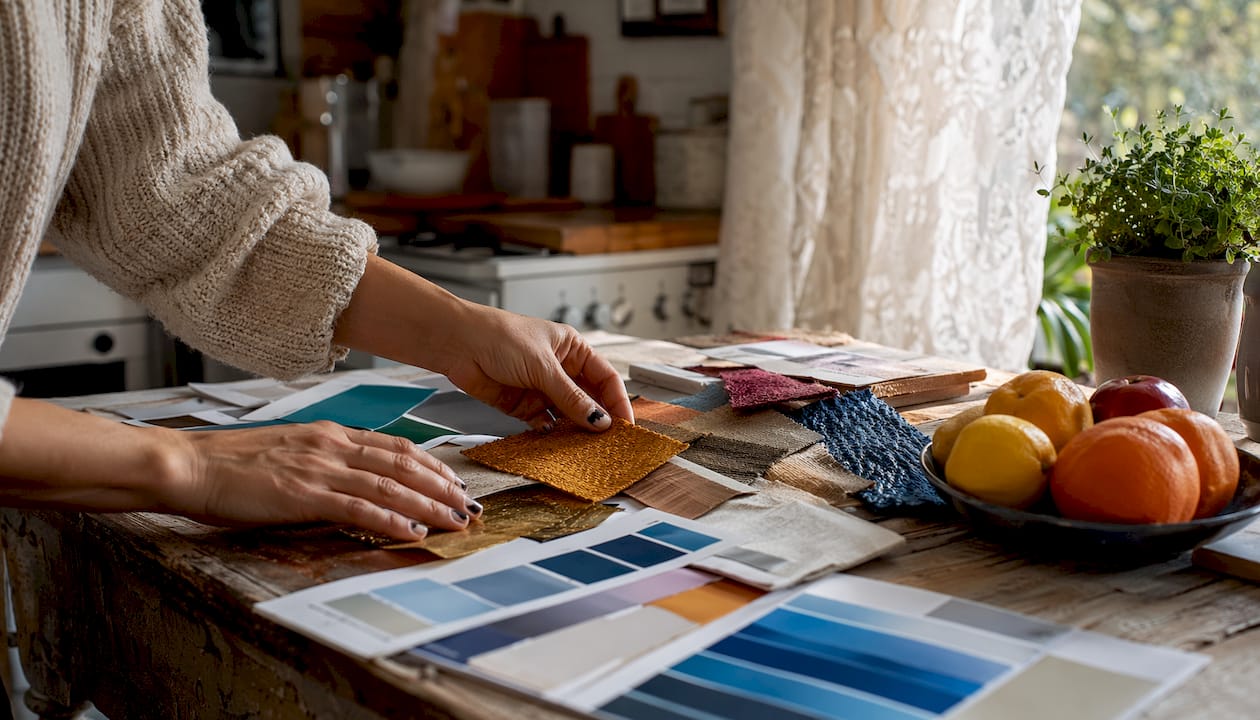
Design principles then govern how those elements interact. The five most important are harmony, rhythm, emphasis, scale, and proportion. Harmony means the room feels unified. Rhythm means the eye moves naturally from one point to another. Emphasis means one feature commands attention without overwhelming everything else.
Two techniques make these principles concrete for everyday use:
- Focal points: Every room needs one dominant visual anchor. A fireplace, a large canvas print, or a statement sofa all work. Once you identify the focal point, arrange everything else to support it, not compete with it.
- Visual weight distribution: Heavy objects, dark colors, and large forms carry more visual weight. Spread that weight evenly across the room so no single corner feels overloaded.
- Thematic repetition: Repeating a color, material, or shape in at least three places ties a room together. A brass lamp, brass cabinet handles, and a brass picture frame create cohesion without matching exactly.
- Scale awareness: A tiny rug under a large sectional breaks proportion. Every piece should feel sized for the room, not just the piece itself.
- Layering textures: Mixing linen, wood, ceramic, and metal in one space adds depth that paint alone cannot achieve.
Pro Tip: Before buying anything new, photograph your room from the doorway. That single image reveals proportion problems, clutter, and missing focal points faster than standing inside the space.
How does interior styling differ from interior design?
The distinction matters because it determines what you can realistically do yourself. Interior styling focuses on surface elements, decoration, and visual emotion. Interior design addresses structural planning, spatial layout, and technical longevity, often requiring licensed professionals and permits.
A designer might reconfigure a floor plan, move walls, or specify plumbing locations. A stylist selects the sofa, arranges the cushions, and chooses the art that makes the room feel like you. Both disciplines matter, but they operate at different levels of intervention.
| Activity | Interior styling | Interior design |
|---|---|---|
| Furniture arrangement | Yes | Sometimes |
| Selecting accessories and art | Yes | Rarely |
| Color palette decisions | Yes | Yes |
| Structural wall changes | No | Yes |
| Lighting fixture installation | No | Yes |
| Floor plan redesign | No | Yes |
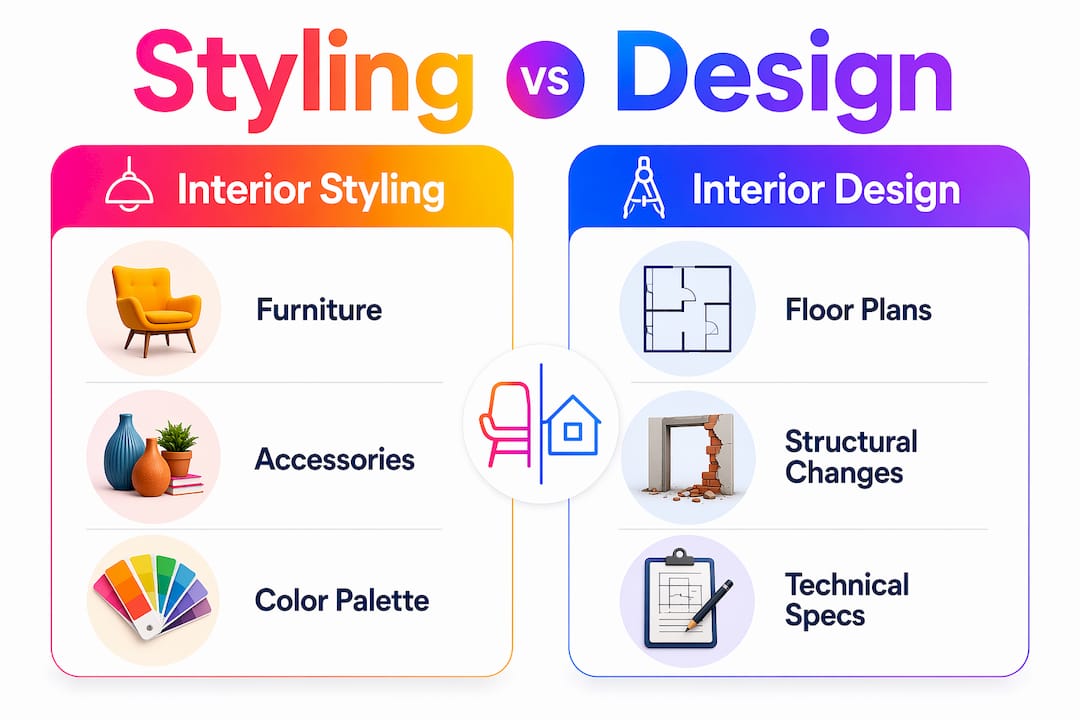
Styling is the right tool when your space is structurally sound but feels flat, impersonal, or disconnected. Design is the right tool when the layout itself creates the problem. Most homeowners and renters need styling far more often than they need design.
What practical methods can homeowners use to style interiors?
The best place to start is with what you already own. Rearranging existing furniture, artwork, and accessories can dramatically transform a room at no cost. Styling often relies on rediscovery rather than acquisition, and that shift in mindset changes everything.
Follow this sequence for a room that needs attention:
- Clear the room mentally. Walk in and identify the one feature worth keeping as a focal point. Build from there.
- Limit your color palette. Three colors create cohesion: one neutral base, one secondary tone, and one accent. Whites, beiges, and a single bold color work reliably across most styles.
- Edit ruthlessly. Every object must earn its place. Removal is often more powerful than addition in styling, and a room with fewer, better-chosen pieces always reads as more intentional.
- Layer textures. Place a woven throw over a leather chair. Set a ceramic vase on a wooden shelf. Contrast in material creates depth that a single-material room cannot achieve.
- Hang art at eye level. The center of a piece should sit roughly 57–60 inches from the floor. That measurement reflects standard gallery hanging practice and keeps art connected to the furniture below it.
- Blend two styles intentionally. Real homes often mix one dominant style with one subtle influence. A mostly Scandinavian room with a few Moroccan textile accents feels richer than a room that commits to one style without variation.
- Use decorative accessories in odd numbers. Groups of three or five feel more natural than pairs when arranging objects on a shelf or table.
Pro Tip: Consistent flooring and material choices across adjoining rooms create visual flow that makes a home feel larger and more cohesive, even without changing a single piece of furniture.
What common styling mistakes disrupt visual harmony?
Knowing what not to do is as useful as knowing what to do. These are the mistakes that most consistently undermine a well-intentioned room:
- Too much contrast. Contrast must be applied carefully; too much creates clutter and visual disunity. Balancing light and dark, hard and soft, is what keeps a room from feeling chaotic.
- Keeping objects without purpose. Clutter is not just a quantity problem. It is a curation problem. If an object has no visual or functional role, it weakens the composition around it.
- Hanging art too high. Art disconnected from the furniture below it floats and loses its anchoring effect. The room feels unfinished even when the art itself is beautiful.
- Ignoring natural focal points. Every room has an architectural feature worth working with, whether that is a window, a fireplace, or a structural beam. Styling professionals prioritize these natural anchors rather than imposing arbitrary themes over them.
- Failing to layer. A room styled in one texture, one material, and one tone reads as flat. Layering is what separates a styled room from a furnished one.
- Buying before editing. Most rooms do not need more objects. They need fewer, better-placed ones. Shopping before editing almost always adds to the problem.
The underlying principle behind all these mistakes is the same. Styling is a subtractive art as much as an additive one. The rooms that feel most considered are the ones where the stylist knew what to leave out.
Key Takeaways
Interior styling is the most accessible form of home improvement available to homeowners and renters because it requires no structural changes, no permits, and no professional license.
| Point | Details |
|---|---|
| Core definition | Styling enhances a room’s mood and appearance through furniture, art, and accessories without altering its structure. |
| Seven elements | Color, texture, space, line, form, light, and pattern are the building blocks of every styled room. |
| Styling vs. design | Styling handles surface and emotion; design handles structure and layout. Most renters need styling, not design. |
| Edit before you buy | Removing non-essential objects often improves a room more than adding new ones. |
| Three-color rule | Limiting a palette to one neutral, one secondary tone, and one accent creates reliable visual cohesion. |
Why styling is more personal than people think
Most people approach interior styling as a problem of acquisition. They buy new things hoping the room will click into place. In my experience, that approach almost always misses the point.
The rooms that feel genuinely good to be in are the ones that reflect the person living there, not a catalog page. Successful rooms feel lived-in and authentic by working with the room’s inherent characteristics rather than imposing artificial style. That is a harder skill than it sounds. It requires you to listen to the space before you start moving things around.
The best styling advice I can give is this: slow down before you spend. Walk the room. Identify what is already working. Then edit everything else around those anchors. The result will feel more personal and more considered than anything a shopping trip can produce. Styling is not about having the right objects. It is about placing the right objects in the right relationship to each other.
— Shlomo
Wall art that works with your styling vision
The right piece of wall art does not just fill empty space. It anchors a room’s color story, establishes the focal point, and adds the kind of personality that furniture alone cannot deliver.
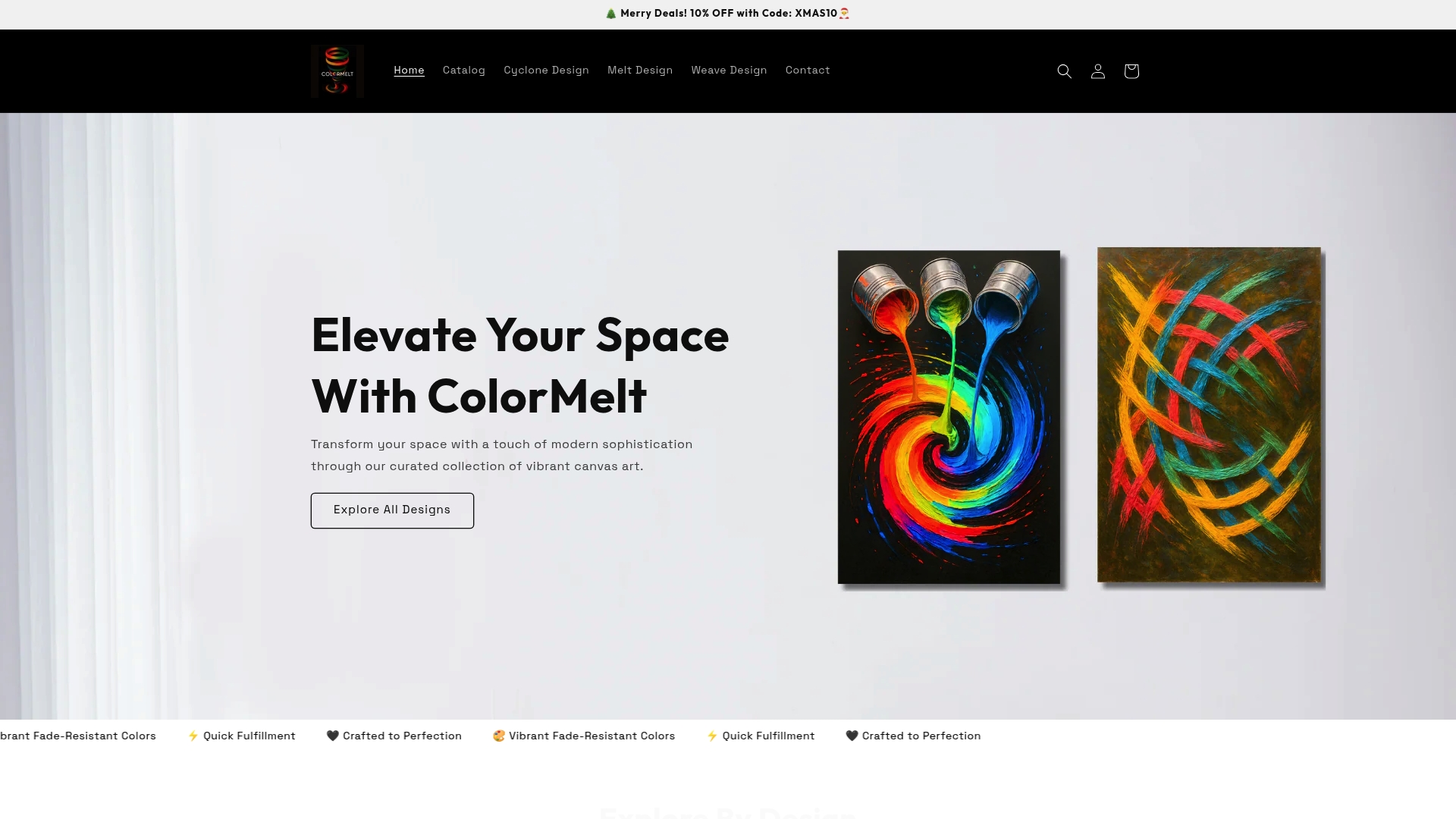
Colormelt’s curated wall art collection is built around exactly that idea. Each piece uses fade-resistant colors and high-quality materials, so the visual impact holds over time. Whether you are working with a neutral base palette that needs one bold accent or a layered room that calls for something more textured, Colormelt offers canvas prints, framed artwork, and wood prints in abstract, weave, cyclone, and floral designs. Browse the collection and find the piece that makes your focal point work.
FAQ
What is interior styling in simple terms?
Interior styling is the process of arranging furniture, art, textiles, and accessories to improve how a room looks and feels, without making any structural changes to the space.
What does an interior stylist do?
An interior stylist selects and arranges decor elements, including color palettes, textures, art, and accessories, to create a cohesive and emotionally resonant space for the people living in it.
How is interior styling different from interior design?
Interior design involves structural planning, floor plan changes, and technical specifications. Interior styling focuses on surface-level decoration and visual appeal, making it accessible to homeowners and renters without professional help.
What are the best interior styling practices for beginners?
Start by identifying one focal point, limit your color palette to three tones, and edit out objects that serve no visual or functional purpose before adding anything new.
Can I style my home without buying new furniture?
Yes. Rearranging existing items and personalizing with art are two of the most effective styling methods available, and both cost nothing or very little.