
Why Buy Sustainable Home Decor: Benefits and Impact
Sustainable home decor is decor crafted from environmentally responsible materials, designed for longevity, healthier indoor environments, and ethical production. The reasons to buy sustainable home decor go far beyond trend-following. Eco-conscious consumers who choose sustainable home goods reduce waste, improve their indoor air quality, and align their living spaces with their values. The US EPA ranks indoor air pollution among the top five health threats, and the materials in your home play a direct role in that risk. Sustainable interior design, the recognized industry term for this practice, addresses that risk at the source.
Why buy sustainable home decor: the core case
Sustainable home decor reduces environmental harm, supports human health, and delivers better long-term value than disposable alternatives. Those three benefits work together, and understanding each one makes the purchasing decision much clearer.
The conventional home furnishings industry follows a linear “take-make-dispose” model. Products are manufactured cheaply, used briefly, and discarded. A 2023 Ellen MacArthur Foundation study highlights how durable, repairable products break that cycle by saving resources compared to fast furniture cycles. That shift from disposable to durable is the foundation of sustainable interior design.
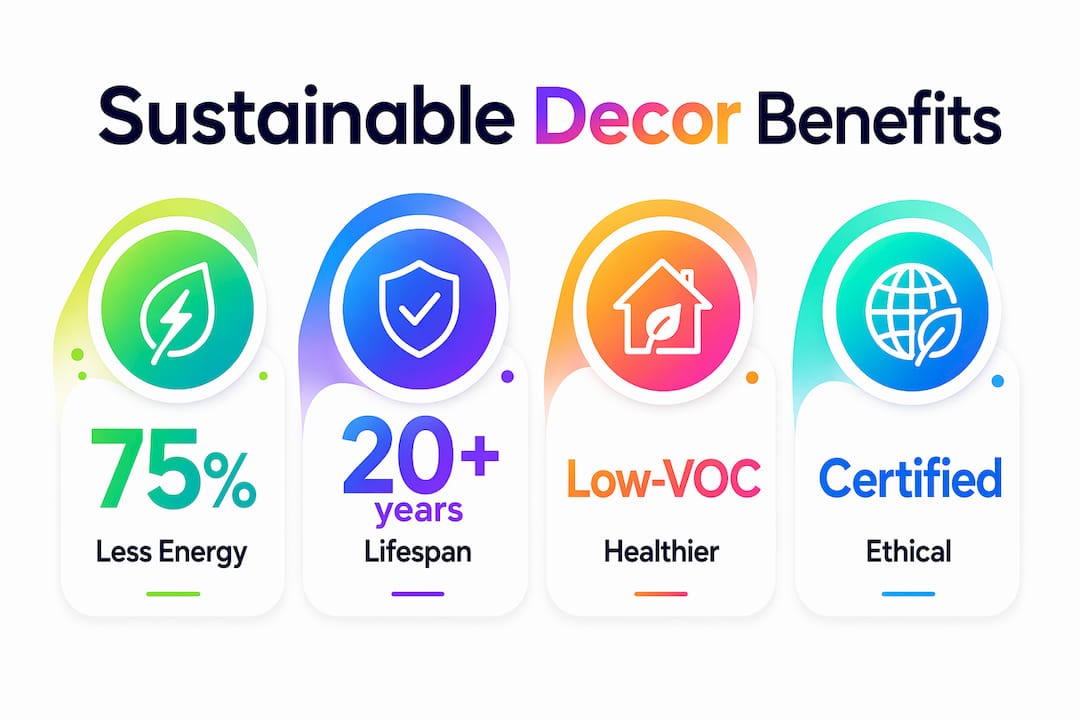
Eco-conscious consumers also benefit financially. A natural fiber rug lasts 20+ years compared to 5–7 years for a synthetic alternative. That lifespan difference means fewer replacements, less landfill waste, and a lower total cost over time. The upfront price of quality decor looks different when you calculate cost per year of use.
What are the environmental benefits of choosing sustainable home decor?
Sustainable decor cuts environmental impact at every stage of a product’s life, from raw material sourcing through end-of-life disposal.
The most direct benefits include:
- Waste reduction. Fast furniture generates enormous landfill volume. Durable, repairable pieces stay in use for decades instead of years.
- Renewable and recycled materials. Bamboo, reclaimed wood, organic cotton, and recycled glass replace virgin plastics and unsustainably harvested timber.
- Lower carbon footprint. Locally sourced and naturally processed materials require less energy to produce and transport than synthetic alternatives.
- Circular economy participation. Products designed for repair and reuse keep materials in circulation rather than sending them to landfill.
The highest-impact sustainability action in home decor is not buying new eco-labeled products. It is reusing, repairing, and upcycling what you already own. That insight runs counter to most marketing in the decor space, but it is the honest starting point for any eco-conscious consumer.
Pro Tip: Before purchasing anything new, audit your current decor. Repainting a worn wooden frame, reupholstering a solid chair, or refinishing a table costs a fraction of replacement and produces zero new manufacturing emissions.
Buying new sustainable decor is still far better than buying conventional alternatives. Choosing FSC-certified wood, GREENGUARD-certified finishes, and products made from recycled content all reduce the environmental burden of your home significantly.
How does sustainable home decor improve indoor health and well-being?
The materials inside your home directly affect the air you breathe every day. Conventional paints, synthetic textiles, and pressed-wood furniture release volatile organic compounds, commonly called VOCs. The US EPA identifies indoor air pollution as one of the top five health threats Americans face, and VOC exposure causes respiratory irritation, headaches, and long-term health risks.
Sustainable decor addresses this through material selection. Here is how the health benefits stack up:
- Low-VOC and zero-VOC finishes eliminate the primary source of indoor chemical exposure from furniture and wall treatments.
- Natural fiber textiles such as organic cotton, wool, and linen do not off-gas synthetic chemicals the way polyester and nylon blends do.
- Bamboo and solid wood products avoid the formaldehyde-based adhesives common in particleboard and MDF furniture.
- Biophilic design elements such as living plants, natural textures, and organic shapes connect occupants to nature inside the home.
That last point matters more than most people expect. Experts report that natural elements in sustainable interiors reduce stress and enhance psychological well-being. The effect is not purely aesthetic. Natural materials, soft textures, and organic forms activate the same calming responses that time outdoors produces. A home decorated with natural wood, stone, and plant-based textiles genuinely feels different from one filled with synthetic alternatives.
The connection between decor and mood is well established in interior design research. Sustainable choices amplify that effect by removing chemical stressors while adding natural, calming elements.
Why is durability and quality important when buying sustainable home decor?
Durability is the financial argument for sustainable home goods, and it is a strong one. Cheap, disposable decor creates a replacement cycle that costs more over time and generates continuous waste.
The numbers make the case clearly. LED lighting uses 75–90% less energy than incandescent bulbs and lasts 25 times longer. Natural fiber rugs outlast synthetic versions by more than a decade. These are not marginal differences. They represent fundamentally different product categories in terms of lifecycle value.
| Product type | Lifespan | Key advantage |
|---|---|---|
| Natural fiber rug | 20+ years | Biodegradable, durable, no synthetic off-gassing |
| Synthetic rug | 5–7 years | Lower upfront cost only |
| LED lighting | 25x longer than incandescent | 75–90% less energy use |
| Solid wood furniture | Decades with maintenance | Repairable, refinishable, timeless |
| Fast furniture | 3–5 years average | None beyond initial price |
The slow decorating movement, covered by Better Homes & Gardens, formalizes this approach. Slow decorating means buying fewer, higher-quality pieces over time rather than filling a space quickly with cheap items. It allows cash flow to build between purchases and results in a home that reflects genuine taste rather than impulse buying.
Avoiding greenwashing is the critical skill here. Many products carry vague environmental claims with no verification behind them. Third-party certifications cut through that noise. FSC certification verifies responsible forest management for wood products. GREENGUARD and GREENGUARD Gold certification verify that products meet strict chemical emission standards for indoor use.
Pro Tip: When shopping for sustainable decor, look specifically for FSC, GREENGUARD Gold, or OEKO-TEX labels. These are third-party certifications with independent auditing. A brand simply calling its product “eco-friendly” or “natural” carries no verified meaning.
Choosing quality wall art follows the same logic. Fade-resistant prints on durable substrates outlast cheap reproductions and avoid the replacement cycle that drives both waste and cost.
How does sustainable home decor support ethical production and social responsibility?
Sustainability in home decor extends beyond environmental impact. The people who make your decor matter as much as the materials it contains.
Conventional low-cost manufacturing often relies on exploitative labor conditions, unsafe workplaces, and poverty wages. Sustainable home goods brands that prioritize ethical sourcing address this directly. The key markers of ethical production include:
- Fair trade certification, which verifies that producers receive fair wages and work in safe conditions.
- Artisan-made products, which support skilled craftspeople and preserve traditional techniques that would otherwise disappear.
- Women-owned and community-based production, which directs purchasing power toward communities that benefit most from economic inclusion.
- Transparent supply chains, where brands publicly disclose where and how their products are made.
Choosing sustainable decor resolves a specific tension that many eco-conscious consumers feel. Living with products made through exploitative processes creates cognitive dissonance for people who care about both the planet and people. Sustainable home goods align your living environment with your values, and that alignment has a real psychological benefit.
The social responsibility dimension also connects to longevity. Artisan-made products are built with skill and care. They last longer, age better, and carry a story that mass-produced items cannot replicate. A hand-woven basket or a hand-thrown ceramic piece is not just more ethical. It is usually a better object.
Displaying art at home made by independent artists follows the same principle. It supports individual creators, adds genuine character to a space, and avoids the generic aesthetic of mass-produced decor.
Key Takeaways
Sustainable home decor delivers environmental, health, financial, and ethical benefits that disposable alternatives cannot match, making it the stronger long-term choice for eco-conscious consumers.
| Point | Details |
|---|---|
| Durability cuts total cost | Natural fiber rugs last 20+ years vs. 5–7 for synthetics, reducing replacement costs and waste. |
| Indoor air quality matters | Low-VOC and natural materials reduce chemical exposure that the EPA links to serious health risks. |
| Reuse beats new purchases | Repairing and upcycling existing decor produces zero new manufacturing emissions and costs less. |
| Certifications verify claims | FSC, GREENGUARD Gold, and OEKO-TEX labels confirm genuine sustainability beyond marketing language. |
| Ethics extend beyond environment | Fair trade and artisan-made products support fair wages and preserve skilled craftsmanship. |
Why slow decorating changed how I think about home design
I spent years buying decor the wrong way. A cheap print here, a synthetic rug there, a pressed-wood shelf that warped within two years. The cost added up fast, and the results never felt right. The space looked assembled, not considered.
Switching to a slow decorating mindset fixed both problems at once. Buying one well-made piece every few months instead of ten cheap ones every season meant I actually thought about each choice. The quality went up. The clutter went down. The home started to feel like a reflection of real preferences rather than a collection of impulse purchases.
The health dimension surprised me most. Replacing synthetic textiles with organic cotton and linen made a noticeable difference in how the rooms felt to spend time in. That is not placebo. Natural materials genuinely change the sensory environment of a space.
My honest advice: start with one room and one category. Replace the first synthetic item that wears out with a natural fiber or solid wood alternative. Look for FSC or GREENGUARD Gold certification on the label. Notice the difference in quality and feel. That single swap usually converts people more effectively than any argument about sustainability ever does.
— Shlomo
Colormelt’s wall art collection for eco-conscious interiors
Wall art is one of the most sustainable decor choices you can make. A single high-quality print transforms a room without requiring new furniture, synthetic textiles, or chemical-heavy finishes.
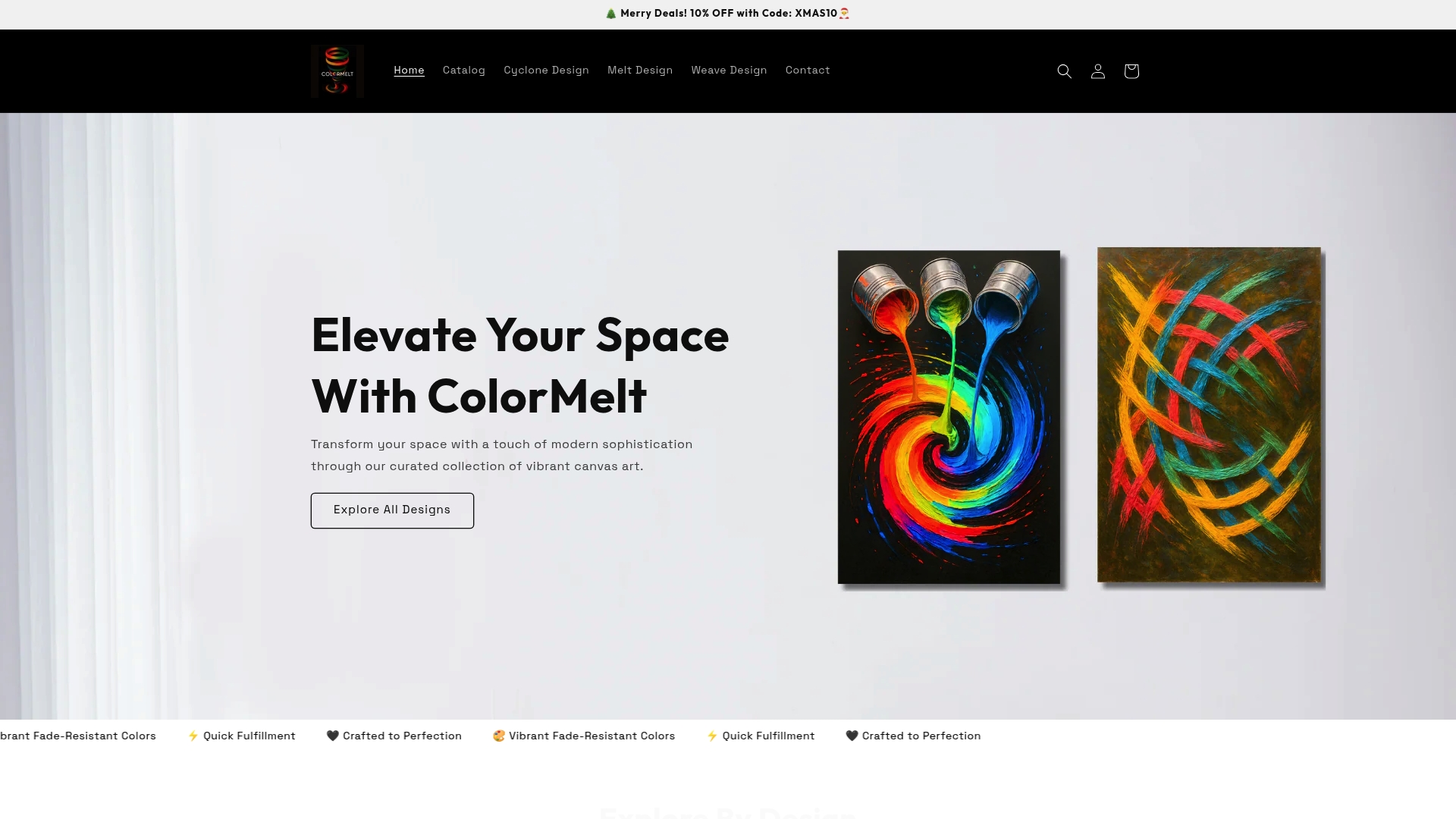
Colormelt produces vibrant wall art using fade-resistant inks and durable substrates, including canvas, acrylic, and wood prints. The designs are built to last, which means no replacement cycle and no waste from peeling or fading prints after a few years. The abstract, floral, and cyclone collections bring bold color and natural-inspired form to any interior without compromising on quality. If you want to add character to your space while staying true to eco-conscious values, Colormelt’s Cyclone design is a strong starting point.
FAQ
What is sustainable home decor?
Sustainable home decor refers to furnishings and decorative items made from environmentally responsible materials, designed for durability, low toxicity, and ethical production. The recognized industry term for this practice is sustainable interior design.
Does sustainable decor actually improve indoor air quality?
Yes. The US EPA ranks indoor air pollution among the top five health threats, and low-VOC materials used in sustainable decor directly reduce chemical exposure from off-gassing furniture and finishes.
Is sustainable home decor more expensive?
Sustainable decor costs more upfront but less over time. Natural fiber rugs last 20+ years versus 5–7 years for synthetic alternatives, and LED lighting lasts 25 times longer than incandescent bulbs, making the lifecycle cost lower.
How do I avoid greenwashing when buying eco-friendly decor?
Look for third-party certifications such as FSC for wood products and GREENGUARD Gold for low-toxicity indoor items. Vague terms like “natural” or “eco-friendly” without certification carry no verified meaning.
What is the most sustainable action I can take with home decor?
Reusing, repairing, and upcycling existing furniture produces zero new manufacturing emissions and is the highest-impact sustainability action available, ahead of purchasing even certified new products.