
Why Choose Handmade Decor for Your Home
Handmade decor is defined as any decorative object crafted by hand rather than manufactured by machine, and it delivers something no factory can replicate: a piece with genuine human presence. The question of why choose handmade decor comes down to three things: uniqueness, craftsmanship, and meaning. Mass production optimizes for speed and uniformity. Artisan production optimizes for quality and character. When you bring a handmade piece into your home, you bring in a story, a skill, and a standard of material quality that outlasts trends. This article covers every reason handmade decor earns its place in a thoughtful home.
Why choose handmade decor for a truly one-of-a-kind space
No two handmade pieces are identical. That is not a flaw. It is the defining advantage of artisan work. When a weaver hand-looms a textile or a woodworker carves a wall panel, subtle variations in color, texture, and proportion appear naturally. These differences are proof of the human hand at work, not errors to correct.
Mass production removes variation by design. Every item off a factory line matches the next one exactly. That uniformity is efficient, but it means your home looks like everyone else’s. A handmade ceramic bowl, a hand-stitched wall hanging, or a hand-carved wooden frame carries marks that make it yours alone.
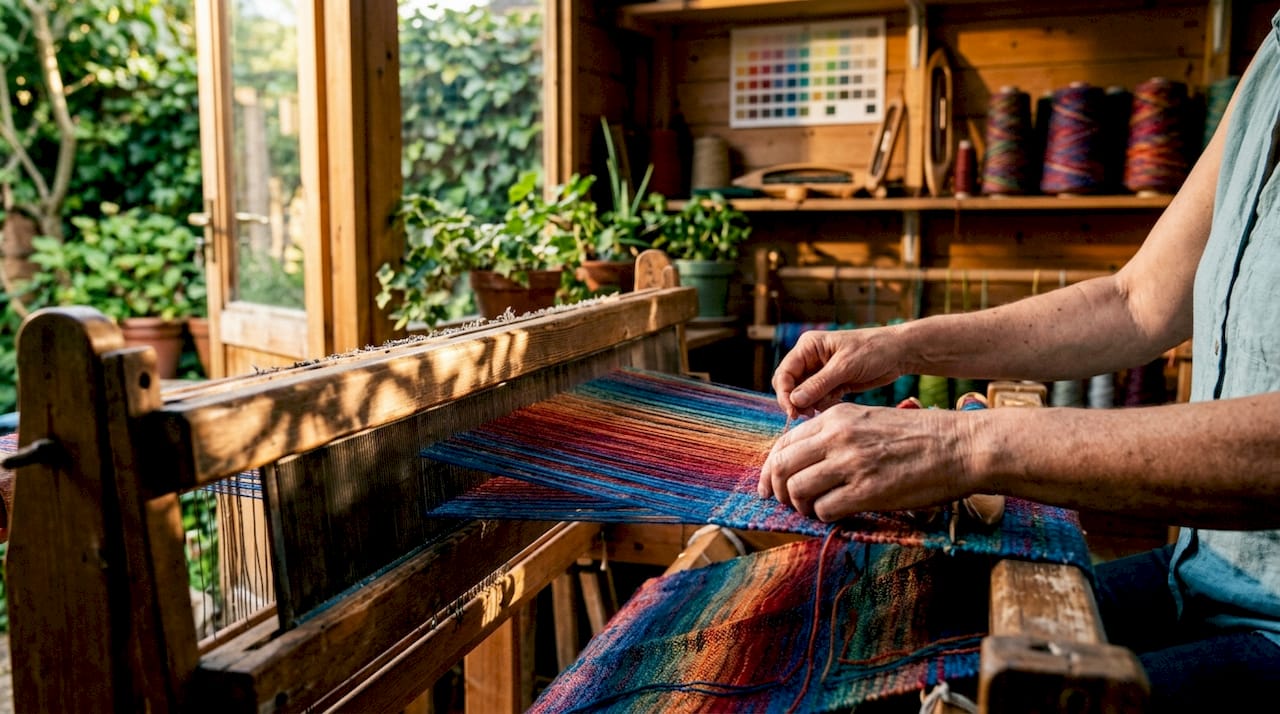
Subtle differences in glaze, texture, or weave embody the human touch unique to artisanship. Many buyers initially mistake these nuances for defects. They are actually the clearest signal of authenticity. A perfectly uniform surface is a machine’s signature. An organic variation is an artisan’s.
The benefits of handmade decor for personalization include:
- Individual character: Each piece carries subtle marks of its maker, making it visually distinct.
- Limited availability: Small-batch production means fewer people own the same item.
- Material honesty: Natural fibers, unfinished wood, and hand-thrown clay show their origins openly.
- Tactile depth: Hand-applied finishes create surfaces that feel different from smooth, machine-pressed alternatives.
- Storytelling potential: A handwoven textile from a regional tradition carries cultural context a catalog item cannot.
Personalized options such as custom colors, sizes, and materials help homeowners avoid the generic sameness of mass-produced goods. That flexibility is one of the clearest handmade decor advantages over standard retail.
Does handmade decor last longer than factory-made pieces?
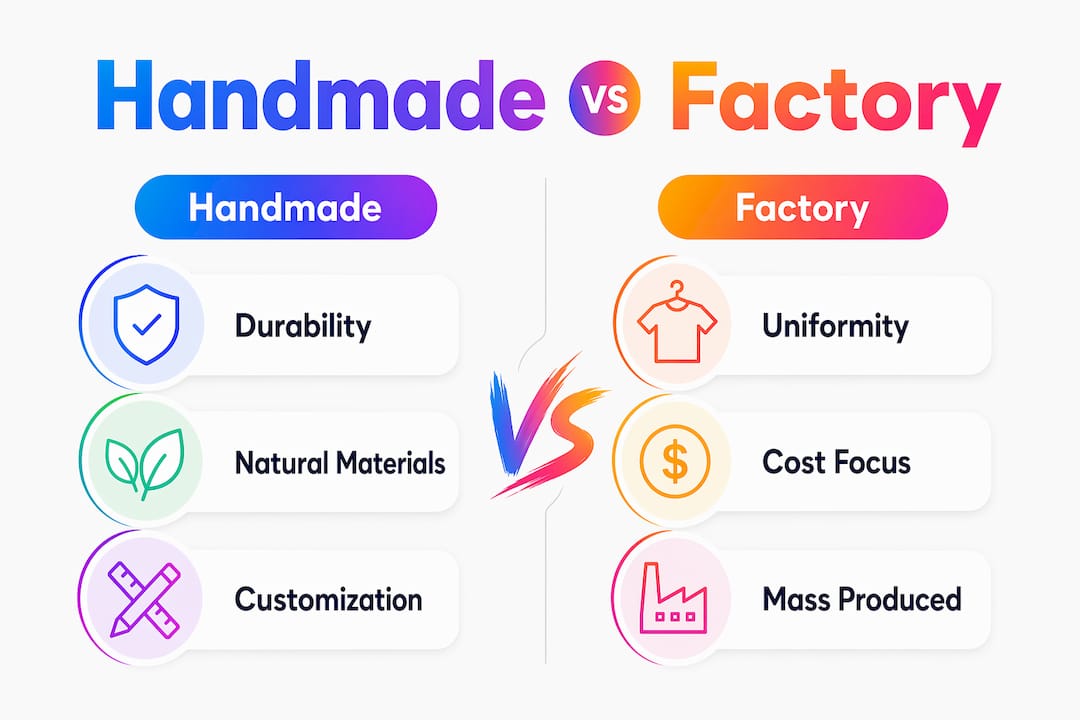
Handmade decor lasts longer because artisans select materials for durability, not cost reduction. A factory optimizes for price per unit. An artisan optimizes for the life of the object. Those two goals produce very different results in your home over five or ten years.
Small-batch producers prioritize quality and avoid chemical finishes that cause quick wear. Mass-produced items rely on synthetic materials that may chip or fade within a season. That difference shows up clearly when you compare the two side by side.
| Feature | Handmade decor | Factory-made decor |
|---|---|---|
| Materials | Natural, durable, locally sourced | Synthetic, cost-optimized |
| Finish | Hand-applied, inspected individually | Machine-applied, uniform |
| Lifespan | Years to decades with proper care | Often seasons to a few years |
| Repairability | Frequently repairable by artisan | Usually replaced, not repaired |
| Quality control | Each piece inspected by maker | Batch sampling only |
Handcrafted decor objects are built with longevity and repairability in mind, often made from materials selected for durability over convenience. That focus on quality means fewer replacements and a more considered relationship with the objects in your home.
Artisans also bring skill that machines cannot replicate. A hand-joined wooden frame uses joinery techniques refined over generations. A machine-stapled frame uses the fastest method available. The difference is not visible at first glance. It becomes obvious after years of use.
Pro Tip: When evaluating a handmade piece, turn it over and examine the back or underside. Hand-finished work shows consistent attention even where no one looks. Machine-made items often reveal shortcuts in hidden areas.
Is handmade decor worth it for sustainability?
Handmade decor is worth it for sustainability because it reduces waste at every stage of production. Smaller batches mean less overproduction. Local materials mean shorter supply chains. Hand processes mean fewer chemical inputs. Each of those factors adds up to a meaningfully lower environmental footprint.
Smaller production batches and locally sourced materials in handmade decor reduce environmental footprint compared to mass-manufactured goods that rely on long-distance shipping and chemical finishes. Handmade decor limits overproduction and waste, encouraging slower consumption patterns with better ecological outcomes.
The sustainability advantages of choosing handmade include:
- Reduced overproduction: Artisans make to order or in small runs, avoiding the surplus that fills landfills.
- Lower chemical use: Natural dyes, unfinished wood, and plant-based fibers replace synthetic coatings.
- Shorter supply chains: Local sourcing cuts transport emissions significantly.
- Longer product life: Durable materials and repairability keep pieces out of the waste stream.
- Support for ethical labor: Artisan workshops operate under conditions visible to buyers, unlike anonymous factories.
Supporting handmade artisans sustains local economies, preserves traditional skills, and promotes fair working conditions, creating regional economic resilience. Buying handmade supports small businesses and family-run workshops rather than anonymous factory production. That is a direct, traceable impact your purchase creates.
You can read more about the full case for sustainable home decor and how material choices affect both your home and the environment.
Handmade items resist fleeting trends via material honesty and timeless design, extending relevance and reducing landfill waste. A piece you buy because of its craft and character will not look dated in three years the way a trend-driven factory item will.
How does personalization and cultural heritage add value to handmade decor?
Handmade decor carries cultural value that mass production cannot manufacture. When an artisan uses a traditional weaving pattern, a regional clay technique, or a dyeing method passed down through generations, that knowledge lives in the object. You are not just buying a decorative item. You are preserving a practice.
Buying handcrafted pieces transforms a home from a collection of objects into a gallery of personal history with presence and story. That shift changes how a room feels. Objects with provenance and meaning create a different atmosphere than objects chosen purely for visual match.
Personalization deepens this further. Many artisans offer custom colors, sizes, and materials, adapting designs to your specific space and preferences. A hand-thrown ceramic in a glaze that matches your kitchen palette, or a woven wall piece sized exactly for your hallway, fits your home in a way no catalog item can. Many artisans offer flexible orders adapting designs to client preferences unlike fixed catalog options. That flexibility is a core handmade decor advantage.
Cultural heritage in decor also creates conversation. A hand-block-printed textile from a regional tradition, or a hand-forged iron hook using a centuries-old smithing technique, gives guests something to ask about. Your home becomes a place with stories to tell, not just surfaces to look at. For practical ideas on how to personalize your home with art, the approach starts with choosing pieces that carry personal meaning rather than simply filling space.
Handmade decor brings deeper emotional connection and storytelling value, elevating the home’s atmosphere beyond surface aesthetics. Knowing the provenance and creation process imbues pieces with meaning and invites mindfulness in owning and caring for them.
Key Takeaways
Handmade decor delivers uniqueness, durability, sustainability, and cultural meaning that mass-produced alternatives cannot match, making it the most rewarding long-term investment for a personalized home.
| Point | Details |
|---|---|
| Uniqueness is built in | Subtle variations in handmade pieces prove authenticity and make each item one of a kind. |
| Durability outlasts factory goods | Natural materials and hand-applied finishes resist wear far longer than synthetic alternatives. |
| Sustainability is structural | Small batches, local sourcing, and repairability reduce environmental impact at every stage. |
| Personalization is real | Many artisans adapt colors, sizes, and materials to fit your specific space and preferences. |
| Cultural value adds meaning | Traditional techniques embedded in handmade pieces create emotional depth and lasting relevance. |
What I’ve learned from living with handmade pieces
Most people approach decorating as a single project to complete. Buy the furniture, add the accessories, call it done. Handmade decor works against that mindset in the best possible way. It asks you to slow down and choose deliberately.
I’ve found that one strong handmade piece does more for a room than a shelf full of matching factory items. Interior designers recommend a gradual approach to incorporating handmade decor, starting with one standout handcrafted piece to build emotional impact without overwhelming the room. That advice holds up in practice. Start with a single hand-thrown vase, a woven wall hanging, or a hand-carved wooden tray. Let it settle into the space. See what it asks for next.
The other thing I’ve noticed is that handmade pieces age well. A factory item looks its best on day one and declines from there. A well-made handmade piece develops character over time. The patina on a hand-finished wood surface, the softening of a natural fiber textile, the way a hand-thrown glaze deepens with light. These are not signs of wear. They are signs of life.
Handmade items add texture, story, and personal history that impact daily life meaningfully, unlike factory-produced decor. That impact is quiet but cumulative. A home filled with objects that have meaning feels different to live in. Not louder or more decorated. Just more present.
My honest recommendation: resist the urge to overhaul everything at once. Mix handmade pieces into what you already own. Let them stand out. That contrast is where the magic lives.
— Shlomo
Colormelt’s artisan-inspired wall art for your home
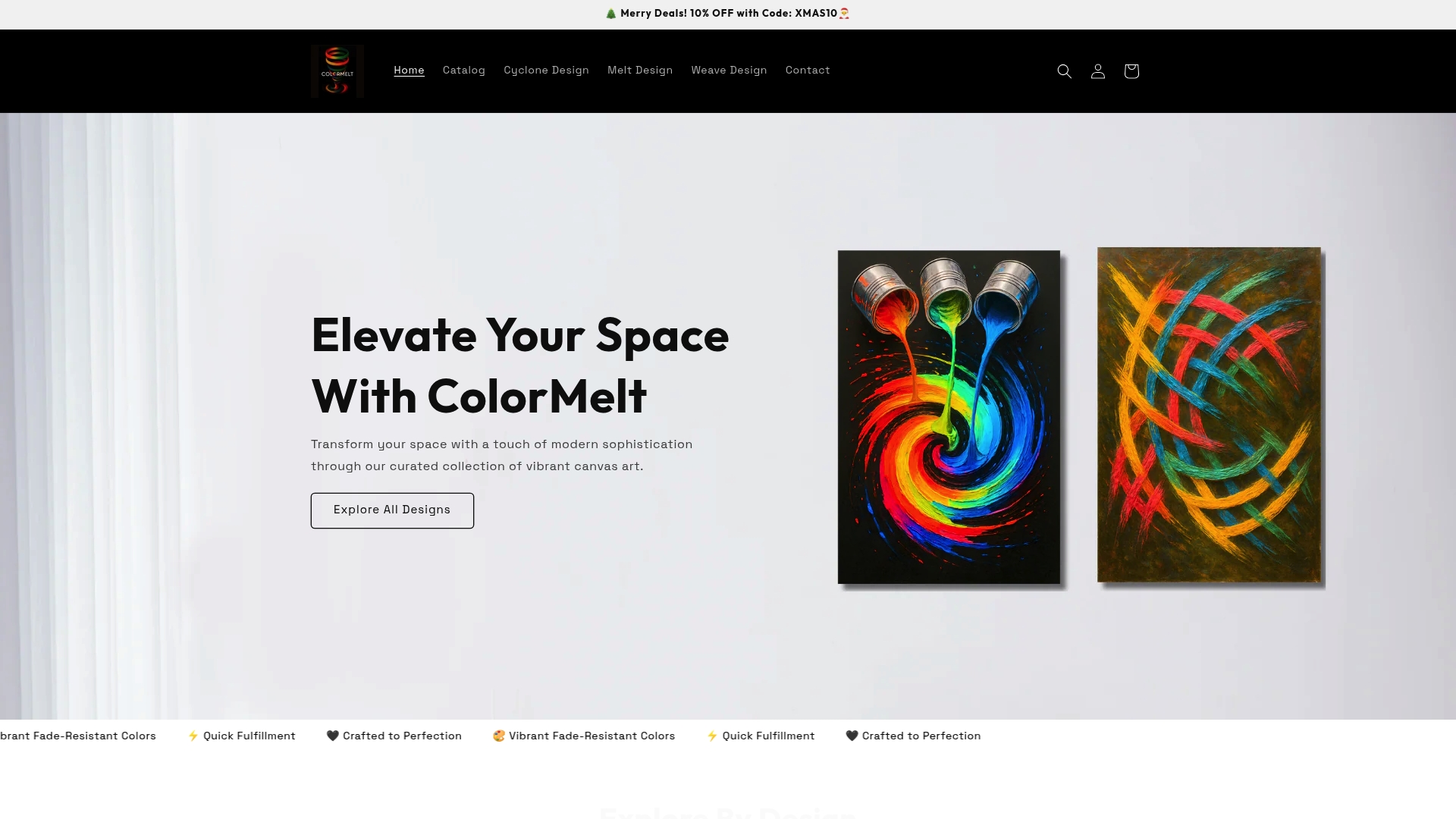
Colormelt brings the spirit of artisan craftsmanship into vibrant, original wall art designed to make your space feel genuinely yours. Every piece in the collection draws on the same principles that make handmade decor worth choosing: bold character, quality materials, and designs that resist trends. The wall art collection spans canvas prints, framed artwork, acrylic prints, and wood prints, featuring abstract, weave, cyclone, and floral motifs built around the contrast of light and dark, simplicity and complexity. Fade-resistant colors and crafted finishes mean these pieces hold their presence for years. If you want a specific starting point, the Cyclone Design brings the energy of handmade color work directly to your wall.
FAQ
What makes handmade decor different from mass-produced items?
Handmade decor is individually crafted, meaning each piece carries subtle variations in texture, color, and proportion that prove its authenticity. Mass-produced items are machine-made for uniformity, removing the human character that gives handmade pieces their depth.
Is handmade decor more durable than factory-made alternatives?
Handmade decor typically lasts longer because artisans use natural, durable materials and hand-apply finishes that resist wear. Factory-made items often use synthetic inputs and chemical coatings that chip or fade within a season or two.
How does buying handmade decor support sustainability?
Handmade production uses smaller batches, locally sourced materials, and fewer chemical finishes, all of which reduce environmental impact. It also supports fair labor conditions in artisan workshops rather than anonymous factory production.
Can handmade decor be customized to fit my space?
Many artisans offer custom colors, sizes, and materials, adapting their designs to your specific preferences and room dimensions. That flexibility is one of the clearest advantages handmade decor holds over fixed catalog options.
Does handmade decor hold its value over time?
Handmade pieces age well because quality materials develop character rather than simply wearing out. Their resistance to trends and their cultural or personal provenance also sustain their relevance and emotional value long after purchase.