
Advantages of Framed Prints for Your Home Decor
Framed prints are defined as artwork mounted within a structural border that simultaneously protects the print and enhances its visual presence in a room. The advantages of framed prints go well beyond aesthetics: a properly framed piece blocks UV radiation, seals out humidity, and prevents the chemical degradation that destroys unframed paper over time. Ideal Magazine identifies framing as particularly critical in living rooms, hallways, and bathrooms where environmental factors accelerate damage. Harten, a conservation framing authority, confirms that the right glazing and acid-free materials can preserve a print for decades. Whether you are buying art for the first time or reconsidering pieces already on your walls, understanding what framing actually does will change how you shop and display.
1. Framed prints protect artwork from UV damage
UV light is the single fastest cause of color fading in paper prints, and a frame is the primary defense against it. Museum Glass blocks 99% of UV light and includes an anti-reflective coating, making it the standard choice for both domestic and gallery settings. That level of protection means a print displayed in a sun-facing living room retains its original color saturation for decades rather than years. Standard window glass, by contrast, blocks almost no UV, so an unframed or cheaply glazed print in a bright room begins fading within months.
The practical implication is straightforward: the glazing you choose is not a cosmetic detail. It is the most consequential decision in the entire framing process. Harten recommends Museum Glass as a glazing that does not need to be replaced for UV reasons, which makes the upfront cost a one-time investment rather than a recurring expense.
2. Framed prints seal out dust, moisture, and humidity
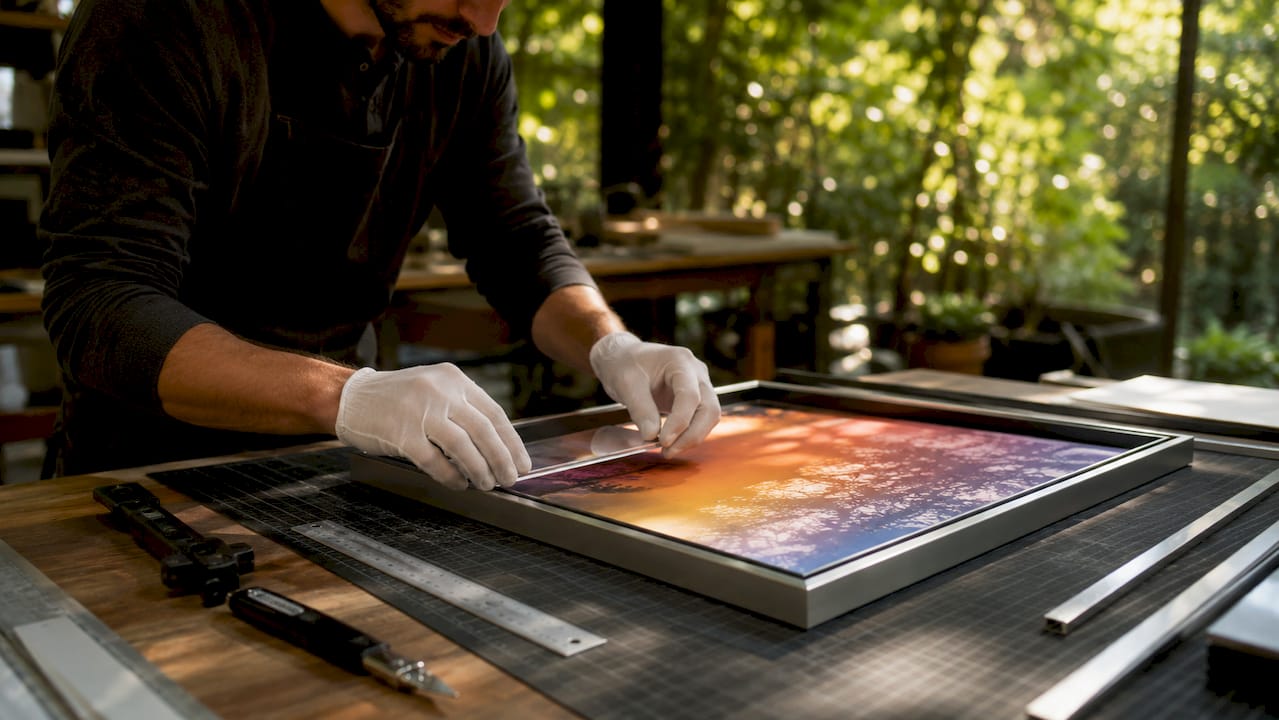
A sealed frame acts as a physical barrier between your artwork and the environment. Ideal Magazine highlights framing’s protective role in spaces like kitchens and bathrooms, where humidity and splatter can warp paper, cause yellowing, and promote mold growth within months. An unframed print in a bathroom is essentially unprotected against these forces.
The seal created by a properly assembled frame keeps airborne dust from settling on the print surface, which matters more than most people realize. Dust particles are mildly acidic and abrasive. Over years, they contribute to surface degradation that no amount of cleaning can fully reverse. A sealed frame eliminates that contact entirely.
Pro Tip: When framing art for a kitchen or bathroom, ask specifically for a sealed backing board rather than a standard open-back frame. The difference in humidity protection is significant.
3. Conservation framing materials prevent chemical degradation
Physical barriers alone are not enough if the materials touching your print are chemically reactive. Conservation framing uses acid-free, lignin-free mounting and backing materials that prevent the chemical breakdown that causes paper to yellow and become brittle over decades. Standard cardboard backing, by contrast, is highly acidic and will transfer that acidity directly to your print.
Harten emphasizes that the entire assembly must be reversible, meaning adhesives and hinges can be undone without damaging the artwork. Reversible archival framing methods preserve artwork for 50 or more years, which is a meaningful distinction if you are buying prints you intend to keep or pass on. This approach is standard practice in museum conservation and is now accessible to home buyers through specialist framers.
4. Spacers and mats prevent print-to-glass contact
One of the least discussed but most damaging framing mistakes is allowing a print to touch the glazing directly. Proper framing assembly includes a spacer or mat to prevent this contact, which eliminates two specific risks: condensation forming between the glass and paper, and chemical transfer from the glazing surface to the print. Both processes are invisible until the damage is already done.
A mat also serves a visual function. It creates breathing room between the image and the frame edge, which draws the eye inward and gives the artwork a more considered, gallery-like presentation. The mat width and color are design choices that directly affect how the finished piece reads on a wall.
5. Frames give artwork structural support and flatness
Paper and canvas prints are physically flexible, and without support they sag, curl, and warp over time. The frame acts structurally to distribute artwork weight and maintain flatness, which prevents the distortion that makes unframed prints look provisional and cheap. This is especially relevant for larger format prints, where the weight of the paper itself becomes a factor.
A flat, taut print reads as intentional and permanent on a wall. A curling or sagging one signals that the owner has not committed to the piece. That perception matters more than most decorators acknowledge, because the physical state of an artwork directly influences how visitors read the room.
6. Framing increases the perceived and market value of artwork
The financial case for framing is concrete. Professional framing can increase secondary market value by 18% to 25%, according to a 2023 study cited by Modern Memory Design. That figure reflects a real shift in how buyers perceive framed versus unframed work: a frame signals care, permanence, and investment. The same print, framed and unframed, reads as two different categories of object.
For home decorators, this translates into a practical principle: framing is not an optional add-on but a finishing step that completes the value of the piece. Framing transforms a print from a provisional purchase into a permanent, integral part of your home decor. That shift in status is visible to anyone who walks into the room.
7. Frames enhance visual weight and room atmosphere
Framing gives art visible weight and makes it appear settled and intentional in a room, according to Ideal Magazine. This is a perceptual effect with real consequences for how a space feels. A room with framed art reads as curated and deliberate. The same room with unframed prints pinned to a wall reads as temporary, regardless of the quality of the artwork itself.
Frame style amplifies this effect. A wide, dark wood frame on a high-contrast abstract print creates drama and anchors a focal wall. A thin, brushed aluminum frame on a botanical illustration reads as clean and modern. The frame does not just contain the image. It communicates the design intent of the entire room. Exploring how decorating with prints affects mood and atmosphere reveals just how much the framing choice shapes the emotional register of a space.
8. Framed prints vs. unframed prints: which to choose and when
Unframed prints are not always the wrong choice. They suit informal, frequently rotated displays, tactile wall arrangements like washi tape grids, or spaces where the decor is intentionally casual. The key distinction is permanence and prominence.
| Factor | Framed prints | Unframed prints |
|---|---|---|
| Protection | UV, dust, humidity sealed | Fully exposed to environment |
| Aesthetics | Polished, gallery-quality finish | Casual, flexible, informal |
| Durability | Decades with conservation materials | Months to a few years |
| Cost | Higher upfront, lower long-term | Lower upfront, higher replacement |
| Best use | Living rooms, prominent walls, gifts | Studios, mood boards, temporary displays |
Framing is most important in living rooms, kitchens, and bathrooms where environmental exposure is highest and the artwork is meant to be a permanent fixture. For a bedroom mood board or a studio inspiration wall, unframed prints are perfectly appropriate.
Pro Tip: If you are unsure whether to frame a print, ask yourself one question: do you plan to keep it in that spot for more than two years? If yes, frame it.
9. How to select the right frame and framing materials
Choosing a frame is a design decision and a conservation decision at the same time. The frame style should complement both the artwork and the room without competing with either. A bold, ornate gold frame works on classical or maximalist interiors. A simple black or white frame suits modern, minimal spaces and lets the artwork carry the visual weight.
On the materials side, the priority list runs as follows:
- Glazing: Choose UV-filtering glass or acrylic for any print you want to keep long-term. Museum Glass is the top tier. UV70 acrylic is a lighter, shatter-resistant alternative for larger formats.
- Mat board: Acid-free, lignin-free mat board only. Standard mat board will yellow your print from the edges inward within a few years.
- Backing: Archival foam board or acid-free corrugated board. Never standard cardboard.
- Assembly: Reversible mounting hinges rather than permanent adhesive tape. This preserves the option to reframe without damaging the print.
For guidance on selecting quality wall art that holds up both stylistically and materially, the framing materials you choose are as important as the print itself. Pairing a high-quality print with substandard framing materials undermines the entire investment.
10. Displaying framed prints effectively in your home
Placement determines whether a framed print becomes a focal point or disappears into the background. The most effective framed print display ideas share one principle: intentionality. Every placement decision should have a reason.
For single statement pieces, hang at eye level with the center of the artwork at approximately 57 to 60 inches from the floor. This is the standard used by most galleries and creates a natural viewing experience. For gallery walls, start with the largest piece as an anchor and build outward, keeping consistent spacing between frames of 2 to 3 inches.
Lighting amplifies the impact of framing significantly. A picture light mounted above a framed print or a directional spotlight from a ceiling track creates depth and draws attention in a way that ambient room lighting cannot replicate. For creative approaches to displaying art prints across different room types, the combination of frame choice and placement strategy makes the difference between art that transforms a room and art that simply occupies wall space.
“A well-placed framed print does not just decorate a wall. It defines the room’s character and tells visitors something true about the person who lives there.”
For gallery wall ideas that work across different room sizes and styles, grouping framed prints by color palette or frame finish creates cohesion without requiring identical frames.
Key takeaways
Framed prints outperform unframed prints in protection, aesthetics, durability, and perceived value because framing is a system, not just a border.
| Point | Details |
|---|---|
| UV protection is non-negotiable | Museum Glass blocks 99% of UV light, preventing color fading in sun-exposed rooms. |
| Conservation materials extend print life | Acid-free mats and reversible archival assembly preserve prints for 50 or more years. |
| Framing increases artwork value | Professional framing raises secondary market value by 18% to 25%, making it a financial investment. |
| Frame style shapes room atmosphere | Frame width, material, and color directly influence how a room reads aesthetically. |
| Placement and lighting complete the effect | Eye-level hanging and directional lighting transform a framed print into a genuine focal point. |
Why I think most people underestimate what a frame actually does
People treat framing as the last step, the finishing touch you add after the real decisions are made. I used to think the same way. Then I watched a print I genuinely loved turn yellow at the edges within eighteen months because I had it in a cheap clip frame with standard backing board in a south-facing room.
The reframe, done properly with UV glass and acid-free materials, cost more than the print itself. But the print has been on that wall for four years since and looks exactly as it did the day I bought it. That experience shifted how I think about the whole category.
The frame is not decoration. It is infrastructure. The aesthetic choices, wood versus metal, wide versus narrow, black versus natural, are real and they matter. But they sit on top of a more fundamental decision about whether you are protecting your artwork or just displaying it temporarily. Most people are doing the latter without realizing it.
The other thing I have noticed is that framing changes how you feel about a piece. A print you were lukewarm about becomes something you are proud of once it is properly framed and lit. The reverse is also true: a beautiful print in a bad frame looks worse than it did rolled up in a tube. The frame sets the terms of the relationship between the artwork and the room. Get that right and everything else follows.
— Shlomo
Bring your walls to life with Colormelt’s framed art collection
Colormelt designs wall art built for exactly this kind of long-term display. Every piece in the collection is printed with fade-resistant inks on quality substrates, so the artwork you frame today holds its color and impact for years.
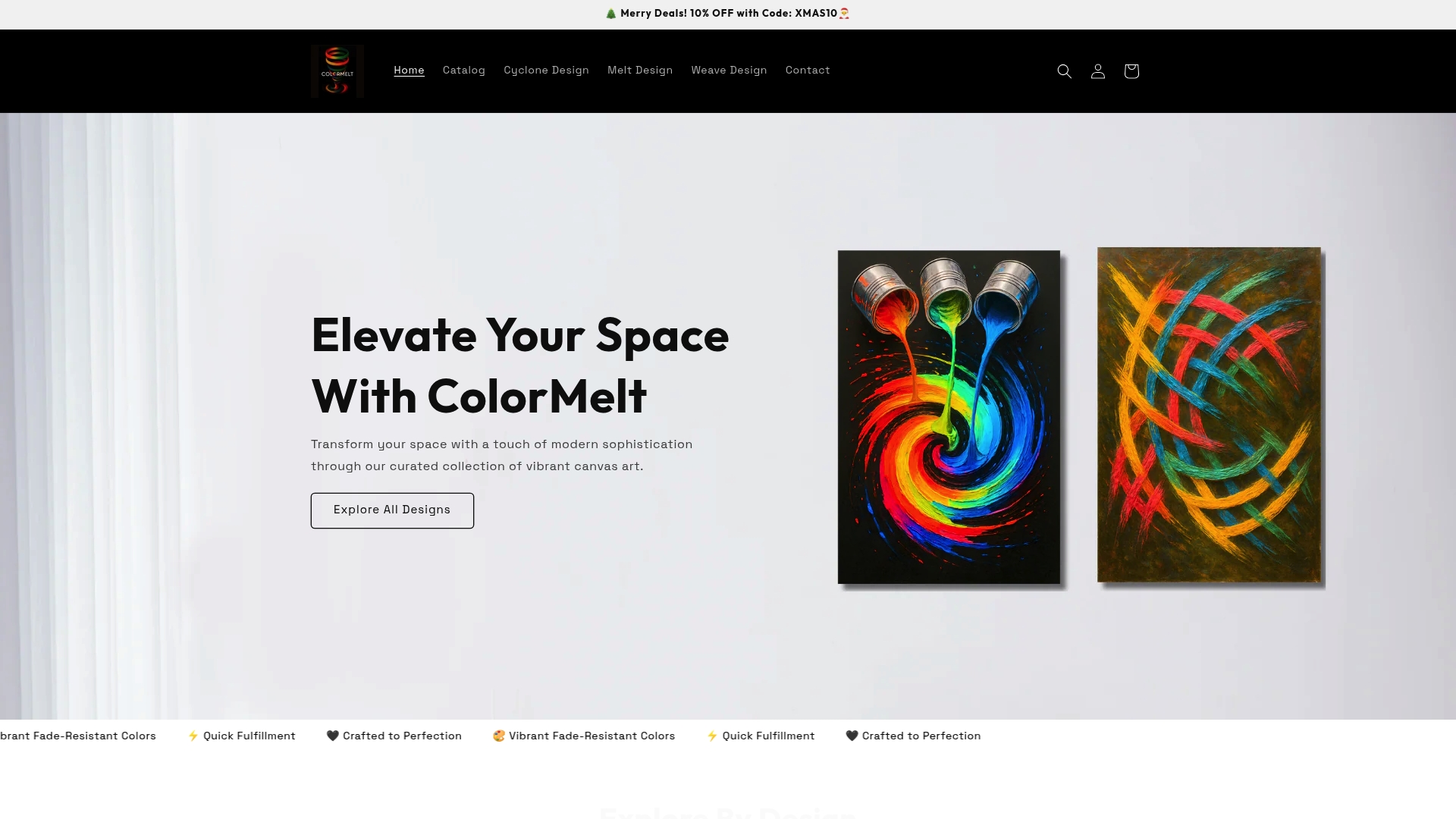
Browse the full wall art collection to find framed prints, canvas art, and statement pieces across abstract, weave, cyclone, and floral designs. If you want something with immediate visual impact, the Vibrant Art Print Melt Design is a strong starting point for any room that needs a focal piece. Colormelt ships quickly and crafts every piece to the standard your walls deserve.
FAQ
What are the main advantages of framed prints over unframed?
Framed prints protect artwork from UV light, dust, and humidity while giving it a polished, finished appearance that increases perceived value. Conservation framing materials extend print life to 50 or more years compared to months for unframed paper in exposed environments.
Does framing really protect against fading?
Yes. Museum Glass blocks 99% of UV light, which is the primary cause of color fading in paper prints. Without UV-filtering glazing, prints in sun-exposed rooms begin fading visibly within months.
Is framing worth the cost for affordable prints?
Professional framing increases the secondary market value of artwork by 18% to 25%, and the protection it provides reduces replacement costs over time. For any print you plan to keep longer than two years, framing pays for itself.
What rooms benefit most from framed prints?
Kitchens, bathrooms, and living rooms benefit most because these spaces have the highest environmental exposure to humidity, splatter, and direct light. Sealed frames are particularly important in wet areas where unframed paper degrades rapidly.
What framing materials should I prioritize?
Prioritize UV-filtering glazing, acid-free mat board, and archival backing board. These three materials form the core of a conservation-grade frame that protects your print from both light damage and chemical degradation.