
Why Display Customer Art Showcases for Brand Trust
Customer art showcases are defined as curated displays of artwork, photos, or creative work submitted by real customers, placed in physical or digital spaces to build community and drive brand credibility. Businesses and individuals who display customer art showcases gain a direct advantage: social proof content is trusted nearly 12 times more than traditional brand-led marketing. That single fact reframes the entire conversation around wall space. A blank wall is not neutral. It is a missed opportunity to let your customers speak for you, build emotional resonance, and turn casual visitors into loyal advocates.
Why do customer art showcases build trust and reduce purchase hesitation?
Customer art showcases work because they replace abstract appreciation with tangible proof. When a potential buyer sees real artwork displayed in a real space, the question “Would this work for me?” gets answered visually and emotionally before they ever open their wallet.
Social proof is the psychological mechanism at work here. People trust other people far more than they trust brands. A display of customer-created or customer-chosen art signals that real individuals have already committed to this space, this style, and this community. That signal lowers buying friction faster than any promotional copy.

Art visualizers and in-context displays reinforce this effect. Showing artwork in real-life settings helps buyers answer the question “Where would I put it?” before they even ask it. The emotional connection forms first, and the logical purchase decision follows.
Video content from collectors amplifies the effect even further. Video testimonials and unpolished clips from real customers drive 80% higher conversions than text alone. That is not a marginal improvement. It is a structural shift in how trust gets built.
“The most effective trust signal is not a five-star rating. It is a real person’s art, displayed in a real space, with their name attached to it. That combination creates emotional proof that no ad budget can replicate.”
The practical implication is clear. Businesses that display customer art throughout the customer journey, from homepage banners to in-store walls, build persistent credibility at every touchpoint. Each display reinforces the last.
- Emotional resonance: Seeing real customer art in context answers “Would this fit my life?” before the question is asked.
- Social proof at scale: Multiple customer pieces signal broad community approval, not just one person’s opinion.
- Reduced hesitation: Visual confirmation replaces abstract trust, shortening the path from interest to purchase.
- Repeat engagement: Customers who see their own work displayed return more often and spend more time on-site.
What marketing advantages do businesses gain from showcasing customer artwork?
Physical art displays function as 24/7 marketing assets. Businesses underestimate their walls as marketing tools. A well-curated customer showcase turns every visitor into a potential content creator, photographing the display and sharing it organically across social platforms.
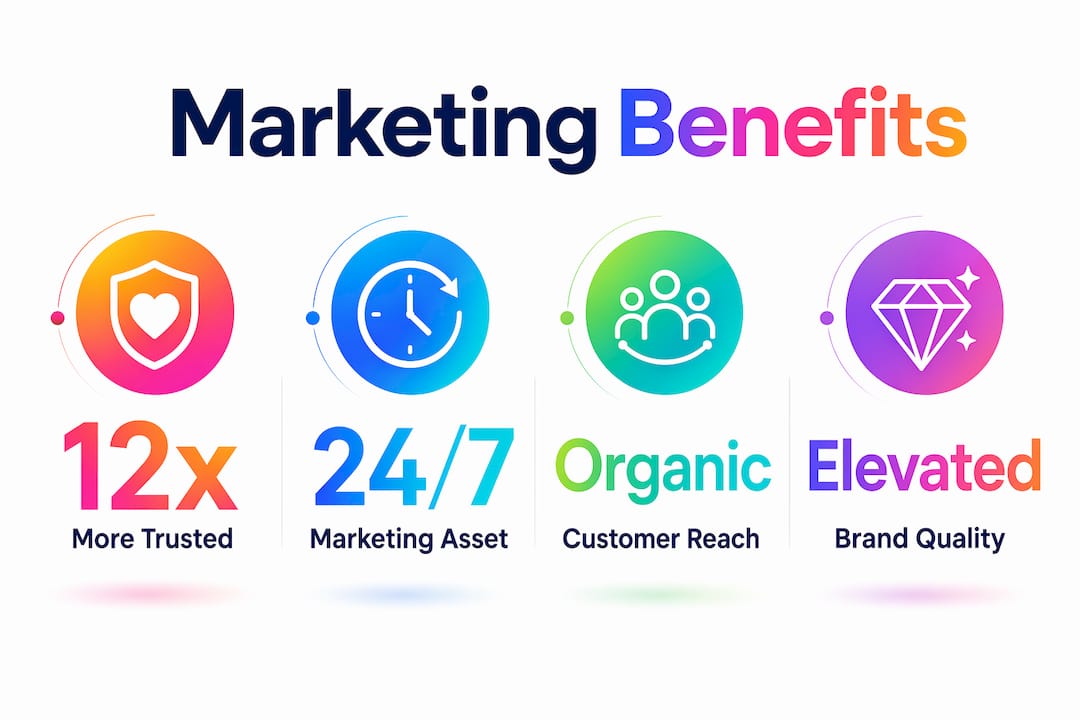
This matters because organic reach costs nothing. When customers photograph art and tag the business, the brand extends its visibility without paying for impressions. That directly lowers customer acquisition cost compared to running paid ads for the same reach.
Unique, high-quality art also elevates perceived brand quality. A space that displays thoughtfully curated customer work signals taste, community investment, and confidence. Those signals support premium pricing because customers associate the environment with higher value.
Curated art displays increase customer dwell time and average spend by creating an atmosphere that encourages conversation and exploration. Longer visits mean more purchases, more social sharing, and stronger emotional attachment to the space.
Here is how the marketing math works in practice:
- Customer photographs the display and shares it on Instagram or TikTok with a location tag.
- New audiences discover the brand through that organic post, with zero ad spend attached.
- Those new visitors arrive pre-warmed because they saw authentic content from a real person, not a polished ad.
- The cycle repeats with every new customer who photographs the display.
Statistic callout: Social proof content is trusted nearly 12 times more than brand-led marketing. That trust gap is the core reason customer art showcases outperform traditional advertising in building long-term brand equity.
The importance of art displays extends beyond aesthetics. Art changes how people feel in a space, and how they feel in a space determines how long they stay and how much they spend.
What are best practices for managing and curating effective customer art showcases?
Effective customer art showcases require structure, not just good taste. Without clear processes, even the most visually compelling display creates legal risk, contributor confusion, and engagement fatigue.
Legal frameworks come first
Consignment agreements are non-negotiable before displaying any customer artwork. These documents cover insurance, damage liability, and commission terms. Without them, a single damaged piece can create a dispute that damages both the relationship and the brand’s reputation.
Written permission is equally critical for digital showcases. Failing to secure written releases before displaying customer-submitted photos or art risks legal and reputational consequences. The standard workflow is to flag high-quality submissions, request a written release, and record it before any public use.
Rotation keeps displays alive
Rotating art every 30–90 days prevents display fatigue and encourages repeat visits. Customers who know the display changes regularly have a reason to return. Each rotation also generates a new round of social sharing from contributors and visitors alike.
| Practice | Recommended approach | Why it matters |
|---|---|---|
| Legal agreements | Consignment contract before display | Prevents liability disputes |
| Rotation cycle | Every 30–90 days | Maintains engagement and repeat visits |
| Labeling | Artist name, title, and backstory | Builds emotional connection |
| Permission workflow | Written release before public use | Protects brand and contributors |
| Instagram-ready spots | Dedicated photo zones with good lighting | Generates organic social content |
Labels do more work than most businesses realize
Adding artist names, titles, and backstory labels to displayed pieces enhances emotional connection and perceived value. A small card that says “This piece was created by Maria, a local watercolor artist who has been a customer since 2022” transforms a decoration into a story. Stories sell.
Pro Tip: Create a dedicated “photo moment” corner in your physical space with good natural or accent lighting. Customers will photograph it, tag your business, and generate organic reach every single time.
How can individuals and businesses start their own customer art showcases?
Starting a customer art showcase does not require a gallery budget or a large space. The core requirement is intentionality: every piece should serve a clear purpose, whether that purpose is community building, brand reinforcement, or direct sales.
The setup process breaks down into four practical decisions:
- Select artwork aligned with your identity. A coffee shop with a warm, neighborhood feel should display local community art, not abstract corporate prints. Alignment between the art and the brand identity makes the showcase feel authentic rather than decorative.
- Balance atmosphere, sales, and community goals. A showcase that only promotes products feels like an ad wall. One that only features community art misses commercial opportunity. The best showcases do both, with community art as the foundation and product context woven in naturally.
- Build a quality control and permission workflow before launch. Decide what standards submissions must meet, who reviews them, and how permissions get recorded. Starting with this structure prevents problems at scale.
- Design for both physical and digital visibility. A physical display should have at least one Instagram-ready spot. A digital showcase should appear on the homepage, product pages, and post-purchase emails to maximize the impact of customer art across the full customer journey.
For individuals decorating personal spaces, the same principles apply at a smaller scale. Displaying art from artists you know personally, or pieces that carry a story, transforms a room from decorated to meaningful. Colormelt’s approach to personalizing spaces with art reflects this: the goal is not just coverage of wall space but the creation of an environment that reflects real identity and real connection.
Pro Tip: For digital showcases, place customer art images at three specific touchpoints: the homepage hero section, the product detail page, and the order confirmation email. Each placement reinforces trust at a different stage of the buying decision.
Key Takeaways
Displaying customer art showcases builds trust, drives organic marketing, and deepens community engagement when backed by clear legal frameworks, consistent rotation, and intentional curation.
| Point | Details |
|---|---|
| Trust multiplier | Social proof content is trusted nearly 12 times more than brand-led marketing. |
| Organic reach engine | Customer photos of displays generate unpaid brand exposure and lower acquisition costs. |
| Legal protection | Consignment agreements and written releases must be in place before any public display. |
| Rotation discipline | Rotating displays every 30–90 days prevents fatigue and drives repeat visits. |
| Label strategy | Artist names and backstory labels increase emotional connection and perceived value. |
What I have learned from watching customer art showcases work in practice
Most businesses treat their walls as afterthoughts. They hang something generic, leave it there for two years, and wonder why the space feels flat. The businesses that get this right treat their walls as living content, updated regularly, tied to real people, and designed to be photographed.
The trust effect is real and it compounds. A customer who sees their own art displayed in a business does not just feel good about it. They tell people. They bring people in. They become advocates in a way that no loyalty program can manufacture. That word-of-mouth effect is the most underrated benefit of the entire practice.
The legal side is where most people stumble. Skipping consignment agreements or permission workflows feels harmless until it is not. One dispute over a damaged piece or an unauthorized digital use can undo months of goodwill. The paperwork is not bureaucracy. It is the foundation that makes the whole program sustainable.
My honest advice: start smaller than you think you need to. One well-curated wall with three pieces, proper labels, and a clear rotation schedule outperforms a crowded gallery with no structure. Quality and intentionality signal more than volume ever will. Build the process first, then scale the display.
— Shlomo
Colormelt’s wall art collections as a foundation for your showcase
Building a customer art showcase starts with having the right pieces to anchor the display. Colormelt’s wall art collection offers canvas prints, acrylic prints, wood prints, and framed artwork in abstract, cyclone, weave, and floral designs, all built with fade-resistant colors for long-term display quality.
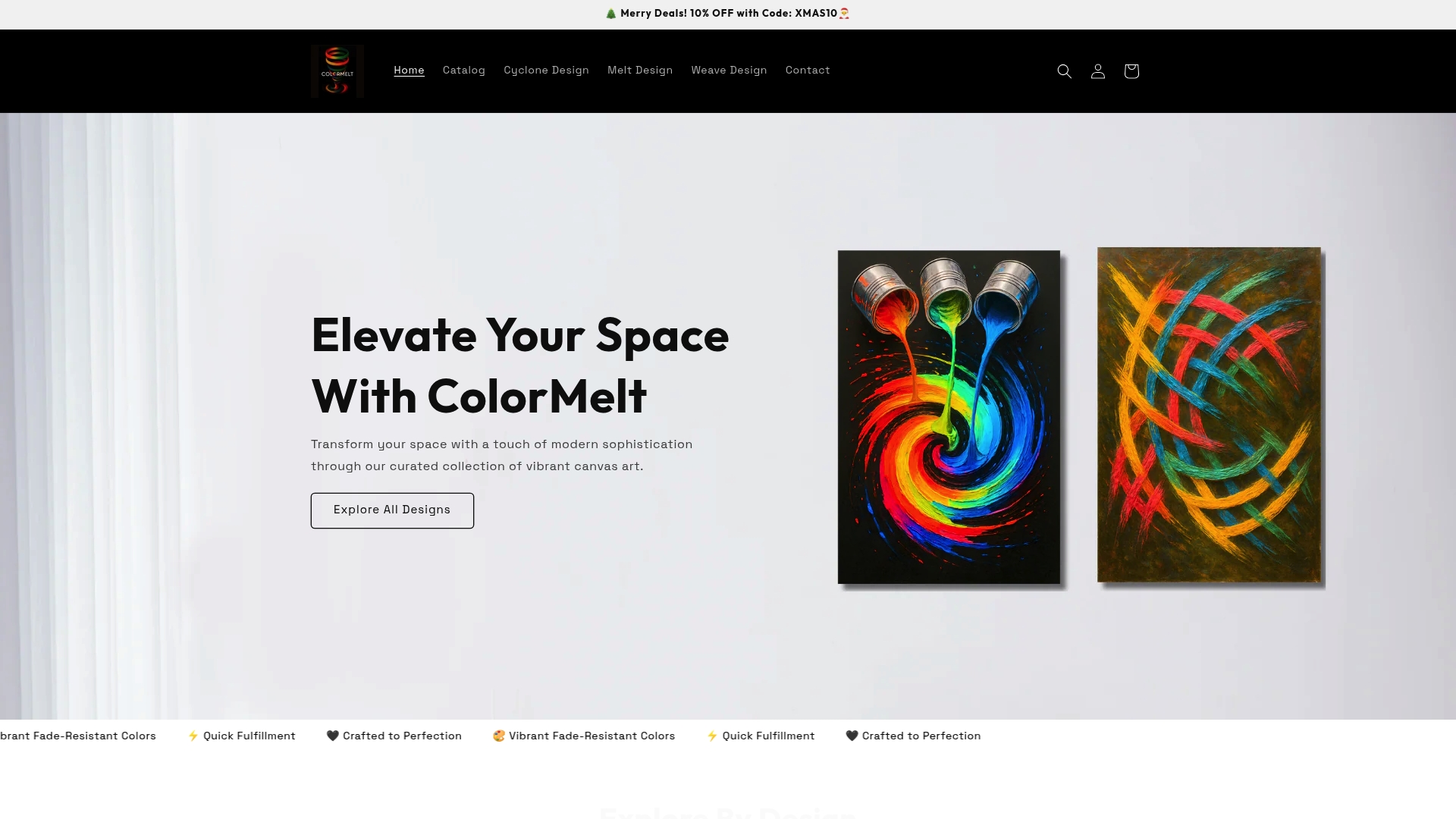
Whether you are setting up a physical showcase in a café, studio, or home gallery, or building a digital display that runs alongside customer-submitted content, Colormelt’s pieces provide the visual foundation that makes surrounding art look intentional rather than random. The cyclone design canvas is a strong anchor piece for high-contrast, modern display environments. Each piece ships quickly and arrives ready to hang, which matters when you are working on a rotation schedule.
FAQ
What is a customer art showcase?
A customer art showcase is a curated display of artwork or creative content submitted by real customers, placed in a physical or digital space to build community trust and brand credibility.
Why showcase customer art instead of professional art?
Customer art carries authentic social proof that professional art cannot replicate. Social proof content is trusted nearly 12 times more than brand-led marketing, making customer work a stronger trust signal.
How often should I rotate a customer art display?
Rotating displays every 30–90 days prevents engagement fatigue, encourages repeat visits, and generates fresh rounds of social sharing from contributors and new visitors.
Do I need legal agreements to display customer artwork?
Yes. Consignment agreements covering insurance, damage liability, and commission terms are required before displaying physical customer art. Written permission releases are required before using customer-submitted photos or digital content publicly.
How do customer art showcases lower marketing costs?
When customers photograph displays and share them organically on social platforms, the brand gains reach without paid advertising. That organic content cycle directly reduces customer acquisition cost over time.