
Top Wall Art Motifs to Define Your Home in 2026
Wall art motifs are recurring visual units that create rhythm, identity, and atmosphere across your living spaces. The top wall art motifs in use today range from nature-inspired botanicals to bold Art Deco geometry, and each one carries a distinct emotional and spatial effect. Choosing the right motif does more than fill a blank wall. It shapes how a room feels, how large it seems, and what story it tells about the people who live there. This guide covers the most compelling motifs available, explains how they work, and helps you pick the one that fits your home.
What are the top wall art motifs for home decoration?
A motif is the fundamental building block of any pattern. Motifs organize repetition and guide the viewer’s eye, creating continuity and proportion across surfaces. The success of any pattern depends on arrangement more than the novelty of the individual unit itself.
The top interior art motifs fall into three broad families:
- Nature-inspired motifs: Leaves, vines, flowers, and birds. These are universally enduring because they connect interiors to natural rhythms. Nature-based motifs soften architectural edges and create warm, timeless changes in home aesthetics.
- Geometric motifs: Chevrons, sunbursts, stepped forms, and lattices. Rooted in Art Deco design, these function as structural elements that establish visual rhythm. Geometric motifs like sunbursts suit varying scales and color palettes without requiring a historic context to feel right.
- Figurative and symbolic motifs: Traditional textile patterns, cultural emblems, and abstract symbols adapted for modern walls. These carry the deepest meaning and create the strongest spatial identity.
Pro Tip: Start with one motif family per room. Mixing all three at once creates visual noise rather than visual interest.
1. Botanical and floral motifs
Botanical motifs are the most consistently popular wall art theme across interior design history. Leaves, ferns, tropical palms, and blooms appear in everything from Victorian wallpaper to modern canvas prints. Their appeal is not trend-driven. Flowers, leaves, and birds fill design archives precisely because they remain safe long-term investments for home aesthetics.
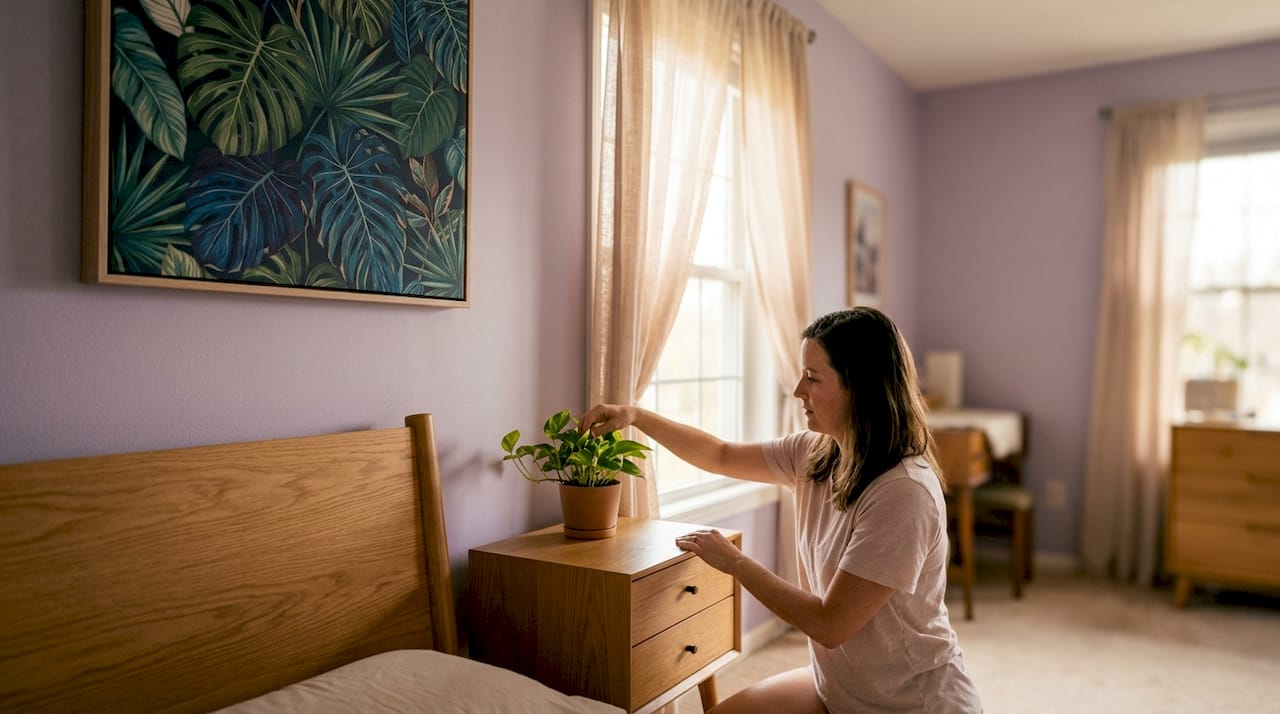
Botanical motifs work especially well in bedrooms, bathrooms, and sunrooms. They bring the outdoors in without requiring actual plants. A large-scale monstera leaf print on a single accent wall creates a focal point that feels lush without being overwhelming.
2. Geometric and Art Deco motifs
Geometric motifs carry the visual authority of the Art Deco era. Sunbursts, chevrons, fan shapes, and stepped zigzags all communicate precision and glamour. Art Deco geometric shapes act structurally, establishing visual rhythm that adapts to multiple room scales and palettes.
These motifs suit living rooms, home offices, and dining areas where you want energy and clarity. A gold sunburst on a deep navy background reads as confident and modern. Geometric motifs also layer well with solid-color furniture because the pattern carries the visual weight.
3. Abstract and cyclone motifs
Abstract motifs resist easy categorization, and that is their strength. Swirling cyclone forms, color-field compositions, and fluid organic shapes create mood without literal reference. Colormelt’s cyclone designs, for example, use contrasts of light and dark to generate visual tension that draws the eye across the canvas.
Abstract motifs work in any room where you want art to feel expressive rather than decorative. They are the right choice when you want a conversation piece rather than a background element. Scale matters most here. A small abstract print disappears. A large one commands the room.
4. Weave and textile-inspired motifs
Weave motifs translate the structure of fabric into wall art. Interlocking lines, basket patterns, and woven grid forms bring tactile warmth to flat surfaces. This category bridges the gap between textile design and visual art, making walls feel layered and considered.
Adapting textile motifs into wall panels and decorative surfaces strengthens spatial identity and supports sustainability by keeping traditional craft knowledge alive. Weave-inspired prints work particularly well in living rooms and entryways where you want texture without adding physical materials.
5. Bird and animal motifs
Bird motifs carry symbolic weight across nearly every culture. Cranes signal longevity in East Asian design. Owls represent wisdom in European traditions. Hummingbirds suggest vitality in Latin American art. Using a bird motif in your home is never just decorative. It is a quiet statement about what you value.
Animal motifs in general work best when they are stylized rather than realistic. A graphic crane silhouette on a pale linen background reads as modern and refined. A photorealistic animal portrait can feel heavy and dated. Choose the level of abstraction that matches your room’s overall tone.
6. Chevron and zigzag motifs
Chevrons are one of the most versatile geometric patterns in wall art. The V-shaped repeat creates strong directional movement, which makes a room feel taller when oriented vertically or wider when oriented horizontally. This makes chevrons a practical tool for correcting awkward room proportions.
Pattern scale and density significantly affect atmosphere and visual impact. A tight, small-scale chevron reads as texture from a distance. A bold, oversized chevron becomes the room’s dominant statement. Match the scale to the size of your wall and the complexity of your other furnishings.
7. Cultural and traditional motifs
Traditional motifs carry meaning that goes far beyond decoration. Motifs serve as symbolic expressions of national identity, communicating lifestyle, beliefs, and cultural legacies. Each one reflects extensive cultural knowledge and skilled craftsmanship built over generations.
Using these motifs responsibly means understanding their origin. A Moroccan zellige-inspired geometric pattern, a West African kente-derived stripe, or a Scandinavian folk art rosette each belongs to a living tradition. Placing them in your home with awareness of their source honors that tradition rather than reducing it to surface decoration.
8. Sunburst and radial motifs
Sunburst motifs radiate from a central point, creating a sense of energy and expansion. They were central to Art Deco interiors and have returned strongly in contemporary design. A sunburst in brass tones on a matte wall reads as both vintage and current, which is a rare quality in decorative art.
Radial motifs work best as singular focal pieces rather than repeated patterns. One large sunburst above a fireplace or behind a bed creates a natural visual anchor. Repeating the motif across multiple walls dilutes its impact and makes the room feel restless.
How do motifs influence the mood and spatial identity of a room?
Motifs are design engines. Arrangement drives success more than the novelty of any individual element. The same leaf motif printed small and scattered reads as calm background texture. Printed large and bold, it becomes the room’s defining statement.
The contrast between organic and geometric motifs produces fundamentally different moods:
- Organic motifs (botanicals, flowing curves, bird forms) create warmth, softness, and a sense of natural ease. They suit bedrooms, reading nooks, and spaces meant for rest.
- Geometric motifs (chevrons, sunbursts, lattices) create structure, energy, and visual clarity. They suit workspaces, dining rooms, and social areas.
“Choosing between Art Nouveau’s organic motifs and Art Deco’s geometric ones changes room ambiance fundamentally. Organic forms suggest a romantic sanctuary. Geometric forms suggest a modern, machine-age glamour.”
Art Nouveau and Art Deco represent the two poles of motif style. Understanding where your preferred motif sits on that spectrum tells you exactly what atmosphere you are creating.
Scale and placement amplify these effects. A motif placed at eye level on a focal wall commands attention. The same motif repeated on a secondary surface becomes a supporting texture. Use motif placement strategically to direct where the eye travels first when someone enters the room.
What cultural meanings do traditional motifs bring to wall art today?
Traditional motifs carry community identity encoded in visual form. Each motif reflects extensive cultural knowledge and skilled craftsmanship, making them far more than aesthetic choices. They are records of how communities understood the world.
Responsible integration of these motifs follows a clear set of principles:
- Research the origin. Know which culture produced the motif and what it signifies before placing it in your home.
- Source from makers within the tradition. Buying art created by artists from the originating culture supports local creative economies directly.
- Place symbolic motifs with intention. Motifs with high symbolic significance belong in focal areas where they receive the attention they deserve, not as filler on secondary surfaces.
- Avoid mixing sacred and secular. Some motifs hold ceremonial meaning that makes casual decorative use inappropriate.
- Credit the tradition. If you display a piece inspired by a specific cultural tradition, knowing and sharing that context adds depth to your home’s story.
Pro Tip: When you buy art directly from artists who belong to the originating culture, you get authentic craftsmanship and support a living creative tradition at the same time.
Culturally informed integration also boosts local creative economies and home ambience simultaneously. The motif becomes a point of connection rather than a surface decoration.
How to choose the right wall art motif for your home
Choosing a motif starts with your room’s existing character. Match the motif’s energy to the room’s function, then align it with your color palette and furniture style. A room-by-room approach prevents the common mistake of buying art you love in isolation but cannot integrate once it is on the wall.
| Motif type | Mood created | Best rooms | Aesthetic fit |
|---|---|---|---|
| Botanical/floral | Warm, natural, timeless | Bedroom, bathroom, sunroom | Bohemian, Scandinavian, cottagecore |
| Geometric/Art Deco | Energetic, structured, glamorous | Living room, dining room, office | Modern, Art Deco, mid-century |
| Abstract/cyclone | Expressive, dynamic, bold | Living room, studio, hallway | Contemporary, maximalist |
| Weave/textile | Tactile, grounded, layered | Entryway, living room | Eclectic, global, artisan |
| Cultural/traditional | Meaningful, identity-driven | Any focal wall | Global, curated, personal |
Scale is the most underestimated variable. A motif that looks balanced in a product photo may feel tiny on a large wall or crowded in a small one. Measure your wall before you buy, and use painter’s tape to mark the print’s dimensions on the wall before committing.
For minimalist spaces, choose one motif in a restrained palette and let it breathe with negative space around it. For bohemian rooms, layer two or three complementary motifs at different scales. For modern interiors, geometric motifs in monochrome or metallic tones deliver the most visual impact.
Key takeaways
The most effective wall art motifs combine visual rhythm, cultural awareness, and deliberate placement to define a room’s identity rather than simply fill its walls.
| Point | Details |
|---|---|
| Motifs create rhythm, not just decoration | Arrangement and repetition drive visual impact more than the motif’s novelty alone. |
| Organic vs geometric sets the mood | Botanical motifs create warmth and calm; geometric motifs create energy and structure. |
| Cultural motifs require context | Research origin, source responsibly, and place symbolic motifs in focal positions. |
| Scale determines dominance | Match motif scale to wall size and room complexity before purchasing. |
| One motif family per room | Mixing multiple motif families creates visual noise; one family creates cohesion. |
Why motif selection is more personal than most design advice admits
Most interior design content treats motif selection as a style quiz. Pick your aesthetic, match the motif, done. That framework misses the point. The motifs that make a home feel genuinely personal are the ones that carry a story you actually care about.
I have seen beautifully styled rooms that feel like hotel lobbies because every motif was chosen for trend alignment rather than personal resonance. The botanical print was on trend. The geometric rug was on trend. Nothing in the room told you anything about the person who lived there.
The motifs worth investing in are the ones that connect to something real. A weave pattern that reminds you of a place you traveled. A bird motif that carries meaning from your family’s cultural background. An abstract cyclone form that simply moves you every time you look at it. These are not decorating decisions. They are identity decisions.
Trends in wall art motifs shift every few years. Nature-based motifs and culturally grounded patterns have outlasted every trend cycle because they connect to something deeper than fashion. If you are choosing between a motif that is currently popular and one that genuinely resonates with you, choose the one that resonates. It will still feel right in ten years. The trending one may not survive the next design season.
Experiment freely, but experiment with awareness. Know what a motif means before you put it on your wall. That knowledge does not limit your choices. It makes every choice more intentional and more yours.
— Shlomo
Colormelt’s wall art motif collections for every style
Colormelt curates wall art that takes motifs seriously. The collection spans abstract cyclone designs, weave-inspired compositions, and floral prints, all produced with fade-resistant colors on canvas, acrylic, wood, and framed formats.
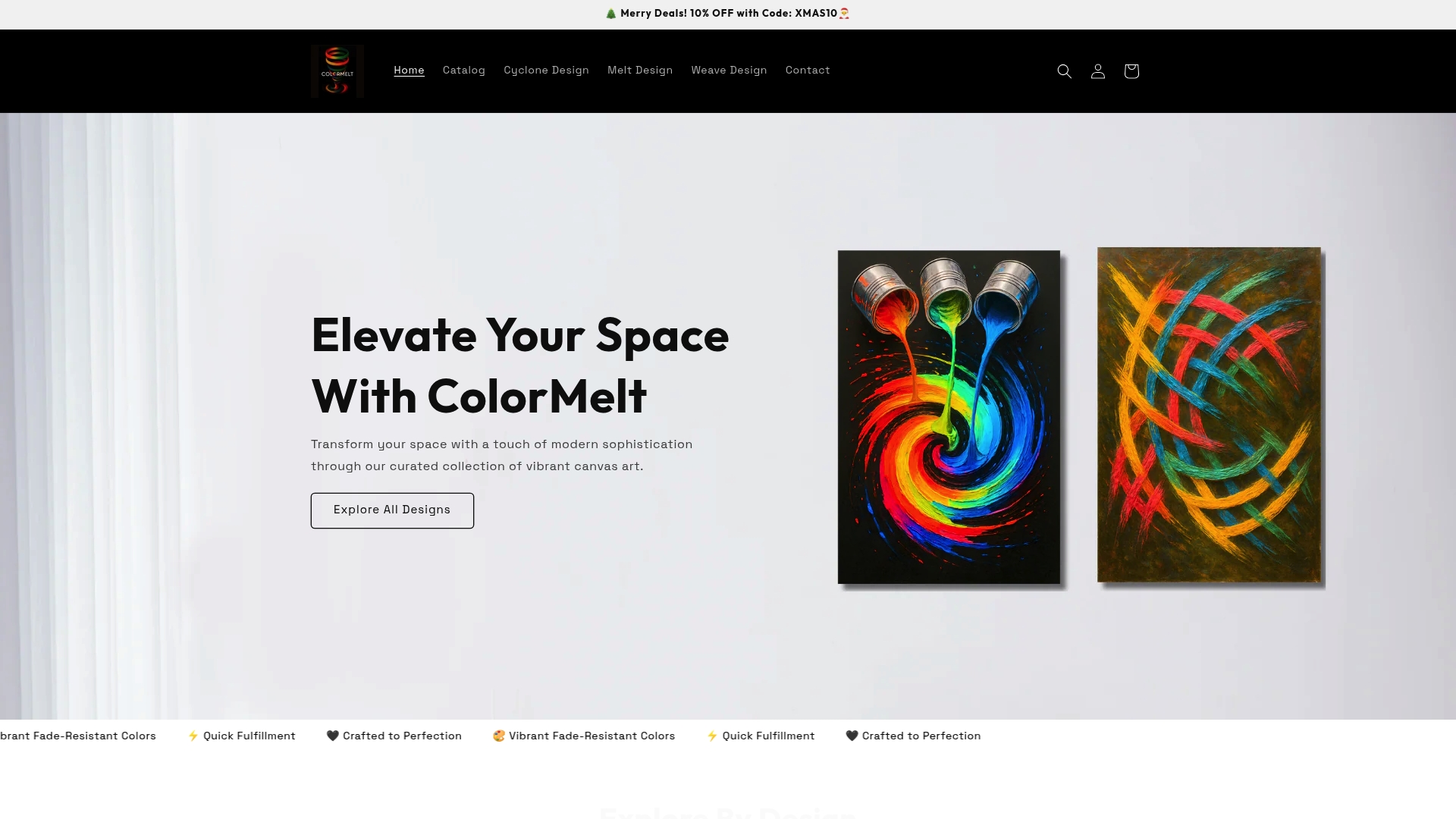
Every piece is built for longevity, not just visual impact. If you are ready to find a motif that fits your space and your story, the Colormelt wall art collection gives you a curated starting point across styles and scales. For something bold and kinetic, the cyclone design prints use light-dark contrast to create movement on any wall. Quick fulfillment and crafted quality mean what you see online is what arrives at your door.
FAQ
What is a wall art motif?
A wall art motif is a recurring visual unit, such as a leaf, chevron, or sunburst, that creates pattern, rhythm, and meaning across a decorative surface. Motifs organize repetition and guide the viewer’s eye to create cohesion in a room.
Which wall art motifs are most timeless?
Nature-based motifs, including flowers, leaves, and birds, are the most enduring choices because they connect interiors to natural rhythms that never go out of style. Geometric motifs from the Art Deco tradition also hold long-term appeal due to their structural clarity.
How do I choose a wall art motif for a small room?
Choose a single motif at a moderate scale and place it on one focal wall rather than repeating it across all surfaces. Pattern scale and density significantly affect how spacious a room feels, so restraint works better in smaller spaces.
Can I mix different motif types in one room?
You can layer two complementary motifs at different scales, but mixing three or more motif families creates visual noise. The most effective approach is one dominant motif and one subtle supporting pattern on a secondary surface.
What does it mean to use cultural motifs responsibly?
Using cultural motifs responsibly means researching their origin, understanding their symbolic meaning, and sourcing art from makers within the originating tradition when possible. Motifs express national identity and cultural legacies, so placing them with intention honors rather than reduces their significance.