
Why Buy Art Online: Benefits Every Home Buyer Should Know
Buying art online is a direct, accessible way to find unique pieces that elevate your home while offering safety, variety, and price transparency. 78% of art collectors purchased art online in 2025, which shows this is no longer a niche habit. It is the dominant way people find and own art. The online art market reached approximately $12 billion globally in 2023, nearly double its 2019 size. That growth reflects a simple truth: buying art through the internet works, and it works well for people who want to personalize their homes without the friction of traditional gallery visits.
Why buy art online for your home?
The single strongest reason to purchase art online is access. No gallery within driving distance can match the sheer range of styles, sizes, and price points available on a well-curated digital platform. You can browse abstract canvas prints, floral motifs, geometric patterns, and photography from artists across the world without leaving your couch.
The advantages of online art shopping go well beyond convenience. Here is what actually matters for buyers focused on their living spaces:
- Global artist access. You are not limited to what is showing locally this month. Online platforms connect you with independent and emerging artists from every region, giving your home a genuinely personal character.
- Anytime browsing. Galleries keep business hours. Online platforms do not. You can spend a Sunday evening comparing three different abstract prints without a sales associate hovering nearby.
- Price transparency. Prices are listed clearly, and you can filter by budget. Purchasing art directly from artists can lower costs for buyers and improve artist earnings when the transaction is managed professionally.
- Discovery of emerging talent. Online platforms surface artists who have not yet landed gallery representation. Buying their work early often means lower prices and a more personal connection to the piece.
- No purchase pressure. You can save a listing, return to it three days later, and compare it against five other options. That kind of deliberate decision-making rarely happens in a gallery setting.
Pro Tip: Before you commit to a piece, use your phone camera to photograph the wall where you plan to hang it. Many platforms let you upload that photo to a visualization tool so you can see the artwork in your actual space before buying.
The benefits of buying art online are most obvious when you are decorating a specific room. You can search by color palette, orientation, or subject matter. That level of filtering simply does not exist in a physical gallery.

How do online art platforms ensure safety and buyer confidence?
Safety is the most common concern for first-time buyers. The good news is that reputable platforms have built clear systems to protect you.
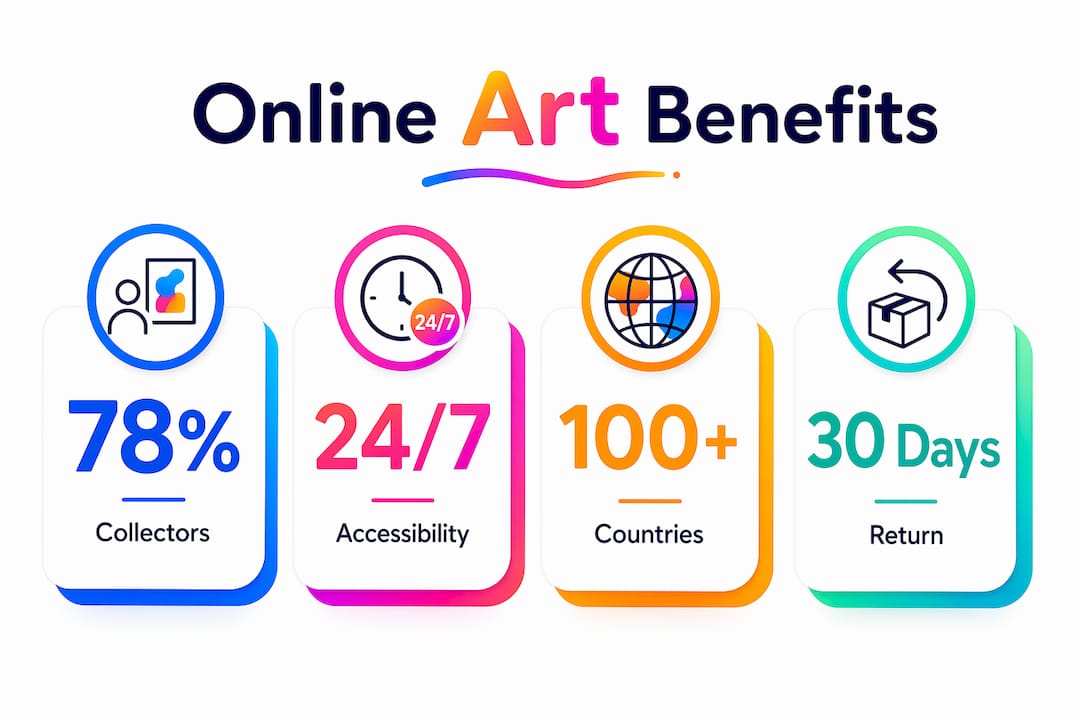
Safety in online art buying emerges from clarity: detailed information about artist identity, artwork originality, and shipping terms. When a platform shows you the artist’s biography, the materials used, the print process, and the exact dimensions, you have everything you need to make a confident decision. Vague listings are a red flag. Detailed listings are a green light.
Here is how trustworthy platforms protect buyers at each stage:
- Verified artist profiles. Platforms that vet their artists and provide full background information reduce the risk of misrepresentation. Curated platforms reduce risk by narrowing choices and providing reliable artist review.
- Transparent return policies. Online platforms prioritize buyer safety through standardized return policies with fixed return periods. Read the policy before you buy, and favor platforms that offer at least a 14-day return window.
- Secure payment processing. Reputable platforms use encrypted payment gateways. Look for HTTPS in the URL and recognized payment options like PayPal, Stripe, or major credit cards.
- Professional shipping and framing. Top-tier platforms handle complex logistics, secure payments, and ready-to-hang packaging for international buyers. That means your canvas arrives protected, framed if requested, and ready to go on the wall.
The digital environment also encourages more reflective purchases. Online buying leads to more informed decisions than traditional galleries because you can revisit listings, compare works side by side, and research the artist at your own pace. Impulse buying drops. Satisfaction rises.
How does online art buying compare to traditional galleries?
Online platforms and traditional galleries serve different needs. Understanding the difference helps you use both well.
| Feature | Online platforms | Traditional galleries |
|---|---|---|
| Selection range | Vast, global, filterable | Curated, local or regional |
| Price transparency | Listed upfront, filterable by budget | Often negotiated or unlisted |
| Buyer pressure | None, browse at your own pace | Present, especially in smaller galleries |
| Artist relationships | Limited, mostly digital | Deep, career-long support |
| Logistics | Handled by platform | Buyer arranges delivery |
| Discovery | High, surfaces emerging artists | Lower, focused on established names |
Traditional galleries build pricing consistency, career-long artist development, and contextual understanding for serious collectors. That is genuinely valuable if you are building a collection with long-term investment intent. But for buyers who want to personalize their home with art and enjoy the process, online platforms win on nearly every practical measure.
Online platforms excel at entry-level buyer access, discovery, and convenience but lack the deep career-long contexts galleries provide. That is not a flaw. It is a feature for buyers whose goal is a beautiful home rather than a curated investment portfolio.
Pro Tip: Use online platforms for discovery and everyday decorating purchases. Reserve gallery visits for significant investment pieces where provenance and artist relationships matter most.
The two channels complement each other. Most experienced collectors use both, depending on what they are buying and why.
How to make confident art purchases online
Buying art online rewards preparation. A few clear habits separate buyers who love their purchases from those who feel uncertain after the fact.
- Research the artist first. Read the biography, look at their full body of work, and check whether the platform has verified their identity. Digital platforms provide deep, interactive artist backgrounds that replace physical gallery experiences. Use that information.
- Check the return policy before you pay. A clear, fair return window removes the biggest risk from any online purchase. If the policy is buried or vague, that tells you something about how the platform treats buyers.
- Understand what you are buying. Canvas prints, acrylic prints, wood prints, and framed artwork each behave differently in a room. Canvas prints absorb light and feel warm. Acrylic prints reflect light and feel modern. Know which finish suits your wall and your lighting.
- Use visualization tools. Many platforms offer room preview features. Upload a photo of your wall and see the piece in context before committing. This single step eliminates most post-purchase regret.
- Consider the room’s color story. A piece that looks striking on a white screen may clash with warm-toned walls. Pull the dominant colors from your room and filter your search accordingly. Colormelt’s collection, for example, is built around color contrast and vibrancy, making it easy to find pieces that anchor a room’s palette.
- Factor in shipping and framing costs. Professional handling of shipping, custom framing, and archival-quality materials is included by many platforms. Confirm what is included before comparing prices across sites.
Learning how to choose wall art for your home is a skill that develops quickly. The more you browse, the faster you develop an eye for what works in your specific spaces.
Key takeaways
Buying art online is the most practical, accessible, and buyer-friendly way to find pieces that genuinely improve your living space, provided you use platforms that prioritize transparency, verified artists, and clear return policies.
| Point | Details |
|---|---|
| Market adoption is high | 78% of collectors bought art online in 2025, confirming this is a mainstream, trusted channel. |
| Safety comes from clarity | Platforms with verified artist profiles, detailed listings, and clear return policies protect buyers effectively. |
| Online beats galleries on access | Global selection, price transparency, and no purchase pressure make online platforms ideal for home decorators. |
| Galleries still have a role | Traditional galleries offer career-long artist context and pricing consistency for serious investment collectors. |
| Preparation improves outcomes | Researching artists, using visualization tools, and reading return policies before buying reduces regret significantly. |
What I have learned from buying art online
By Shlomo
The first time I bought a canvas print online, I spent two weeks second-guessing myself. I kept returning to the listing, zooming into the texture, reading the artist’s statement three times. What I did not expect was how much I enjoyed that process. It felt nothing like standing in a gallery trying to look like I belonged there.
What online buying gave me was time. Time to sit with a piece, imagine it in different rooms, and decide whether I actually wanted it or just liked the idea of it. That deliberate pace changed how I think about art entirely. I stopped buying things that looked impressive and started buying things that felt right for the specific wall, the specific light, the specific mood of a room.
The thing most people miss about purchasing art digitally is the storytelling layer. Modern digital art platforms create a storytelling-driven experience, offering rich cultural backgrounds that substitute for the gallery wall experience. When you read about why an artist chose a particular color or technique, the piece means more when it is hanging in your home. That context travels with the artwork.
My honest advice for new buyers: do not wait until you feel certain. Start with one piece at a reasonable price point from a platform with a solid return policy. Hang it. Live with it for a week. You will learn more about your own taste from that single experience than from hours of browsing.
— Shlomo
Colormelt’s curated wall art for modern homes
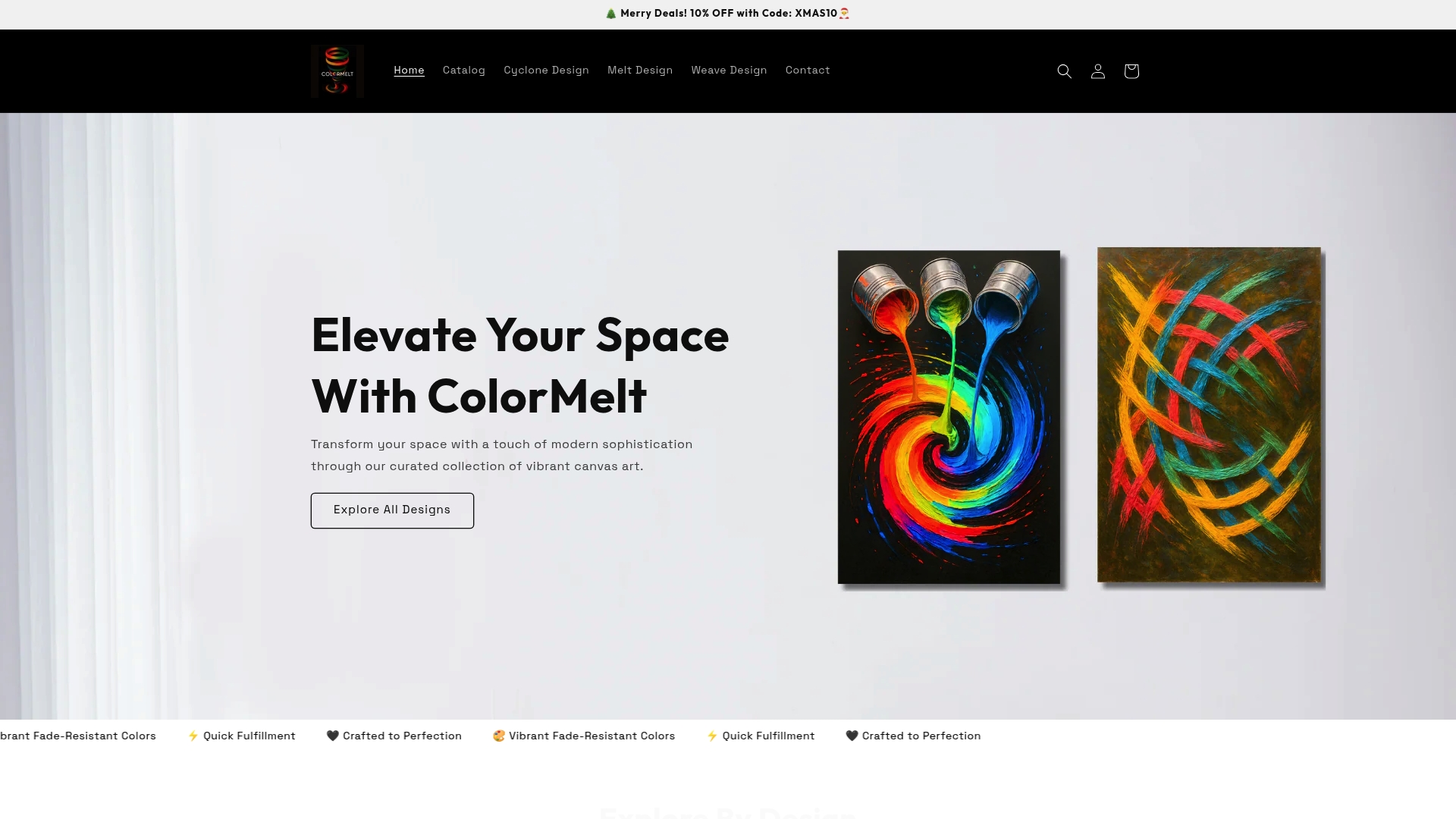
Colormelt offers a curated collection of vibrant wall art built for people who want their homes to feel intentional, not generic. Every piece is designed around color contrast and visual energy, from abstract weave patterns to bold cyclone motifs and floral prints. The collection covers canvas art, acrylic prints, wood prints, and framed artwork, all produced with fade-resistant colors and quick fulfillment. If you want a specific starting point, the Cyclone Design colorful decor piece is a strong example of how a single bold print can anchor an entire room. Browse the full collection and find the piece that fits your wall, your palette, and your style.
FAQ
Why buy art online instead of in a store?
Buying art online gives you access to a global selection, transparent pricing, and the ability to browse without time pressure or sales influence. 78% of collectors bought art online in 2025, confirming it is a trusted and widely used channel.
Is buying art online safe?
Yes, when you use platforms that provide verified artist profiles, detailed artwork information, and clear return policies. Safety in online art buying comes from clarity about artist identity, originality, and shipping terms.
How do I know the art will look right in my home?
Use the visualization tools most platforms offer, which let you preview artwork on a photo of your actual wall. Filtering by color palette and checking the listed dimensions against your wall space also helps significantly.
What types of art can I buy online?
Online platforms carry canvas prints, acrylic prints, wood prints, framed artwork, photography, and original paintings. Colormelt, for example, specializes in canvas art, acrylic prints, and framed pieces featuring abstract, weave, cyclone, and floral designs.
Do online art platforms handle shipping and framing?
Most reputable platforms do. Professional handling of shipping, custom framing, and archival-quality materials is included by many sellers, delivering pieces ready to hang without requiring a local framer.