
Why Invest in Quality Prints for Your Home
Quality prints are defined as art reproductions produced with archival materials, pigment-based inks, and professional printing techniques that preserve color accuracy and structural integrity for decades. Choosing premium printing over mass-produced alternatives is one of the most direct ways to improve how your home looks and feels every day. Physical art creates an emotional connection that a digital screen simply cannot replicate. Research confirms that physical prints require 21% less cognitive effort to process than digital images, which means your brain absorbs and remembers them more deeply. For anyone serious about enhancing their living space, understanding why invest in quality prints is the first step toward making choices that last.
Why invest in quality prints: what separates premium from standard?
The difference between a quality print and a cheap one is not just visible. It is structural. Standard mass-produced prints typically use dye-based inks on uncoated paper. Those inks fade within a few years when exposed to light and humidity. A premium print uses pigment-based inks bonded to archival, acid-free substrates that resist yellowing, moisture, and UV damage.
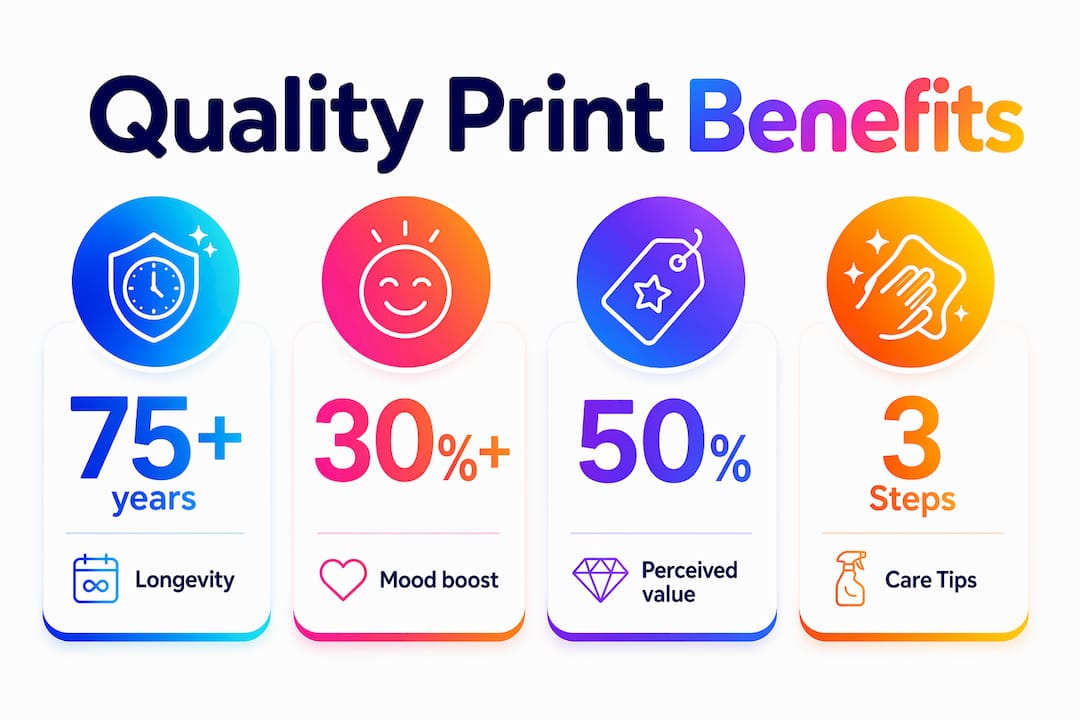
Museum-grade prints last up to 75 years without significant fading when produced with the right materials and coatings. That longevity is not a marketing claim. It reflects the chemistry of pigment particles sitting on the surface of acid-free paper rather than soaking into it and breaking down over time.
Color accuracy is the other major dividing line. Professional printing processes calibrate output to match the original image’s full tonal range. The result is a print that looks vibrant and true to life on your wall, not washed out or oversaturated.
- Archival, acid-free paper: Prevents yellowing and brittleness over time
- Pigment-based inks: Resist fading from UV light and humidity far better than dye-based alternatives
- High-resolution output: Captures fine detail and smooth gradients that low-resolution prints lose
- UV-resistant coatings: Add a protective layer that extends color life significantly
- Professional color calibration: Ensures the print matches the original artwork’s intended palette
Pro Tip: When buying a print, ask specifically whether it uses pigment-based inks and acid-free paper. If the seller cannot confirm both, treat it as a standard print with a short lifespan.
What does the science say about the value of quality prints?
The case for investing in physical art prints is not just aesthetic. Neuroscience backs it up. An EEG and eye-tracking study of 270 participants found that physical print media requires 21% less cognitive effort and produces 70% higher recall compared to digital equivalents. That finding has a direct implication for your home: art you hang on a wall registers more deeply in memory and emotion than the same image on a phone or tablet screen.
Physical prints also carry a psychological signal that digital images cannot. High-quality prints signal permanence and importance in a way that a screensaver never will. When you frame and display an image, you are telling yourself and everyone who enters your home that this image matters. That signal shapes how you feel in the space every day.
“Printed photos foster emotional connection and higher self-esteem in children when displayed at home. The physical presence of a printed image communicates value, belonging, and care in ways that digital displays simply do not.”
Print quality also influences how others perceive your space. Poor print quality signals unreliability, while high-quality output communicates care and competence. In a home context, that translates directly to how guests experience your space and how you feel living in it.
How do quality prints shape the atmosphere of a living space?
A quality print does more than fill a blank wall. It anchors the mood of an entire room. The color accuracy and tonal depth of a premium print create a visual focal point that cheaper alternatives cannot achieve. A faded or pixelated print draws the eye for the wrong reasons. A sharp, vibrant piece pulls attention and holds it.
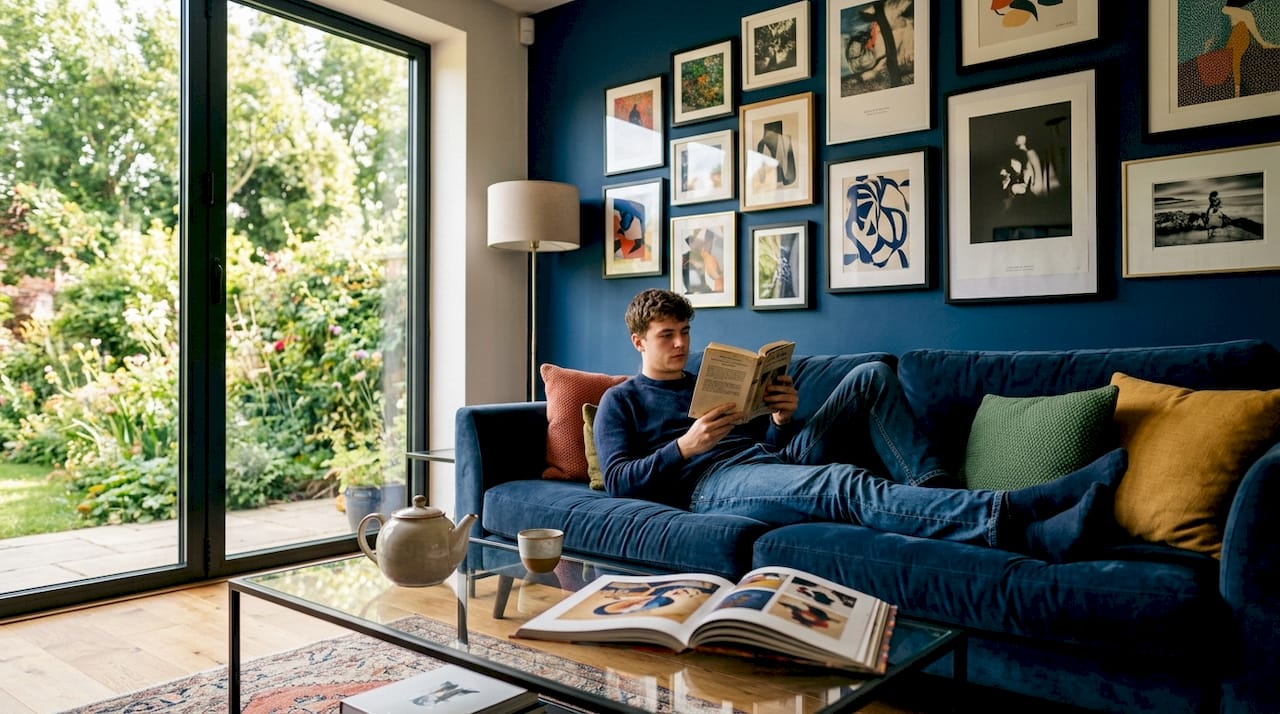
Displayed prints foster emotional bonds and a sense of belonging, particularly for children growing up in the home. Seeing meaningful images on the walls of their home every day builds self-esteem and a sense of identity. That effect compounds over years in a way that rotating digital slideshows do not.
The materials themselves also contribute to the atmosphere. Canvas prints add texture and warmth. Acrylic prints create a sleek, gallery-like finish. Framed prints add structure and formality. Each format changes how a room feels, and premium materials make those effects more pronounced.
- Color depth: Vibrant, accurate colors set the emotional tone of a room more powerfully than muted or inaccurate prints
- Texture and format: Canvas, acrylic, and wood prints each create a distinct tactile and visual atmosphere
- Scale and placement: A quality large-format print commands a room in a way a small, cheap print never can
- Permanence: A print that holds its color and structure for decades becomes part of your home’s identity, not a temporary decoration
Quality prints also carry legacy value. Museum-grade prints can increase in collectible value over time, particularly when produced in limited editions with documented archival materials. That is a dimension of value that a mass-produced print simply does not offer.
What practical steps help you get the most from premium prints?
Selecting a quality print is only the first decision. How you display and maintain it determines how long it delivers value. The following steps give you a clear framework for maximizing your investment.
- Verify archival materials before buying. Confirm that the print uses acid-free paper or canvas and pigment-based inks. A print without these specifications will fade and degrade regardless of how well you display it.
- Choose the right format for the room. Canvas suits warm, casual spaces. Acrylic works well in modern, light-filled rooms. Framed prints fit formal or gallery-style arrangements. Match the format to the room’s existing character.
- Frame for protection, not just aesthetics. UV-filtering glass or acrylic glazing blocks the light wavelengths that cause fading. A quality frame also protects edges from humidity and physical damage.
- Position prints away from direct sunlight. Even UV-resistant prints degrade faster under direct sun exposure. North-facing walls or spots shaded by furniture are ideal for long-term preservation.
- Clean gently and rarely. Dust with a soft, dry cloth. Avoid moisture near unframed canvas or paper prints. Most quality prints need almost no maintenance when properly framed and positioned.
| Display factor | Why it matters |
|---|---|
| UV-filtering glazing | Blocks fading wavelengths without distorting color |
| Acid-free matting | Prevents chemical transfer that yellows paper over time |
| Wall humidity control | Reduces warping and mold risk for paper and canvas |
| Proper hanging hardware | Prevents tilting and physical stress on the print |
Pro Tip: If you are choosing quality wall art for a room with large windows, prioritize prints with UV-resistant coatings and frame them with UV-filtering glazing. That combination gives you the most protection without sacrificing the visual impact of natural light.
The cost of a quality print is real, but so is the math behind it. A premium print that lasts 75 years costs far less per year of enjoyment than a cheap print replaced every few years. When you factor in the emotional and aesthetic value it delivers daily, the case for investing in durable prints becomes straightforward.
Key Takeaways
Investing in quality prints delivers superior durability, emotional depth, and lasting aesthetic value that mass-produced alternatives cannot match.
| Point | Details |
|---|---|
| Archival materials define longevity | Museum-grade prints using pigment inks and acid-free paper last up to 75 years without fading. |
| Science supports physical prints | Physical prints require 21% less cognitive effort and produce 70% higher recall than digital images. |
| Emotional impact is measurable | Displayed prints build self-esteem and belonging, especially for children in the home. |
| Display choices protect your investment | UV-filtering glazing, acid-free matting, and proper placement extend a print’s lifespan significantly. |
| Premium prints carry legacy value | Museum-grade and limited-edition prints can appreciate in collectible value over time. |
What I’ve learned from living with quality prints
I used to think the difference between a quality print and a cheap one was mostly about snobbery. I was wrong. The first time I hung a properly produced canvas print in my living room, the shift in atmosphere was immediate and undeniable. The room felt finished in a way it never had with framed posters or digital art on a screen.
What surprised me more was the emotional dimension. I noticed I stopped walking past the wall without looking at it. The image held my attention every single day. A cheap print I had owned for years had become invisible within weeks. Quality commands presence in a way that is hard to articulate until you experience it.
The research on children and displayed photos resonated with me personally. Growing up, the photos on our walls were not expensive, but they were printed and framed. That physical presence communicated something that I only understood as an adult: these moments matter enough to be permanent. That is exactly what a quality print does for a home.
My honest advice is to buy fewer prints and buy them better. One well-chosen, properly produced piece does more for a room than a wall covered in cheap alternatives. The benefits of displaying art at home are real, and the quality of the print determines how fully you experience them.
— Shlomo
Colormelt’s wall art collection: quality you can see
Colormelt produces wall art built around the principles this article describes: archival materials, fade-resistant pigment inks, and professional craftsmanship across every format. The collection includes canvas prints, acrylic prints, wood prints, and framed artwork in abstract, weave, cyclone, and floral designs.
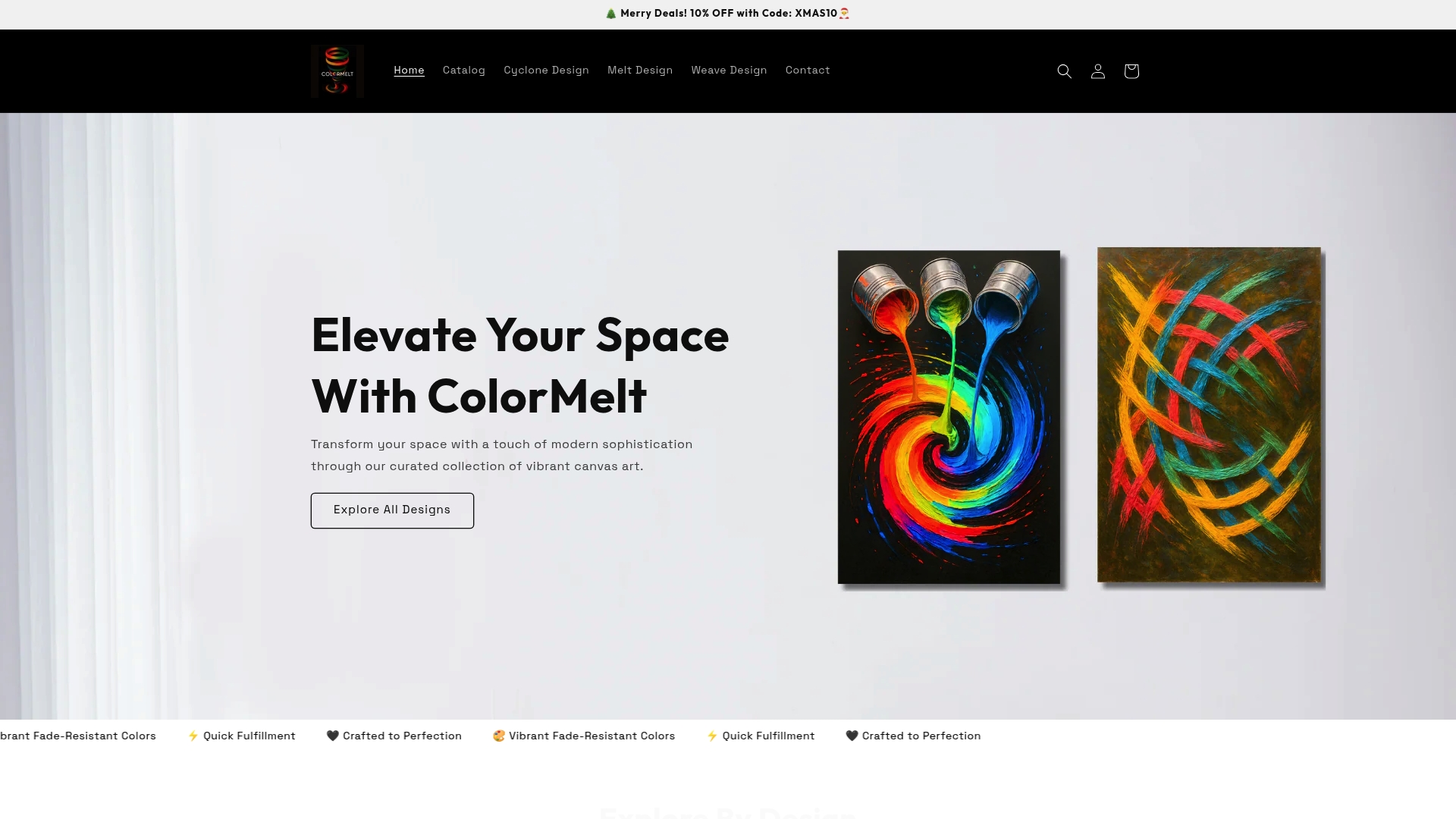
Every piece is designed to anchor a room, not just fill a wall. If you are ready to put these ideas into practice, the Colormelt wall art collection is a direct starting point. For a bold, color-forward option, the Cyclone Design print delivers the kind of visual impact that premium materials make possible. Quality is built into every order, from the ink to the finish.
FAQ
What makes a print “museum-grade”?
Museum-grade prints use archival, acid-free substrates and pigment-based inks with UV-resistant coatings. These materials allow prints to last up to 75 years without significant color loss.
Are quality prints worth the higher cost?
A premium print that lasts decades costs less per year of enjoyment than a cheap print replaced every few years. The emotional and aesthetic value it delivers daily makes the investment straightforward for most homeowners.
How do physical prints affect mood and well-being?
Physical prints displayed at home build emotional connection and self-esteem, particularly for children. The permanence of a printed image communicates that a moment or image has lasting importance.
What is the best way to protect a quality print?
Frame it with UV-filtering glazing, use acid-free matting, and position it away from direct sunlight. These three steps address the main causes of fading and physical degradation.
How do I know if a print uses quality materials?
Ask the seller to confirm pigment-based inks and acid-free paper or canvas. If those details are not publicly listed, treat the print as a standard product with a shorter lifespan.